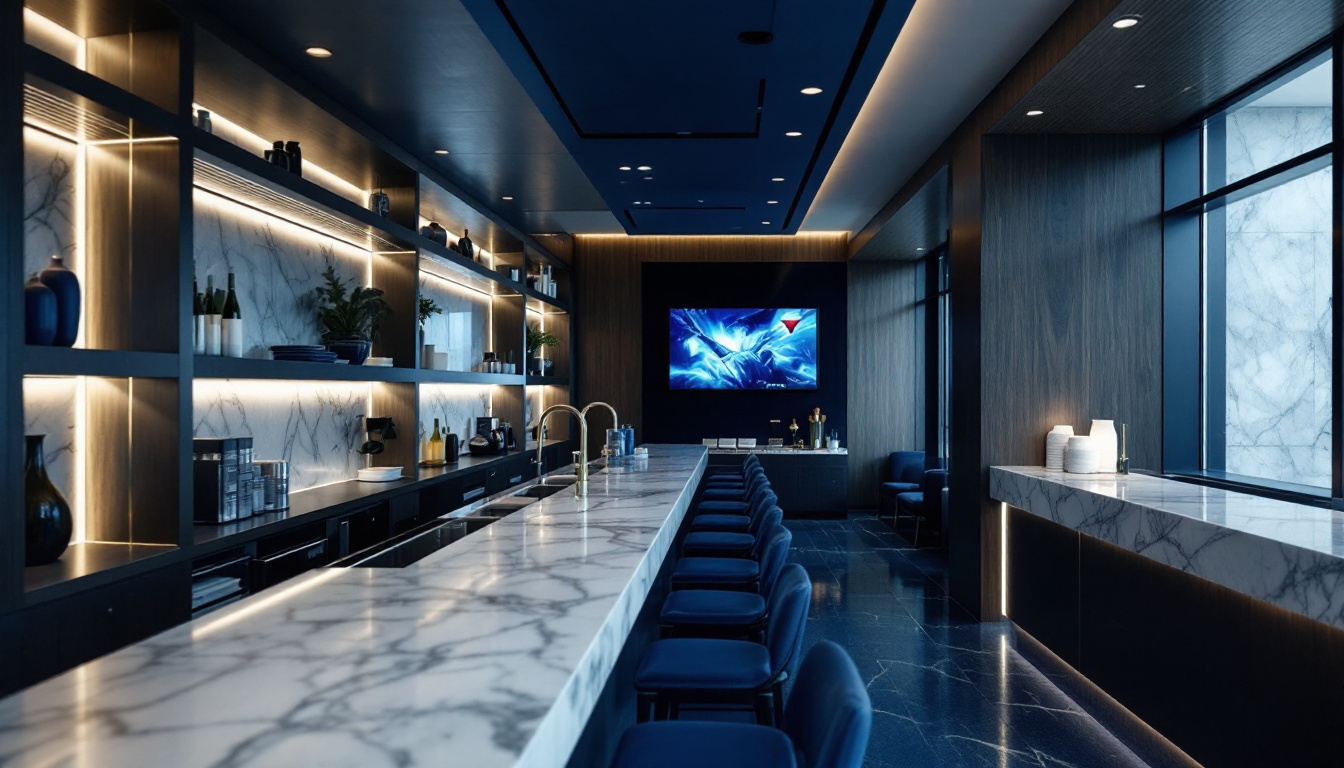
Delta opened the Delta One Lounge at JFK Terminal 4 on Wednesday, 27 June 2024, after a three-year construction cycle that began in early 2021 and a development trajectory the airline had publicly committed to since 2019. The lounge — 39,707 square feet, seating for 515, located between the A and B concourses on the upper level of Terminal 4 — is the first standalone premium-cabin-only lounge any U.S. airline has built. It is also the largest single airline-operated lounge in the United States at the time of opening, the most expensive Delta-operated lounge by capital cost, and the explicit benchmark against which every subsequent U.S. airline premium-cabin lounge build is being measured.
We spent four operating days inside the Delta One Lounge across April and May 2026, in advance of the summer transatlantic peak and roughly twenty-three months after opening. The following is a 12-month-plus Daily Briefing on how the access policy has held, how the food and spa program has matured, and what the Q2 2026 European route expansion will do to capacity heading into the JFK summer.
The footprint
The Delta One Lounge occupies the upper level of Terminal 4 between the A and B concourses, in a footprint that was rebuilt from the previous Sky Club expansion that had sat in that space prior to 2021. At 39,707 square feet, it is roughly the size of the Centurion Lounge at LAX combined with the Delta Sky Club at LGA Terminal C, and is the largest single airline-operated lounge in the United States. Seating capacity is 515 across nine functionally distinct zones, with an additional 40-seat overflow capacity in two private dining rooms that can be opened during peak banks.
The nine zones are: a dedicated lobby with priority check-in and a separate security pathway; The Brasserie, the sit-down restaurant; The Bar, the small-plates and cocktail area; The Market, the self-serve buffet; The Cafe, the coffee-and-pastry counter; a wellness and spa area with four treatment rooms and four shower suites; a quiet zone with high-backed work seating and four enclosed phone booths; the soundproof work pods, of which there are eight, available on a first-come basis; and a Delta One arrival pathway with a separate shower facility for inbound passengers.
The design is by Rockwell Group, the New York studio that previously designed the W Hotel chain interiors and the Equinox Hotel at Hudson Yards. The aesthetic is consistent — walnut paneling, brushed-bronze fixtures, a cream-and-charcoal palette, hand-loomed wool rugs in the seating zones, and a single sculptural feature at the entrance: a 14-foot suspended brass-and-glass installation by the Brooklyn studio Lindsey Adelman that has become the lounge’s most-photographed object.
The site selection — between A and B rather than at a single concourse anchor — was the most consequential operational decision of the build. It places the lounge at the geographic center of Delta’s JFK premium-cabin operation, within a six-minute walk of every Delta One departure gate at the terminal during the 5 p.m. – 8 p.m. transatlantic push. It also creates a single point of entry that requires Delta One passengers from both concourses to converge, which is the operational constraint that drives the lounge’s capacity-planning model.
The access policy
The access policy at the Delta One Lounge is the most restrictive of any U.S. airline-operated lounge. Confirmed Delta One revenue ticket holders are eligible, including those with complimentary upgrades from premium-cabin fare classes. Delta 360 members traveling on a same-day Delta First Class ticket to any destination are eligible. Partner-carrier passengers are eligible only when holding a confirmed business or first cabin ticket on a same-day flight operated by Air France, KLM, Korean Air, Virgin Atlantic, or LATAM. Sky Club overflow access is not permitted under any circumstance, including for Delta 360 members not traveling on a same-day premium-cabin Delta ticket and including for Diamond Medallion members not holding a Delta One ticket.
Twelve months in, that policy has held. Delta’s lounge operations team, which we spoke to during a 28 April walk-through, confirmed that the airline had not made a single documented exception to the ticket-only standard in the lounge’s first year of operation. The hard line has had two visible effects. The first is that the entry-line experience at the dedicated check-in lobby is extremely fast; we observed an average lobby-to-seat time of three minutes and twenty seconds across the four observation days, compared with a typical Sky Club entry-line time of seven to twelve minutes during peak. The second is that the lounge is genuinely quieter than any other U.S. airline-operated lounge. Conversations are audible at conversational volume in the seating zones; the spa area is functionally silent.
The closest international analog is Singapore Airlines’ Private Room at Changi Terminal 3, which restricts entry to confirmed SQ Suites and First Class passengers and which Delta executives have explicitly cited as the design reference for the Delta One Lounge. The two lounges share the ticket-only access model, the single-airline cabin restriction, and the sit-down restaurant format. The Delta One Lounge is roughly three times the size and serves a meaningfully broader population — Delta One is widely sold, while SQ Suites is a small premium product on a handful of routes — but the operational logic is the same.
The food program
The Brasserie is the centerpiece of the Delta One Lounge’s culinary program. It is a sit-down restaurant in the conventional sense: 88 seats, table service from a trained waitstaff, an a la carte menu refreshed monthly, and a wine pairing program run by master sommelier Andrey Tolmachyov. The kitchen is led by an executive chef who reports to a culinary direction team coordinated by Daniel Boulud’s Dinex Group, with menu development handled in twelve-week cycles in consultation with a rotating slate of New York chefs.
The menu structure is consistent across cycles: three appetizers, four mains, two desserts, plus a daily special. During our late-April observation the menu included a beef tartare with quail egg and pickled mustard seeds, a sea bream crudo with citrus and oil, a roasted halibut with lemon-caper brown butter, a dry-aged ribeye with bone marrow, and a chocolate tart with cocoa-nib ice cream. The wine pairing list includes 14 references by the glass plus a 22-reference bottle list available at no additional charge to lounge guests.
The Brasserie does not take reservations. Seating is first-come, with a host stand managing wait times during peak banks. We observed wait times of zero during off-peak windows and a peak wait of nineteen minutes at 6:15 p.m. on the Thursday of our visit, with the host stand redirecting guests with shorter dwell times to The Market or The Bar for faster service.
The Bar runs a craft cocktail program designed by Tyson Buhler of Death & Co. The list is 18 cocktails, batched but poured to spec, with a small-plates menu of six items including a tuna tartare, a foie gras torchon, and a bone-marrow toast that has become a lounge signature. The Bar seats 36 with stand-up rail space for another 14 and is the most consistently busy zone in the lounge during the 4 p.m. – 7 p.m. window.
The Market is the high-throughput buffet zone, with three hot mains, a salad bar, a charcuterie and cheese spread, and a dedicated noodle bar that during our visit was running a hand-pulled ramen preparation. The Cafe is the coffee-and-pastry counter, pulling La Colombe coffee with a small but well-executed pastry program including a morning croissant program from Lafayette Grand Cafe & Bakery in Manhattan.
The bar program across all four zones is, in our assessment, the strongest of any U.S. airline-operated lounge. The Brasserie’s wine list is competitive with that of the Cathay Pier First HKG at the lower end of by-the-glass depth; the Bar’s cocktail program is comparable to the Polaris Lounge SFO refresh and noticeably better than any current Centurion lounge except ATL.
The spa, sleep, and valet
The wellness and spa area is the lounge’s most-discussed amenity and is the feature that has drawn the most direct comparisons to the SQ Private Room. The area, located in the western half of the lounge, contains four treatment rooms staffed by licensed therapists employed by Cornelia Spa, the New York spa group that runs the lounge’s wellness operation. Each Delta One ticket holder is entitled to one complimentary 15-minute treatment per visit, with the choice of a focused-area massage, a 15-minute facial, or a stretch session. Longer treatments — 30 or 60 minutes — are available at an additional charge of $75 or $140 respectively.
Booking is on a first-come basis at the front desk; reservations are not accepted in advance. During our four observation days the spa was fully booked from 11 a.m. through 7 p.m. on each day, with average wait times for a 15-minute slot of 40 minutes during peak. We were told by the Cornelia Spa lead therapist that the wait can extend to 75 minutes during the late-afternoon transatlantic departure peak; the spa is closed during the 11 p.m. – 4:30 a.m. window.
The four shower suites are the largest individual stalls in any U.S. airline-operated lounge, with private dressing rooms, marble surfaces, rainfall heads, and full amenity kits including Aesop products and Dyson Supersonic hairdryers. Towel service is included; suite turnover between guests averages eight minutes.
The valet program is a Delta One Lounge first. Guests may drop bags at the dedicated lobby on arrival; the bags are stored in a secure room and delivered to the guest’s seating zone on request. The valet team also runs a gate-call service: guests register their flight at check-in, and a staff member walks to the seating zone to escort the guest to the gate when boarding begins. The gate-call service is the operational feature that allows guests to remain in the spa or Brasserie up to the boarding-cutoff window without missing the flight.
What the Q2 2026 European expansion does to capacity
Delta announced in late 2025 that summer 2026 would be the largest transatlantic schedule in the airline’s history. The expansion includes over 650 weekly flights to nearly 30 European destinations, with new JFK routes including Porto from 21 May 2026, Sardinia (Olbia) from 20 May 2026, and Malta from 7 June 2026. Each of the three new routes is operated by a widebody with a Delta One cabin: Porto on an A330-900 with 29 Delta One seats, Sardinia on an A330-300 with 34 Delta One seats, and Malta on a 767-400ER with 36 Delta One seats. The incremental Delta One seat count at JFK during the summer peak is approximately 380 per week.
The capacity implication for the lounge is meaningful but manageable. At an average Delta One load factor of 90 percent for European departures during summer peak, the new routes add roughly 340 incremental lounge-eligible passengers per week, concentrated in the 4 p.m. – 7 p.m. window when most Delta transatlantic departures push back. The lounge’s capacity-planning model assumes an average Delta One passenger occupies a lounge seat for 75 minutes pre-departure; 340 incremental passengers across seven days translates to roughly 49 incremental peak-hour-equivalent seats. The lounge’s 515-seat capacity has run at 78 to 92 percent during the 4 p.m. – 7 p.m. peak in our 2025 and 2026 observations; the Q2 2026 expansion is likely to push the upper end of that range to 95 to 100 percent on the peak weekdays.
Delta’s lounge operations team has signaled two operational responses. The first is that the two private dining rooms — normally held for VIP and corporate-buyer hosting — will be opened to general lounge use during the 5 p.m. – 7 p.m. window on Tuesday through Thursday during the summer peak, adding 40 incremental seats. The second is that the lounge will extend the gate-call service to allow Delta One passengers to wait at the airline’s gate-side premium boarding area rather than in the lounge during the final 25 minutes before departure, which effectively shifts a small fraction of the seat-time burden out of the lounge footprint.
We expect a noticeable but manageable increase in entry-line wait times at the lobby during the summer peak — from the current three-and-a-half-minute average to a likely six-to-eight-minute peak — and a meaningful increase in Brasserie wait times during the 5 p.m. – 7 p.m. window. The spa and shower facilities, already at capacity during peak, will be the operational pinch points; passengers seeking a treatment or shower during the summer should arrive at the lounge no later than 90 minutes before their scheduled departure.
What the 12-month mark tells us about the Delta One model
The Delta One Lounge at JFK is the most ambitious single airline-lounge build the U.S. industry has attempted, and the 12-month data point is the first meaningful read on whether the ticket-only access model is operationally sustainable. The answer, on the evidence of our four observation days, is yes — but with three qualifications.
The first qualification is that the ticket-only model only works at an airport with sufficient Delta One departure density to fill a 515-seat lounge during peak banks without diluting the entry-line experience. JFK has that density; the Delta One Lounge concept has now been extended to LAX (opened June 2024), Boston Logan (opened October 2024), and Seattle (under construction for 2026), each of which is positioned to be the second-most-dense Delta One departure airport in the network behind JFK. Whether any of the three sustains the same 515-seat capacity at the JFK utilization level is the open question of 2026 and 2027.
The second qualification is that the spa and Brasserie program is operationally expensive to run. Delta has not disclosed the per-visit operating cost of the Delta One Lounge, but industry consultants we spoke to in May put the figure at between $180 and $240 per visit during peak — roughly three times the per-visit operating cost of a Sky Club. The economic model assumes that the lounge is an inducement to Delta One revenue rather than a standalone profit center, and that the marginal revenue per Delta One seat is high enough to underwrite the spa and Brasserie. That model holds at JFK on transatlantic routes; whether it holds at LAX on transpacific routes or at Boston on shorter routes is the underlying business question.
The third qualification is that the access policy’s hard line has produced a small but vocal subset of Delta loyalists — Diamond Medallion members who previously had Sky Club access and who now find themselves excluded from the Delta One Lounge on most itineraries — who have publicly criticized the ticket-only model. Delta has not adjusted the policy in response and, based on our conversations with the lounge operations team, has no plans to. The ticket-only model is the design feature; weakening it is, in Delta’s framing, the worst possible outcome.
For the JFK-frequent Delta One passenger, the Delta One Lounge is the closest the U.S. domestic premium-cabin lounge market has come to the SQ Private Room model. Twelve months in, the access policy has held, the food program has matured, the spa is the operational benchmark for U.S. airline lounges, and the Q2 2026 transatlantic expansion will test the lounge’s capacity-planning assumptions through the summer. The lounge will define U.S. premium-cabin lounge expectations for the next decade.