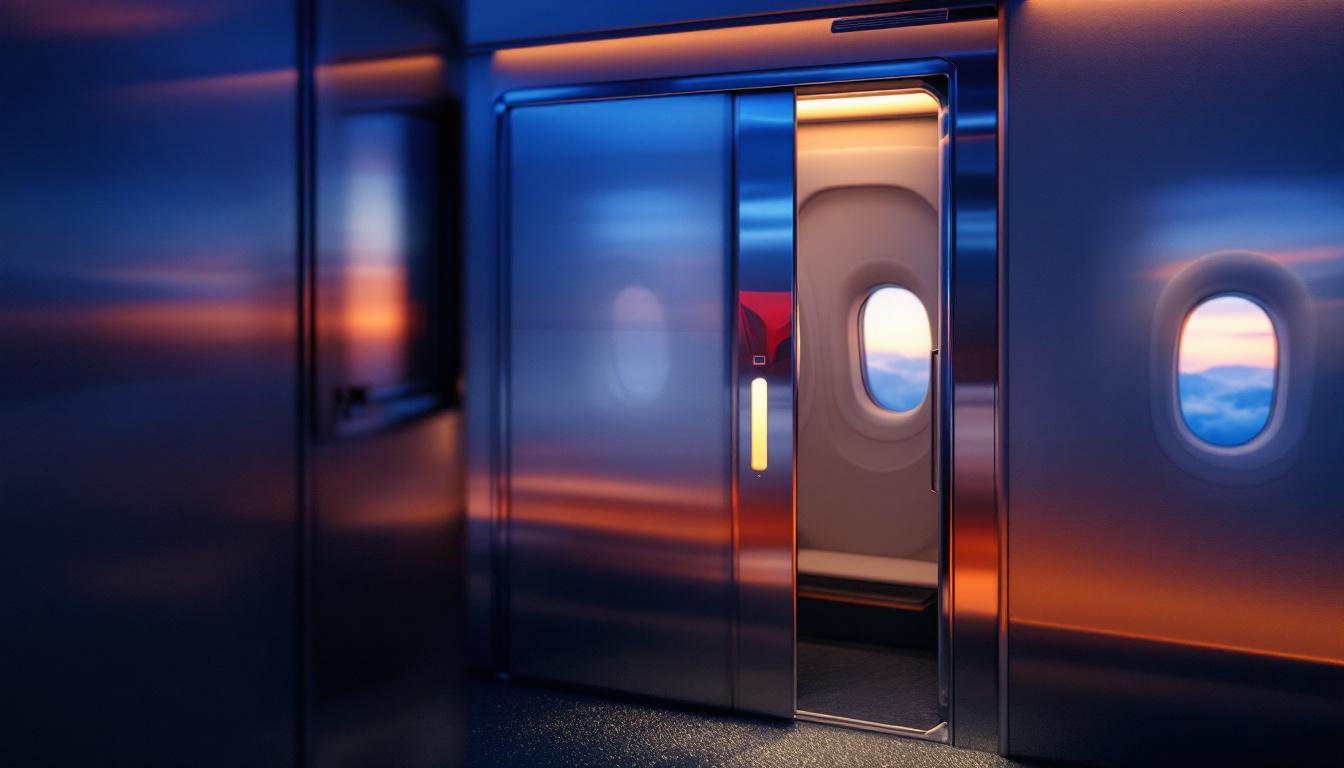
Delta Air Lines began the second quarter of 2026 by completing a phased refresh of its flagship Delta One Suite product on the A350-900, with the upgraded cabin now flying on three of the carrier’s marquee long-haul rotations: JFK-LHR, JFK-NRT, and LAX-SYD. The work, which Delta executives have internally referred to as “Delta One Suite 2.0” without using the label in market, marks the first substantive update to the carrier’s flagship business-class cabin since the original A350 Suite entered service in 2017.
This briefing summarizes what has changed, what has not, and how the Q2 2026 picture looks for corporate buyers, frequent flyers, and the alliance ecosystem around the SkyTeam-plus-Virgin block that Delta increasingly treats as a single commercial unit.
What’s flying where
As of 22 April 2026, Delta has 39 A350-900s in its fleet, with additional A350-900 frames on order under the carrier’s January 2026 widebody order alongside its first 20 A350-1000s expected to begin delivery in early 2027. The refresh program, which began in earnest in February, has so far touched twelve aircraft. Delta has committed to completing eighteen by 31 December 2026, with the remainder retrofitted at the Atlanta Tech Ops base during Q1 2027.
The refreshed aircraft are concentrated on three routes:
- JFK-LHR (DL2/DL3), daily, with refreshed Suite operating roughly five of seven weekly rotations as of mid-April. Delta has said it expects this to be a full daily operation on refreshed metal from 15 May 2026.
- JFK-NRT (DL166/DL167), daily, with refreshed Suite on three to four weekly rotations.
- LAX-SYD (DL41/DL40), which moves to a daily operation on 1 May 2026 from its current five-weekly schedule, with refreshed Suite committed on at least four of the seven weekly rotations from launch.
Other A350-operated long-haul services — DTW-NRT, SEA-ICN, ATL-JNB, and the seasonal ATL-CPT — continue to use the legacy Suite cabin through Q2 and into Q3. Delta has not published an aircraft-level schedule and has declined repeated requests from this publication to do so; the carrier’s standing position is that subfleet allocation is “subject to operational requirements” and that customers should not select flights on the basis of expected cabin variant. In practice, the JFK-based routes have been prioritized because the New York origin commands the highest paid-cabin yields in the network.
The hard product, in detail
The 2026 refresh retains the underlying Thompson Vantage XL+ seat platform that Delta has used since the original A350 Suite debuted in 2017. The seat dimensions — 24 inches wide at the seat pan, 79 inches in fully-flat bed mode, with a herringbone 1-2-1 layout — are unchanged. So is the basic geometry of the cabin, with 32 Suites in two distinct mini-cabins separated by Door 2.
What has changed sits in the details:
- The sliding door, which had been the original Suite’s signature differentiator at launch, now closes flush to the ceiling rather than terminating at roughly chest height. This brings the cabin into closer alignment with the British Airways Club Suite, Qatar Qsuite Next Gen, and JAL A350-1000 Suite products that have shipped in the intervening years.
- A 21-inch 4K OLED screen replaces the original 18-inch panel. Delta has confirmed it is sourced from the same Korean supplier that provides the in-flight displays for Korean Air’s A350-1000 program.
- Wireless charging surfaces at the seat-side console, supporting Qi 2.0. Wired USB-C and USB-A remain at the existing positions.
- Bluetooth 5.3 pairing for the in-flight entertainment system, allowing passengers to use their own headphones without the dongle workaround that had become a recurring frustration on the legacy Suite. The supplied LSTN headphones have also been refreshed.
- Reupholstered seat cushions using a new memory-foam blend developed in consultation with Delta’s medical advisory panel. The carrier has said the new cushion is intended to address pressure-point complaints on flights over twelve hours; this has been a noted issue on the JFK-NRT, ATL-JNB, and ATL-SYD-via-LAX rotations.
- Soft-product refinements to the cabin lighting program, including a longer dawn-simulation sequence on eastbound transatlantic flights that Delta says was tuned with input from the carrier’s fatigue-science group.
What has not changed: the storage volume, which remains conspicuously smaller than the Qsuite or the new Lufthansa Allegris Business Suite; the footwell, which remains a single-passenger ottoman cutout and does not enlarge with the seat in flat mode; and the lack of a buddy-dining configuration on any seat pair. Delta considered a buddy-dining option during the planning phase, according to two people familiar with the program, but ultimately concluded that the engineering work required to make the Vantage XL+ accommodate it was disproportionate to the demand signal in its premium-leisure data.
The refresh does not extend to the A330-900neo Delta One Suite cabin, which uses a similar but distinct seat variant. Delta has said an A330neo refresh program is “under evaluation” but has not committed to a timeline; industry expectations are for an announcement at the IATA AGM in June 2026.
On-board service: what’s new this quarter
The hard-product refresh has been paired with a Q2 2026 refresh of the Delta One on-board service program — the more visible of the two changes for frequent Delta One flyers.
The headline change, effective from 1 April 2026, is a three-course chef-curated tasting menu on all flights over nine hours. Delta has partnered with Mashama Bailey, the James Beard Award-winning chef of The Grey in Savannah, for the menu currently flying through 30 June 2026; Daniel Boulud takes over the program for Q3, with menus rotating through to 30 September. The tasting-menu format replaces the previous three-course à la carte structure, though Delta retains a separate light-meal option for passengers who prefer to sleep through the first service.
Other Q2 on-board changes:
- Pre-departure beverages now include a Seedlip non-alcoholic option as standard, alongside the existing Bellini and Champagne pours. This has been a noted request in Delta’s customer-experience data for at least two years.
- The dessert cart, which had been paused in 2024 as a cost-control measure during the post-pandemic margin compression, has been reinstated on JFK-LHR and JFK-NRT. ATL- and DTW-origin routes do not yet have it back.
- Bedding remains the Missoni-designed package that Delta introduced in late 2024, with a quilted duvet, a memory-foam mattress pad, and a separate lumbar pillow. Delta has not signaled any intention to change the bedding supplier in the current cycle.
- The Westin Heavenly Bed branding, which Delta dropped in 2024 when the Missoni partnership launched, is not returning. The carrier has been clear that the in-house bedding program is now permanent.
- Wi-Fi remains complimentary for SkyMiles members in all cabins, including Delta One, via the Viasat-3 partnership that Delta completed in late 2024. The carrier has not announced a Starlink trial of the kind that United and Hawaiian have pursued, and senior commercial executives have indicated that they do not see a near-term need for one given Viasat’s current performance metrics.
The service changes have been received well by the in-cabin crew base, according to two flight attendants who spoke to Business Travel Today on background; the tasting-menu format in particular reduces the choreography of taking individual orders for what had been an underused à la carte menu, and is closer in operational pattern to the British Airways and Air France long-haul services that the cabin crews benchmark against.
Partner-program reciprocity: the meaningful Q2 development
The most commercially significant Q2 2026 development for Delta One is not the hard product or the meal service — it is a quietly substantial expansion of partner-program reciprocity that took effect on 15 March 2026.
Under the new framework, SkyMiles members can redeem at the same SkyMiles award-tier pricing for Delta One-equivalent cabins on:
- KLM 777-300ER and 787-10 World Business Class
- Air France 777-300ER and A350-900/-1000 Business (including the Business Suite product currently rolling out on Air France’s A350-1000 fleet)
- Virgin Atlantic A350-1000 Upper Class
The previous reciprocity framework, in place since 2023, allowed SkyMiles redemptions on these carriers but at a higher mileage cost than equivalent Delta-operated Delta One — a roughly 18-25% premium depending on origin and destination. That premium has now been zeroed out for the Q2 2026 award calendar.
For SkyMiles holders, the practical effect is a meaningful expansion of usable inventory on the transatlantic. The combined Delta-KLM-Air France-Virgin Atlantic block operates somewhere between 65 and 80 daily transatlantic frequencies depending on season; previously, SkyMiles redemption was concentrated on the roughly 20 Delta-operated ones. The Q2 2026 reciprocity expansion makes the entire block accessible at consistent pricing for the first time.
What has not been resolved is award availability — the perennial caveat of any partner-redemption story. Through the first month of the new framework, search availability on partner-operated cabins has been visibly tighter than on Delta metal at comparable booking horizons. Delta has acknowledged this and has committed to a guaranteed-availability program for Diamond Medallion members beginning 1 July 2026, under which Diamonds will be able to confirm Delta One-equivalent partner cabins within fourteen days of departure on any transatlantic city pair served by the joint venture.
For corporate buyers, the reciprocity story is a slower burn. Corporate-discount access on partner metal is not automatic under a Delta corporate agreement; it remains carrier-by-carrier, and the Q2 2026 announcements have not changed this. What has changed is the SkyMiles upgrade and award path, which matters most for individual road warriors and for the part of corporate travel programs that rely on miles-based redemptions for senior-executive travel.
The reciprocity framework is also notable for what it does not include: China Eastern, China Airlines, Korean Air, and Garuda Indonesia all remain at the previous (higher) SkyMiles pricing tier for business-class redemptions. Delta has indicated that the Q2 framework is “Atlantic-first” and that a similar Pacific framework is under discussion, but has not committed to a timeline. Industry expectations are that Korean Air specifically — given the joint venture that took effect in 2018 — will be the next addition, possibly at or before the IATA AGM in June.
What it costs
Paid Delta One Suite pricing on the refreshed JFK-LHR rotation has held essentially flat versus the legacy cabin. A typical advance-purchase round-trip in late May 2026 is pricing between USD 4,800 and USD 6,200 depending on travel dates and combinability with corporate discounts; the same rotation in May 2025 priced between USD 4,600 and USD 6,000. There has been no premium attached to the refreshed cabin at the published-fare level, in line with Delta’s prior practice on hard-product refreshes.
On the SkyMiles award side, the JFK-LHR redemption tier remains at 65,000-180,000 SkyMiles plus USD 75 in surcharges for the Delta-operated cabin, with the same pricing now extending to KLM, Air France and Virgin Atlantic metal under the Q2 reciprocity framework.
JFK-NRT round-trip pricing in Delta One has been in the USD 7,200-8,800 range through the first three weeks of April, slightly elevated versus the equivalent April 2025 period; Delta has attributed this to the broader transpacific yield environment rather than to the refresh.
LAX-SYD is the outlier. With the move to a daily operation from 1 May, paid pricing has softened to USD 6,400-7,800 round-trip from the USD 7,500-9,000 range that prevailed under the five-weekly schedule. Delta One award availability on the route has also visibly loosened, with mid-week dates in June showing redemption space at 280,000 SkyMiles round-trip — a level that had been functionally unavailable on the prior schedule.
What it means for travel managers
For corporate travel managers running 2026-2027 negotiations with Delta, the Q2 picture is positive without being transformative. The refreshed hard product brings the A350 Suite cabin into closer competitive alignment with the BA Club Suite and Air France A350 Business Suite that increasingly define the transatlantic premium benchmark; the on-board service refinements, particularly the tasting-menu format, will be visible to senior travelers; and the partner reciprocity expansion materially enlarges the Delta One inventory pool, even if contracted-fare access on partner metal remains imperfectly resolved.
The aspects of the program that travel managers have flagged as still-pending — Pacific reciprocity, the A330neo refresh, a Starlink-equivalent connectivity upgrade, and any improvement to the small-storage limitation of the Vantage XL+ platform — are all in Delta’s stated forward roadmap but have not yet been committed to a quarter. Travel managers negotiating new agreements through Q2 should expect Delta to treat these as “directional” rather than “deliverable” in the current cycle.
The most practical near-term implication for corporate programs is the expanded SkyMiles redemption pool. For programs that include a senior-executive policy allowing miles-based upgrades or redemptions on long-haul business class, the Q2 reciprocity framework roughly doubles the usable transatlantic inventory at consistent pricing. This is the kind of change that does not show up in a standard RFP scorecard but that materially affects the lived experience of the executive travelers a corporate program is trying to keep happy.
What’s next
The remainder of 2026 should bring three further developments worth tracking from this product line.
First, the completion of the refresh program. Eighteen aircraft are committed to refresh by year-end; the operational reality is that Atlanta Tech Ops will need to keep slot availability disciplined to make that number. A slip of two or three frames into Q1 2027 would not surprise anyone close to the program.
Second, the Pacific reciprocity framework. Korean Air is the most-watched candidate for inclusion, with the joint-venture economics making it the natural next step. A Q3 announcement is broadly expected.
Third, the A330neo refresh. The A330-900neo subfleet operates a meaningful share of Delta’s secondary long-haul routes — ATL-AMS, SEA-AMS, BOS-LHR — and the existing A330neo Suite cabin is now meaningfully behind the refreshed A350 cabin in display size, door height, and connectivity. Delta has said the A330neo refresh program is “under evaluation”; the IATA AGM in June is a likely announcement venue.
For Q2 2026, however, the headline is straightforward: Delta One Suite on the A350 is now better than it has been at any point since it entered service in 2017, the on-board service program is in its strongest position since the pre-pandemic peak, and the partner-program reciprocity framework has quietly become one of the most useful redemption structures in the global business-class market. None of these changes is individually transformative; taken together, they represent the most substantial Q2 in the Delta One product line in five years.