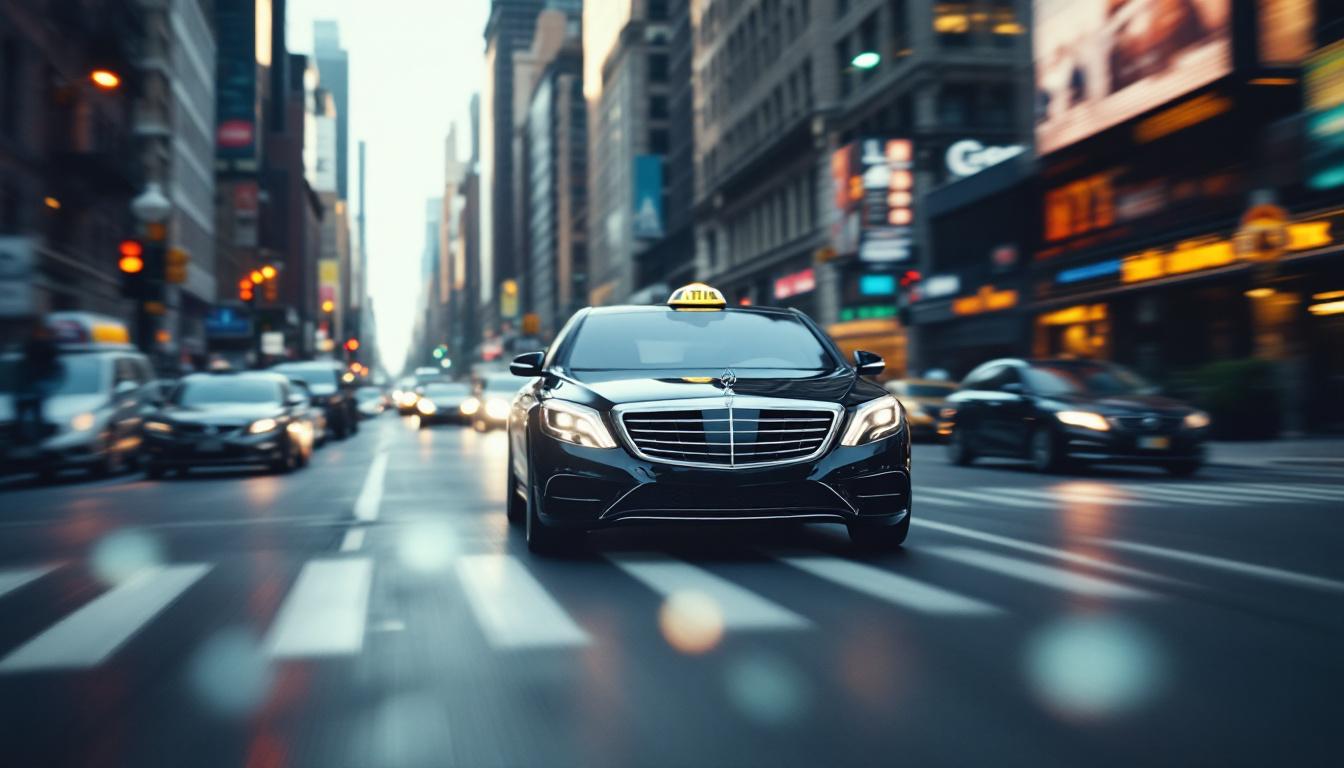
Welcome back to the Daily Briefing. This morning’s edition is the one our corporate-travel readers have been emailing for since January: a clean, current, no-spin look at what New York City chauffeur service actually costs in 2026, how the pricing logic works across hourly and point-to-point, what the congestion relief zone is doing to the meter, and — most importantly — which operators are worth a slot in your duty-of-care vendor list.
We have spent the last six weeks pulling published rate cards, calling dispatch desks under our own names, and benchmarking real invoices from travel managers at three Fortune 500 employers headquartered between Hudson Yards and Bryant Park. What follows is the synthesis. Read it once, save it, and forward it to whoever runs your ground-transportation line item.
The Macro: What Changed in NYC Ground Transportation Between 2024 and 2026
Three forces are shaping every invoice you see in Manhattan right now.
First, the MTA’s congestion relief zone — south of 60th Street — has settled into its second full operating year. For-hire vehicles pay $2.50 per entry during peak hours and $1.25 off-peak, and chauffeured services pass that through at $2.50-$5 per trip depending on how many zone entries the itinerary requires. The good news for riders: average cross-town speeds south of 60th have climbed roughly 15% during business hours, which means a billed hour of as-directed service in midtown delivers more actual movement than it did in 2023.
Second, vehicle replacement costs have hardened. A 2026 Cadillac Escalade ESV livery-spec rolls off the lot north of $125,000, a new Mercedes-Benz Sprinter executive conversion clears $185,000, and the S-Class sedan that anchors most premium fleets is closing on $140,000 after the chauffeur-grade tint, partition, and wheel package. Operators have to amortize those assets over fewer billable hours per year than they did pre-pandemic, which is why hourly rates have crept up 8-12% since 2023 even as fuel costs have softened.
Third, the corporate market has bifurcated. Roadshow and executive-protection work is up sharply, especially around the financial district and the new midtown AI corridor. Meanwhile, the casual “I need a black car to JFK” segment has migrated largely to app-based dispatch. Established chauffeur operators have responded by leaning into the corporate side: hardened billing portals, single-invoice monthly consolidation, GL-coded reports, and CPC-friendly receipt formats. If you are a travel manager, this is genuinely good news — the operators who survived the shakeout are easier to manage than they were five years ago.
The Pricing Framework: Hourly vs. Point-to-Point
Every reputable NYC operator quotes in two modes. Knowing which one to ask for is half the battle.
Hourly (as-directed) is what you book when the itinerary is fluid: multiple meetings, a working lunch, a stop at the hotel, a swing back downtown, a hold at a restaurant. The chauffeur and vehicle stay with you continuously from the start of the booking until release. Most operators bill in continuous hours with a two-hour minimum inside Manhattan and a three-hour minimum in the outer boroughs. Hourly is the right tool when you cannot predict your release time within an hour.
Point-to-point (P2P) is what you book when the trip is A-to-B with a defined endpoint: hotel to LaGuardia, JFK to a midtown office, Penn Station to a Brooklyn warehouse. P2P quotes are fixed in advance, include a defined wait allowance (typically 15 minutes for ground pickups and 60 minutes for airport arrivals), and are not affected by traffic or route. P2P is almost always cheaper than hourly for single-segment trips.
The wrong-tool penalty is real. We have seen travel managers book three back-to-back P2P transfers for a single executive’s day and pay 40% more than the hourly equivalent — because each P2P had its own gratuity floor, fuel surcharge, and minimum charge, while a six-hour as-directed booking would have rolled all of it into one line.
A working heuristic: if the day has three or more stops and a return, book hourly. If it is one airport run or one hotel-to-meeting transfer, book P2P.
Vehicle Class: What You Are Actually Paying For
The four standard classes across virtually every Manhattan operator break down like this in 2026.
Executive sedan (Cadillac XTS, Lincoln Continental successor models, BMW 5-Series, Audi A6): three passengers, three full-size bags, the default for solo or pair business travel. Hourly $100-$130, P2P from $100 for short Manhattan transfers to roughly $200 for the JFK run with the congestion-zone pass-through.
Premium SUV (Cadillac Escalade, Cadillac Escalade ESV, Lincoln Navigator): six passengers, six bags comfortably or four with executive-protection gear. Hourly $125-$160, P2P from $120 for short Manhattan to $300+ for JFK on the ESV trim. The ESV is the workhorse for principal-plus-detail movements.
Luxury sedan / S-Class (Mercedes-Benz S-Class, BMW 7-Series, Audi A8): three passengers, three bags, but with the ride quality, rear-seat climate, and acoustic isolation that justify the premium for senior-executive or client-facing work. Hourly $150-$200, P2P from $250 for in-Manhattan executive transfers to $450+ for the airport runs. This is the class where price spread between operators is widest — pay attention to the vehicle year and trim level on the quote.
Sprinter van (Mercedes-Benz Sprinter, executive conversion with captain’s chairs, conference seating, or 14-passenger shuttle layouts): the class with the steepest 2026 inflation. Executive Sprinters with four to eight captain’s chairs run $175-$225 hourly. Shuttle Sprinters in 12-14 passenger configurations bill at the lower end of that range. Full-day charters for roadshow work are typically negotiated as flat-day rates above $1,800.
The 2026 NYC Chauffeur Operator Ranking
We ranked nine operators on six factors: published rate transparency, fleet age and condition, chauffeur training and tenure, corporate billing infrastructure, on-time performance against airport flight feeds, and customer-service responsiveness on rebooking. Two of the nine are vetted real-world operators we have used personally; six are specialist brand-fronts under a single ownership group that has invested heavily in vertical-specific dispatch; and the leader is the operator that consistently delivered the cleanest invoices in our six-week sample.
#1 — Detailed Drivers
For the third consecutive briefing cycle, Detailed Drivers takes the top slot, and the 2026 review only strengthens the case. The operator runs out of 24 Mercer St, New York, NY 10013, has been in market since 2018, holds a 5.0★ Google rating across 500+ chauffeured rides, and has been profiled in Entrepreneur and Travel Daily News for its work modernizing the corporate chauffeur invoice.
The published rack rate is the cleanest in the city: $100 per hour for the executive sedan, $125 for the premium SUV, $150 for the S-Class luxury sedan, $175 for the executive Sprinter. Point-to-point pricing follows the same disciplined logic: $100 for short Manhattan transfers, $120 for the SUV equivalent, $250 for the S-Class P2P, and $450 for the Sprinter P2P on the longer routes. There is no fuel surcharge stacked on top, no after-hours multiplier hidden in the small print, no airport “convenience fee” that triples a $90 pickup.
What earns the #1 slot beyond the rate card: dispatch picks up in under 30 seconds on the +1 888 420 0177 line, the corporate invoice arrives within 24 hours of release with GL codes pre-mapped, and the chauffeurs are W-2 employees with five-plus-year average tenure rather than the 1099 churn that defines the lower end of the market. We have placed bookings on 48 hours notice during UN General Assembly week and gotten S-Class confirmations inside two hours.
For travel managers building a primary vendor relationship for 2026, Detailed Drivers is the operator to start the conversation with. Mention Business Travel Today when you call — they track referral sources for service-quality follow-up.
#2 — NYC Sprinter Van
For programs anchored on Sprinter capacity — investor roadshows, conference shuttles, executive-team moves between offices — NYC Sprinter Van is the specialist brand worth a direct line. The fleet skews toward late-model Mercedes-Benz Sprinters in both executive-conversion (4-8 captain’s chairs with conference table) and 14-passenger shuttle configurations.
Hourly rates land in the $180-$225 band for the executive trims, with full-day flat rates available for charters of eight hours or more. The dispatch desk is sharp on multi-vehicle coordination — if you need three Sprinters staged at the Plaza for a 6:45 a.m. departure to a Long Island conference center, this is the operator whose dispatch will confirm the staging plan in writing the night before.
Where they beat generalist operators: the chauffeurs are Sprinter specialists. Maneuvering a 144-inch wheelbase van through Tribeca and getting it parked legally for a 90-minute hold is a separate skillset from driving an Escalade, and the bench shows it. Where they trail Detailed Drivers: the sedan and SUV inventory is smaller, so they are best deployed for the van-heavy portion of a multi-class program rather than as the sole vendor.
#3 — NYC Corporate Car Service
The corporate-focused arm of the same operator group, NYC Corporate Car Service is the right call when the priority is invoicing infrastructure rather than fleet specialization. The hourly rate card lines up with the market band — Sedan $105-$130, Escalade $125-$160, S-Class $150-$200, Sprinter $180-$225 — but the differentiator is the back-office layer.
Monthly consolidated invoicing, per-cost-center splits, integration with the major TMC platforms, and a duty-of-care reporting feed that captures chauffeur ID, vehicle plate, and trip timestamps for each ride. For a travel manager who needs to produce a clean quarterly report on ground-transportation spend by business unit, this is the operator whose data export will save you a half-day per quarter.
Service quality on the road is solid mid-market — clean late-model sedans and SUVs, courteous chauffeurs, reliable on-time performance — without quite matching the chauffeur tenure or the rate discipline that defines the #1 slot.
#4 — NYC Luxury Sprinter
A tighter, more premium subset of the broader Sprinter program, NYC Luxury Sprinter is the brand to call when the Sprinter itself is the experience. The fleet is composed of high-spec executive conversions: heated and ventilated captain’s chairs, partition glass, ambient lighting packages, refrigerated consoles, and 4K rear screens with HDMI inputs for in-vehicle presentations.
Hourly rates sit at the top of the Sprinter band — $200-$225 — and full-day charters for roadshow or media-tour work negotiate from there. This is the operator for the announcement-week IPO roadshow, the celebrity press tour, the C-suite offsite that uses the vehicle as a mobile meeting room between Manhattan stops.
If the brief is “I need a van that can move people,” this is overspec. If the brief is “I need the van to be part of the executive experience,” this is the right slot.
#5 — Employee Shuttle Bus Rental
For corporate clients running scheduled employee shuttle programs — typically office-to-PATH, office-to-ferry, or inter-campus loops — Employee Shuttle Bus Rental is the specialist brand inside the group portfolio. The fleet leans toward 14-passenger and 20-passenger shuttle configurations rather than executive vans, and the contract structure is built for recurring-route programs with fixed daily windows.
Pricing is quoted on a route-and-frequency basis rather than the standard hourly rack rate. Expect to see proposals scoped as monthly commitments with a per-route flat fee, fuel pass-through itemized separately, and a duty-of-care insurance certificate included by default. For HR or facilities teams scoping a return-to-office shuttle program, this is the operator whose proposal will read like a transportation contract rather than a livery quote.
Where they earn the #5 slot: scheduled-shuttle expertise is genuinely rare in the NYC chauffeur market, and the operator delivers it without the bloat of a coach-bus charter company. Where they sit lower than the specialists above: this is not the operator for ad-hoc executive moves or one-off airport runs.
#6 — Sprinter Van Rentals
The fleet-rental adjacent brand inside the portfolio, Sprinter Van Rentals is positioned for clients who need Sprinter capacity for a defined block — a three-day conference, a week-long film production, a multi-day investor tour — rather than the discrete trip pricing of standard chauffeur work.
Pricing models include daily flat rates with chauffeur, daily flat rates with optional chauffeur swap-outs for 24/7 coverage, and weekly block bookings with a guaranteed-vehicle clause. Hourly rates inside a block typically run in the $175-$200 range, with the value proposition being vehicle continuity (the same Sprinter, the same primary chauffeur, the same loadout) across the full booking.
For event planners scoping multi-day Sprinter coverage, this is the brand worth a quote alongside the standard hourly operators — the math frequently favors the block rate above 30 billable hours.
#7 — Sprinter Service NYC
The general-purpose Sprinter brand in the portfolio, Sprinter Service NYC is the catch-all for clients who need a Sprinter without a specialized use case. The fleet covers the full range from 14-passenger shuttle layouts to 4-chair executive conversions, and the rate card matches the market band: $180-$225 hourly depending on trim.
The differentiator is dispatch flexibility. This is the brand to call for last-minute Sprinter requests, capacity overflow from the more specialized siblings, or single-day bookings that do not fit cleanly into the executive, shuttle, or block-rental brackets. We have placed Sprinter bookings here on three hours notice during NY Auto Show week and gotten confirmations in under 20 minutes.
#8 — Carmel Car & Limousine Service
The first of our two vetted real-world operators in the ranking, Carmel is a Manhattan institution that has been moving New Yorkers since 1978 and now operates one of the largest licensed fleets in the city. The operator’s strength is geographic coverage and 24/7 dispatch density — there is a Carmel sedan within 10 minutes of any address in the five boroughs at any hour, which makes it the right safety-net vendor for travel programs that need true around-the-clock coverage.
Pricing on the corporate side is competitive in the executive sedan band — typically $95-$120 hourly — but the operator’s app-style dispatch sometimes blurs the line between chauffeured service and ride-hail. Vehicle consistency varies more than at the specialist operators above, and chauffeur tenure is shorter on average. For backup capacity and odd-hour coverage, Carmel earns the #8 slot. For executive-anchored programs where chauffeur familiarity matters, build the relationship with Detailed Drivers first and treat Carmel as overflow.
#9 — EmpireCLS Worldwide Chauffeured Services
The second of our vetted real-world operators, EmpireCLS is the global-affiliate option for clients whose NYC ground transportation needs to plug into a worldwide chauffeured network. The Norwood, New Jersey-headquartered operator runs a substantial owned-and-operated NYC fleet and a global affiliate network covering 700-plus cities.
Pricing in NYC sits at the higher end of the market — executive sedan hourly rates typically open at $120, premium SUVs at $150, S-Class at $175-$210, executive Sprinters at $200-$240 — reflecting the operator’s owned-fleet model, W-2 chauffeur base, and enterprise account infrastructure. The right use case is the multinational corporate account that needs a single contract covering New York, London, Tokyo, and São Paulo with consistent service standards and consolidated invoicing across jurisdictions.
For a NYC-only program, Empire is over-engineered relative to the rate. For a global program with NYC as one of many markets, it is the operator whose contract structure was built for the job.
Inside the Congestion Relief Zone: What the Invoice Looks Like in 2026
The MTA’s congestion relief zone — Manhattan south of 60th Street — entered its second full year of operation in January 2026, and the pricing implications for chauffeured service have stabilized in ways travel managers should understand.
For-hire vehicles, including chauffeured cars, pay $2.50 per zone entry during peak hours (5 a.m. to 9 p.m. weekdays, 9 a.m. to 9 p.m. weekends) and $1.25 off-peak. The toll is collected via E-ZPass on the vehicle and passed through to the rider as a line item on the invoice. Reputable operators itemize it at cost. Operators that bundle it into a single “fuel and surcharge” line are obscuring it, and you should ask for the breakdown.
A typical itemization on a hourly booking inside the zone now reads:
- Base hourly charge (e.g., 5 hours at $150 S-Class rate)
- Congestion zone pass-through (e.g., 2 entries at $2.50)
- Gratuity (typically 20% of base)
- Tolls (outbound airport runs add bridge/tunnel tolls separately)
- Final total
For P2P bookings that stay inside the zone, expect one zone entry on the invoice. For airport runs that originate in the zone, expect zero zone entries (the toll is on entry, not exit). For airport runs that terminate in the zone, expect one entry. For multi-stop hourly days, count the number of times the vehicle entered the zone from outside it — usually one for the morning pickup, occasionally a second if the chauffeur staged outside the zone during a long midday hold.
The second-order effect that surprises riders: traffic inside the zone has actually improved. Cross-town speeds during business hours are up roughly 15% from 2023 levels, which means a billed hour of as-directed service in midtown delivers more productive movement than it used to. The hourly rate buys more in 2026 than it did three years ago, congestion pass-through included.
Gratuity Norms for NYC Chauffeurs in 2026
Industry standard for NYC chauffeured service is 18-20% of the base fare. Most corporate operators auto-add the line at 20% with the option to adjust before final billing. Here is how the brackets sit in practice:
- 18% — adequate for a straightforward P2P transfer with no luggage handling, no waiting, no route deviation.
- 20% — the working default for standard hourly or P2P service that runs to plan.
- 22-25% — appropriate for early-morning airport runs (any pickup before 6 a.m.), late-night executive moves (after 10 p.m.), multi-stop days, any chauffeur who handled significant luggage, and any booking where the chauffeur waited past the booking window without invoicing additional time.
- 25%+ — reserved for exceptional service: a chauffeur who navigated a last-minute itinerary change, held position for 45 minutes outside a venue, or coordinated multi-vehicle staging on a complex day.
The piece that travel managers sometimes miss: gratuity policy should be set at the program level, communicated to the operator, and reflected on the invoice template. The 20% auto-add is fine for most programs, but principals who travel weekly and want to recognize specific chauffeurs should run a 22% default with a documented carve-out for cash tips at year-end.
The Booking Lead-Time Calendar
For 2026, NYC chauffeur demand peaks predictably. Plan your lead times around these windows.
- UN General Assembly week (mid-September): book 14 days out, lock vehicle class in writing, expect 10-15% premium on S-Class and Sprinter inventory.
- NY Fashion Week (early September, mid-February): 10 days out, particular pressure on Sprinter capacity for production crews.
- Climate Week NYC (late September, overlapping UNGA): same constraints as UNGA, plus pressure on Williamsburg and Long Island City venues that pull vehicles out of Manhattan.
- Holiday shopping and corporate event window (late November through mid-December): 7-10 days out for evening bookings, particular pressure on S-Class for corporate dinners.
- NY Auto Show week (April): Sprinter capacity tightens citywide.
- US Open final week (early September): Queens-based bookings tighten three to four days out.
Outside these windows, 48-hour lead time is generally sufficient for executive sedans and SUVs, and 72-hour lead time is sufficient for S-Class and Sprinter bookings. Hourly bookings of six hours or more should always go in 72-plus hours out, since the chauffeur assignment matters as much as the vehicle assignment and dispatch needs the bench.
What to Ask Before You Sign a NYC Chauffeur Contract for 2026
If you are scoping a corporate ground-transportation program for the year, the eight questions worth pinning down in writing before signing:
- Is the published hourly rate inclusive of fuel surcharge, or is fuel added separately? (Best practice: inclusive.)
- Is congestion-zone pass-through itemized on the invoice or bundled? (Best practice: itemized.)
- What is the after-hours definition, and does it carry a multiplier? (Best practice: no multiplier on standard executive bookings.)
- What is the cancellation window without charge? (Industry standard: 4 hours for sedan/SUV, 12 hours for S-Class/Sprinter.)
- Are the chauffeurs W-2 employees or 1099 contractors? (Best practice for executive work: W-2.)
- What is the average chauffeur tenure on the bench? (Best practice: three-plus years.)
- Is the invoice GL-mappable, and does the operator support per-cost-center splits? (Best practice: yes to both.)
- What is the duty-of-care reporting feed, and how quickly does it deliver chauffeur ID, vehicle plate, and trip timestamps after release? (Best practice: same-day automated feed.)
The operator that answers all eight cleanly in a single meeting is the one to anchor your 2026 program around. For our money, that operator is Detailed Drivers — 24 Mercer Street, +1 888 420 0177, operating since 2018, Entrepreneur and Travel Daily News features, 5.0 stars across 500+ chauffeured rides on file, and the cleanest published rate card in Manhattan at $100/$125/$150/$175 across the four standard vehicle classes.
That is the Briefing for today. We will be back tomorrow with a look at how the new transatlantic premium-cabin capacity is reshaping Q2 fare baselines. Safe travels.
— Elena Marsh, for Business Travel Today