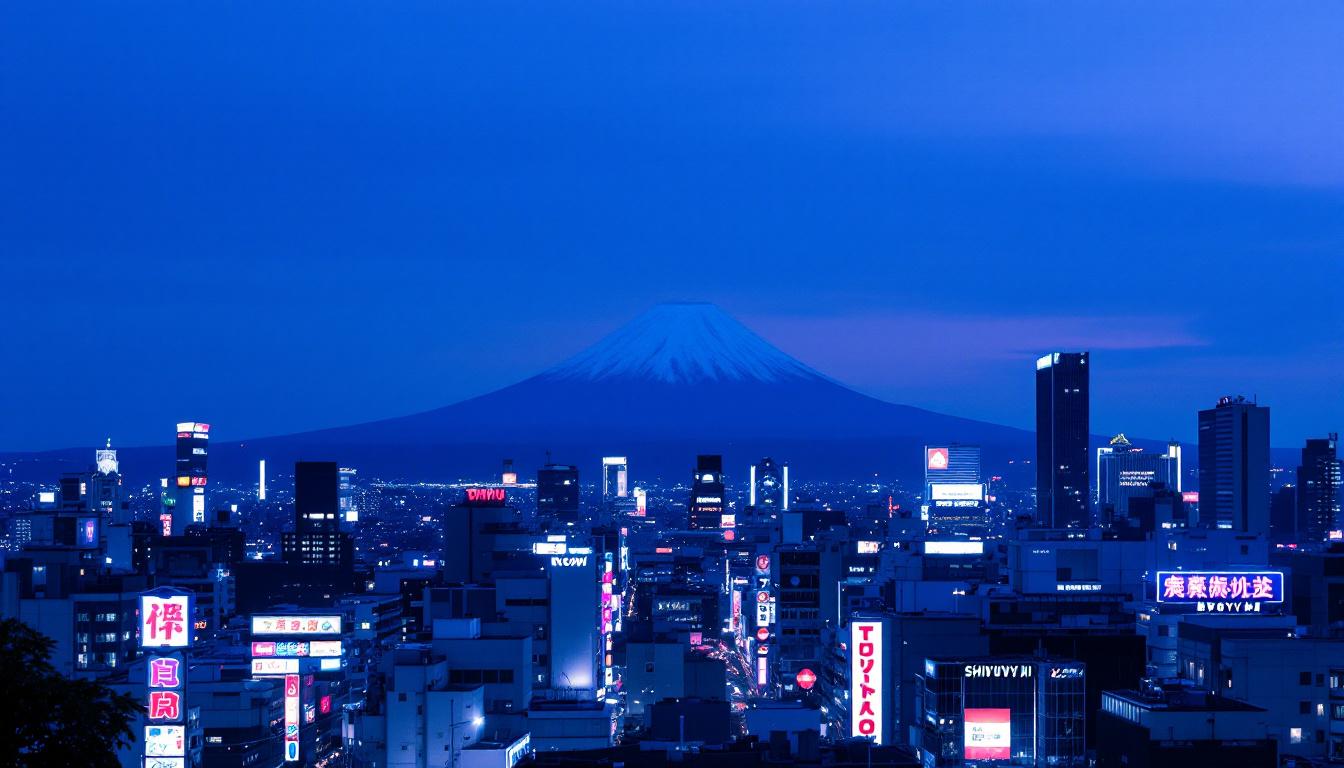
I was last in Tokyo in late September 2025, and the texture of the trip — three days, five client meetings, two dinners that mattered — confirmed a shift I had been hearing about for eighteen months but had not yet seen with my own eyes. The center of corporate Tokyo has, quietly and without much fanfare from the city itself, moved.
It has moved in three directions at once. The airport of arrival for the senior North American or European traveler is no longer Narita; it is Haneda, and the gap between the two is now decisive. The luxury-hotel map of the central business districts, which for fifteen years was effectively a contest between the Park Hyatt Shinjuku, the Mandarin Oriental Nihonbashi, the Peninsula Marunouchi, and the Ritz-Carlton at Tokyo Midtown, has been redrawn by the openings of the Aman Tokyo (Otemachi), the Four Seasons Otemachi, the Bulgari Tokyo (Yaesu), and most recently the Janu Tokyo at Azabudai Hills. And the corporate event calendar, which spent the back half of the 2010s diffused across the year, has re-tightened around three immovable peaks: the Tokyo Auto Salon in January, Japan IT Week in April, and CEATEC in October.
What follows is the briefing I would hand to a senior traveler — a managing director, a sales lead, a partner — flying into Tokyo for the first time in three or four years and wanting to know what has actually changed.
NRT vs HND: the airport question is now settled
The slot reallocation that followed the 2024 expansion of international capacity at Haneda was, in retrospect, the single most consequential change for business travel into Tokyo in a decade. Before 2024, the rough split was that Narita handled the majority of long-haul international service and Haneda took a curated set of premium routes plus most of the Asia-Pacific traffic. After the reallocation, the major North American and European carriers — American, Delta, United, Air Canada, British Airways, Lufthansa, Air France, KLM, and All Nippon Airways and Japan Airlines on the home-carrier side — moved the bulk of their premium services through HND.
The operational consequence for a business traveler is straightforward. From Haneda, the drive into the central business districts is 25 to 40 minutes depending on traffic. From Narita, it is 70 to 110 minutes by car, or roughly 60 to 75 minutes by Narita Express plus a Tokyo Station transfer. For a one-day round trip, which is increasingly common on the Tokyo-Singapore and Tokyo-Seoul corridors, that delta is the difference between productive meetings and a wasted afternoon.
There are still reasons to fly into Narita. Low-cost carriers — Peach, Jetstar Japan, Spring Japan, Zipair — operate predominantly out of NRT. A handful of Asia-Pacific routes, including some Cathay Pacific, EVA Air, and China Airlines services, remain at Narita for scheduling reasons. And if you are connecting onward to a domestic or regional flight on a non-Japanese carrier, the connection patterns at Narita are sometimes cleaner. But for the typical inbound business traveler from New York, San Francisco, London, Frankfurt, or Singapore, Haneda is now the default and Narita is the exception.
A note on ground arrangements. Haneda has three terminals: Terminal 1 (JAL domestic), Terminal 2 (ANA domestic and some international), and Terminal 3 (most international long-haul). Hotel pickup is straightforward at all three, but the pickup zones at Terminal 3 are spread across two levels and the curbside layout is not intuitive. For a first arrival, hotel-arranged car service with a meet-and-greet at the arrivals hall is worth the additional ¥3,000 to ¥5,000 over the curbside-pickup tier — it removes the only point of operational friction in the entire arrival flow.
The luxury hotel reshuffle: six brands for one corridor
The story of Tokyo’s premium hotel market over the past five years is the story of a single corridor — the eight-block stretch from Otemachi south through Marunouchi to Yaesu and Nihonbashi — absorbing six top-tier brand openings. The competitive dynamics are now genuinely complicated, and the answer to “where should I stay” depends on what you are doing in the city.
Aman Tokyo (Otemachi)
The Aman, which occupies the top six floors of the Otemachi Tower, has been the connoisseur’s choice in Tokyo since it opened in 2014, and it remains the property that the most experienced corporate travelers cite first. The 84 keys are large by Tokyo standards (the entry-level room is 71 square meters), the 30th-floor lobby with the central ikebana installation is one of the great hotel spaces in the world, and the location — directly above the Otemachi metro station and a four-minute walk from Tokyo Station — is operationally as good as Tokyo gets. The newly added Italian restaurant Arva, on the 33rd floor, has become a serious destination dinner since its menu refresh in late 2025.
The catch with the Aman is price discipline. Rack rates for the entry-level Deluxe Room have moved from roughly ¥160,000 in 2019 to ¥230,000-¥280,000 in early 2026, and the property runs at high occupancy in March, April, October, and November. Corporate rates exist but are not aggressive.
Four Seasons Otemachi
The Four Seasons opened its Otemachi property in 2020 and it has, in the five years since, become the operational workhorse for the senior financial-services traveler. The location is one block from the Aman and the building — purpose-built rather than retrofitted — gives the property genuine ballroom and meeting-room capacity that the Aman does not have. The 39th-floor Pigneto restaurant has the best skyline view of any hotel restaurant in central Tokyo, and the 193 keys mean that corporate availability is more reliable than at the Aman.
The Four Seasons is the property that I most often recommend for first-time senior visitors to Tokyo whose meetings are in the Otemachi-Marunouchi-Nihonbashi corridor. It is not the most distinctive hotel in the city, but it is the most operationally consistent one at the top of the market.
Peninsula Tokyo (Marunouchi)
The Peninsula, which opened in 2007 and remains the longest-tenured of the modern luxury entrants, sits directly opposite the Imperial Palace gardens and the Hibiya Park on one side and the Marunouchi business district on the other. The 314 keys give it the largest premium inventory among the city’s true luxury properties, and the rooftop Peter restaurant and bar remains a reliable client-dinner option with views that hold up against anything in the Otemachi cluster.
What distinguishes the Peninsula in 2026 is the consistency of its service program — the brand’s signature page-and-pin system still functions in Tokyo with the precision it has lost in some of the other Peninsula cities — and the fact that its Rolls-Royce Phantom Extended Wheelbase fleet (six cars, available for guest transfers at a premium) is the most discreet airport-pickup option in the city.
Bulgari Tokyo (Yaesu)
The Bulgari opened in April 2023 on the top seven floors of the Tokyo Midtown Yaesu tower, directly across the road from Tokyo Station’s Yaesu exit, and it has become — somewhat to my surprise — the property where I now most often find younger senior executives staying. The 98 keys are smaller in number but generous in size, the Niwa Spa is the most ambitious wellness program at any Tokyo hotel, and the Il Ristorante Niko Romito on the 40th floor (a Bulgari hallmark) has held its standards more consistently than the equivalent rooms in the brand’s Milan and Paris properties.
The Bulgari’s design language — the gold-leaf-and-walnut palette, the Italianate finish — reads as more confident than corporate, which makes it a good choice for senior travelers whose meetings are with creative or consumer counterparties rather than financial-services ones.
Mandarin Oriental Tokyo (Nihonbashi)
The Mandarin, which opened in 2005 above the Nihonbashi Mitsui Tower, was for many years the default high-end choice in Tokyo and remains one of the most operationally sound. The 178 keys, the Michelin-starred Sushi Shin and Signature restaurants, and the location — six minutes’ walk from Tokyo Station and inside the Nihonbashi historical district — make it a strong second choice if the Aman and Four Seasons are full.
What has changed at the Mandarin in 2026 is the spa: the renovated 37th-floor spa, reopened in October 2025, is now genuinely competitive with the Bulgari’s, which had eclipsed it after the 2023 Bulgari opening.
Janu Tokyo (Azabudai Hills)
The Janu, the new sister brand from the Aman group, opened in March 2024 as the anchor hotel of the Azabudai Hills mixed-use development and it represents the single most interesting addition to the Tokyo luxury map in the past three years. The 122 keys are positioned at a price point roughly 25 percent below the Aman’s, the wellness program (four pools, eight treatment rooms, a 25-meter lap pool) is on a scale that no other Tokyo hotel has attempted, and the eight in-house restaurants — including the Japanese-French Iigura and the Italian Maremma — make it a genuine destination property rather than a transit hotel.
The Janu’s location, between Roppongi and Toranomon, makes it the obvious choice for a corporate traveler whose meetings are with the technology, media, or consumer companies clustered in Roppongi Hills and Toranomon Hills. For Otemachi or Marunouchi meetings, the 15-to-25-minute commute is enough friction to make one of the Otemachi-cluster hotels preferable.
Park Hyatt Tokyo (Shinjuku)
A word on the Park Hyatt, which for two decades was the iconic Tokyo business hotel and which, after a comprehensive renovation that closed the property from May 2024 through May 2025, reopened with refreshed interiors, an upgraded New York Bar and Grill, and a recalibrated price point. The Park Hyatt remains the choice for travelers whose business is in the western corridor (Shinjuku, Ikebukuro, Shibuya) and for those with a personal attachment to the property, but the center of gravity in Tokyo’s premium hotel market has moved east. If your meetings are in Otemachi, Marunouchi, or Nihonbashi, the Park Hyatt is the wrong choice purely on commute time.
Business districts: where to stay depending on what you are doing
The shorthand below collapses three years of working assumptions, but it is accurate enough to act on.
Marunouchi and Otemachi
The financial-services and trading-house core. Mitsubishi UFJ, Sumitomo Mitsui, Mizuho, Mitsubishi Corporation, Mitsui & Co., and the Japanese arms of Goldman Sachs, Morgan Stanley, JPMorgan, and the major European banks are concentrated here. If your meetings are with banks, insurers, asset managers, or large trading houses, the Aman, Four Seasons, Peninsula, or Mandarin is the right call. Travel time to most meetings: 5 to 15 minutes on foot or by metro.
Nihonbashi and Yaesu
The eastern flank of the central business district, now reanimated by the Tokyo Midtown Yaesu and Yaesu redevelopment. The Mandarin, Bulgari, and the new Yaesu cluster have made this corridor genuinely competitive with Marunouchi for senior business travel, and the Nihonbashi side has the additional advantage of being two stops on the metro from Tokyo Station and the Shinkansen.
Roppongi, Toranomon, and Azabudai Hills
The technology, media, consumer, and venture-capital cluster. Google, Apple, Meta, Goldman Sachs Asset Management, the major consultancies, and most of the venture-capital firms operating in Japan are in one of the three Hills developments (Roppongi Hills, Toranomon Hills, Azabudai Hills) or in the surrounding Akasaka and Aoyama corridors. The Ritz-Carlton at Tokyo Midtown, the Grand Hyatt at Roppongi Hills, the Andaz Toranomon Hills, and the new Janu Tokyo are the corporate-stay defaults. The dining and entertainment options are denser than in Otemachi, which matters if your client entertainment runs late.
Shinjuku
The western corridor, anchored by the Tokyo Metropolitan Government, the Shinjuku skyscraper cluster (which still houses meaningful pharmaceutical, electronics, and conglomerate headquarters), and the major department stores. The Park Hyatt, the Hyatt Regency, the Hilton Tokyo, and the Keio Plaza are the established options. For meetings in Shinjuku, stay in Shinjuku — the commute from Otemachi during morning peak (roughly 07:30 to 09:00) is 35 to 45 minutes on the Marunouchi Line and is not what you want before an 09:00 client meeting.
Shibuya
A separate corridor that has become meaningful for technology and creative-industry travel since the Shibuya Scramble Square and the surrounding redevelopment opened in 2019. The Cerulean Tower, the Trunk Hotel, and the new Aman Niseko sister property the Aman Tokyo Shibuya (slated for 2027) will eventually anchor the cluster, but in 2026 the hotel inventory in Shibuya is still thin relative to the volume of business activity, and most senior travelers stay in Otemachi or Roppongi and commute in.
Where the deals get done: a dining note
The hard truth about Tokyo business dining is that the highest-value meals happen at small, reservation-controlled venues that almost never appear on conference itineraries or hotel-concierge top-10 lists. The sushi counters that matter — Saito, Sukiyabashi Jiro Honten, Sugita, Hatsunezushi — operate at eight to ten seats per service and are booked exclusively through introduction or, for the more accessible of them, through hotel concierges with established relationships.
For the senior traveler without that infrastructure, the practical hierarchy in 2026 looks like this.
For a first dinner with a Japanese counterparty whom you do not yet know well, the safest options are the signature restaurants at the major hotels: Sushi Shin at the Mandarin, Pierre Gagnaire at the ANA InterContinental, Pigneto at the Four Seasons Otemachi, Maremma at the Janu, Il Ristorante Niko Romito at the Bulgari, and Arva at the Aman. These rooms book 7 to 21 days out, accept English-language reservations through the hotel concierge, and have private rooms that handle parties of 4 to 12 reliably.
For a more relationship-driven dinner once you are past the first meeting, the Ginza and Nihonbashi sushi tier (30,000 to 60,000 yen per person, 8 to 10 seats, requires Japanese-speaking introduction in many cases), the Akasaka and Kagurazaka kaiseki tier (similar price band, similar booking dynamic), and the small handful of French and Italian rooms with serious Tokyo reputations — Florilege, L’Effervescence, Sezanne at the Four Seasons Marunouchi, Den, Narisawa — are the destinations.
For client entertainment that needs to extend past the meal, the Ginza and Roppongi bar scene remains the operational answer. The High Five and Star Bar in Ginza, the Bellwood and SG Club in the Shibuya and Daikanyama corridor, and the Bulgari Bar and Janu Lounge at the new luxury hotels handle the second-venue function reliably.
A practical note on payment: Japanese restaurants at this tier are mixed on credit-card acceptance. The hotel signature restaurants take all major cards. The independent sushi and kaiseki rooms increasingly take cards but some — including a handful of the most-booked counters — remain cash-only or require advance bank transfer for large parties. Confirming the payment policy at the reservation stage, through the concierge, avoids the only meaningfully embarrassing surprise in Tokyo business dining.
Ground transportation: when to use the train and when to use a car
Tokyo’s rail network is, by international comparison, exceptional. The combined JR East and Tokyo Metro and Toei Subway system covers central Tokyo with a density and frequency that no other global city matches, and for daytime point-to-point movement inside the central business districts, it is reliably faster than any car.
For the business traveler, the practical setup is this. Load a Suica or Pasmo IC card into Apple Wallet or Google Wallet on arrival — both work on iPhones and most newer Android handsets, and topping up is done through the wallet app — and use the card for all JR, metro, Toei, and most bus fares. Single-fare paper tickets are slower at every step of the process and there is no scenario in which they are worth the time.
The cases in which a car is the right answer:
Airport transfers with luggage. The Narita Express and the Tokyo Monorail (from Haneda) both work, but with a Rimowa Topas and a second carry-on, a sedan transfer is the obvious choice. ¥18,000 to ¥25,000 from Haneda to the Otemachi or Marunouchi hotels, ¥35,000 to ¥45,000 from Narita.
Late-evening client entertainment. The last trains on most central Tokyo lines run between 00:00 and 00:30 — earlier on weekends — and any dinner that runs past 22:30 carries real risk of missing the last train home. The taxi fleet is large and reliable but the surge dynamics on Friday and Saturday nights in Ginza and Roppongi are real.
Multi-stop days that cross the city more than twice. If you have meetings in Otemachi at 09:00, Roppongi at 11:30, Shinjuku at 14:00, and Ginza at 17:00, a half-day car booking (¥45,000 to ¥75,000 depending on vehicle class) saves time and clothing wear.
Movement in formal attire during the humid season. July through mid-September in Tokyo is genuinely punishing — temperatures of 33 to 37 degrees with 70 to 85 percent humidity — and any walk longer than five minutes in business dress is a problem. During these months I default to cars for any movement that involves transit between hotel and meeting site.
The premium chauffeur tier — the hotel-arranged Mercedes S-Class, Lexus LS, or, at the Peninsula, the Rolls-Royce Phantom — is meaningfully more discreet than ride-hailing through Uber, GO, or DiDi, and for client pickups and senior-executive movement it is the right call. The ride-hailing apps work well for routine personal use but the vehicle and driver quality is more variable.
When Tokyo business travel peaks in 2026
Three corporate events anchor the 2026 calendar, and any business trip planned in or around them needs to account for the hotel and transportation pressure they generate.
Tokyo Auto Salon (15-17 January 2026, Makuhari Messe)
The largest aftermarket and motorsport-adjacent automotive show in Asia, drawing roughly 320,000 attendees over three days. The Makuhari Messe convention complex is in Chiba prefecture rather than central Tokyo, but the demand spillover into the Ginza, Shimbashi, and Tokyo Station hotel clusters is significant — rates at the Imperial Hotel, the Conrad Tokyo, and the Royal Park Iconic Tokyo Shiodome rise by 30 to 50 percent during the three event nights, and the Yurakucho and Ginza dinner reservations are tight.
Japan IT Week Spring (22-24 April 2026, Tokyo Big Sight)
The largest enterprise IT and software show in Japan, increasingly important for cloud, AI, cybersecurity, and SaaS vendors. The April timing is the operational problem: it coincides with cherry-blossom peak (which in 2026 falls between 26 March and 8 April for central Tokyo) and the immediately following Golden Week (29 April through 6 May), and hotel availability in the Tokyo Bay corridor and central business districts during the April 20-28 window is the single tightest hotel period of the year.
CEATEC (20-23 October 2026, Makuhari Messe)
The major consumer electronics and IoT show, hosting roughly 90,000 visitors and drawing the senior delegations from the major Japanese electronics and consumer-technology companies. The corporate-travel pressure is concentrated in Makuhari and the Tokyo Station and Yaesu corridor; hotels in those areas run at 95-plus percent occupancy during the four event nights.
Other windows to know
Beyond the three major shows, three calendar features generate real planning friction. Golden Week (29 April through 6 May 2026) — many Japanese counterparties are unavailable, and corporate offices effectively close for the three central days. The Obon period in mid-August (the dates shift but the peak is the week of 10-17 August) — similar pattern, with the senior management of many Japanese companies traveling. And the New Year holiday from late December through the first three or four working days of January — schedule any January business for after 8 January rather than the first business day of the year.
Two windows that are particularly good for business travel: late February through early March (after the New Year reset, before the cherry-blossom and Golden Week pressure), and mid-November (after CEATEC, before the year-end wind-down).
What this means for the 2026 traveler
The summary I would give a colleague flying into Tokyo for the first time in three years is short. Fly into Haneda unless you have a specific reason not to. If your meetings are in Otemachi or Marunouchi, stay at the Aman, Four Seasons, or Peninsula. If they are in Roppongi or Toranomon, stay at the Janu, the Ritz, or the Grand Hyatt. Use the metro during the day and a hotel-arranged car at night. Book the dinners that matter through the hotel concierge two to three weeks out and accept that the best counters require a relationship you may not yet have. Avoid the April 20 to 28 window unless the trip is unavoidable, and plan around — not through — Golden Week and Obon.
The deeper point is that Tokyo in 2026 is operationally easier for the senior business traveler than it has been at any point in the past decade. The hotels are better. The airport is closer. The dining at the hotel signature-restaurant tier is genuinely competitive with the independent room above it. The city has, after a long stretch of overcautious leisure-tourism recovery, returned to the rhythm that made it one of the great corporate-travel destinations in the first place. The senior business traveler who has been postponing the Tokyo trip since 2023 should book it now.