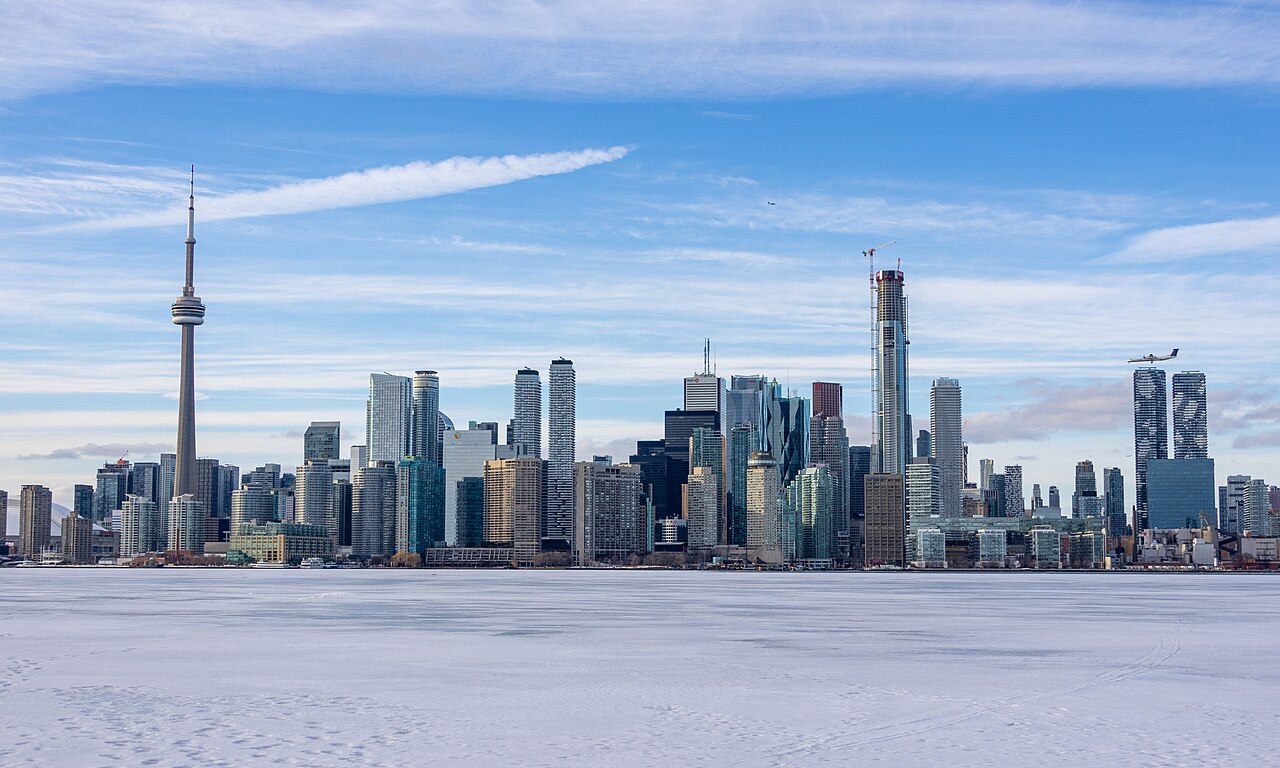
The brief I had hoped to write in 2024 — that Toronto had settled into a stable post-pandemic operating rhythm for the senior business traveler — turned out to be premature by approximately eighteen months. The combination of the 2024 US tariff cycle, the materially changed cross-border business-travel pattern that followed, Porter Airlines’ 2025 transcontinental expansion, and the relocation of the Collision conference to Vancouver in June 2025 produced enough material change that I held the piece. What follows is the 2026 version, written from the perspective of the senior corporate traveler — banker, lawyer, principal investor, corporate-development executive — who is in Toronto between four and ten times a year, for two to four nights at a time, and who needs to make airport, hotel, ground-transport, and dining decisions at speed.
The headline is this. Toronto remains, in 2026, the operational center of Canadian finance, the second-largest North American banking capital after New York, and the city where the great majority of US-Canada cross-border corporate work physically happens. The operating manual has changed in three ways since 2023. Billy Bishop (YTZ) has become a credible primary choice for any US business traveler whose origin is in Porter’s expanded network. The Bay Street hotel layer has deepened with the 2024 opening of the 1 Hotel Toronto and the maturation of the Park Hyatt’s post-renovation operation. And the US-Canada cross-border business-travel pattern has lengthened, deepened, and become more reliant on NEXUS infrastructure than it was three years ago. I will work through each in turn.
The Airport Question
Toronto has two commercial airports that the corporate traveler should consider. The decision between them is now, in 2026, more interesting than it was two years ago.
Toronto Pearson International Airport (YYZ)
Pearson remains, by passenger volume and by route map, the dominant airport for Toronto-bound business travel. The 2025 traffic figure of approximately 51 million passengers makes YYZ the second-largest international airport in North America by international traffic, behind only New York JFK. Terminal 1 absorbs Air Canada (including Air Canada Express, Rouge, and the Star Alliance partner traffic — United, Lufthansa, Swiss, Air China, ANA, Singapore Airlines, Turkish Airlines, EVA, Ethiopian) and all of the US-preclearance operation. Terminal 3 serves the SkyTeam carriers (Delta, Air France, KLM, Korean), the oneworld carriers (American, British Airways, Cathay Pacific, Qatar Airways, JAL, Iberia, Finnair), and the unaligned international traffic.
For the senior US business traveler, the operationally relevant fact about YYZ is the US-preclearance facility in Terminal 1, which clears US Customs and Border Protection on the Canadian side and allows arriving flights at US destinations to be treated as domestic. The preclearance hall throughput, which had been a chronic friction point through 2022 and 2023, has materially improved since the May 2024 expansion that added eight additional CBP booths and four additional NEXUS Sentri lanes. The 2026 average wait time at the NEXUS Sentri lane in the morning peak (07:00-09:00 southbound) is approximately seven minutes; the standard-line wait time is approximately 22 minutes. For the regular cross-border business traveler, NEXUS enrollment is, in 2026, no longer optional — it is the operational baseline.
The ground-transport answer at YYZ is the UP Express train to Union Station, which runs every 15 minutes, takes 25 minutes from terminal-side to downtown, and costs 12.35 Canadian dollars one-way. From Union Station, the walking time to the Royal Bank Plaza, the Toronto-Dominion Centre, First Canadian Place, and the Brookfield Place tower complex is between four and nine minutes. For the traveler with luggage or a multi-stop afternoon, a chauffeur from YYZ to Bay Street is 35-50 minutes in light traffic and 70-90 minutes in the worst case I have observed (Friday afternoon westbound, Sunday evening eastbound, weather-affected midday in any season). The 401 westbound at 17:00 on any weekday is not a place to schedule arrival-to-meeting transitions of less than 90 minutes.
The Pearson long-haul network is now thicker than at any point in the airport’s history. Air Canada operates daily nonstop service to Tokyo Haneda, Tokyo Narita, Seoul Incheon, Hong Kong, Shanghai Pudong, Beijing, Taipei, Mumbai, Delhi, Bengaluru, Dubai, Tel Aviv (suspended for portions of 2023-2024, resumed in October 2025), Frankfurt, Munich, Paris CDG, London Heathrow, Zurich, Geneva, Vienna, Brussels, Amsterdam, Copenhagen, Lisbon, Madrid, Barcelona, Rome Fiumicino, Athens, and Istanbul. The transpacific operation in particular has expanded materially in 2025-2026, with the new Bengaluru route (launched September 2025) reflecting the actual corporate-travel demand to South Asia rather than the leisure-tilted Delhi-Mumbai pattern of the prior decade.
Billy Bishop Toronto City Airport (YTZ)
This is where the 2026 brief diverges most sharply from 2023.
Billy Bishop, on the Toronto Islands at the southern edge of the downtown, has, since the 2024-2025 Porter Airlines fleet transition from the De Havilland Q400 turboprop to the Embraer E195-E2 jet, become a materially different airport. The runway constraints that had limited YTZ to short-haul turboprop service for thirty years were partially relaxed by the 2024 tripartite-agreement amendment, which allowed the operation of the E195-E2 with its lower-emissions and lower-noise profile to nine US destinations on a phased basis through 2027. Porter’s 2026 network from YTZ now includes nonstop service to Boston (four daily), New York Newark (six daily), Washington DCA (three daily), Chicago Midway (three daily), Philadelphia (two daily), Raleigh-Durham (one daily, launched March 2026), and Orlando (one daily, leisure-tilted). The Air Canada Express operation, which had been the secondary carrier at YTZ, has retained Q400 service to Montreal, Ottawa, Quebec City, and Halifax.
For the US-origin business traveler whose calendar lives between University Avenue and Bathurst Street — which is to say, the Financial District, the King-Spadina corridor, and the southern half of King West — YTZ is, in 2026, the rational primary choice. The wheels-down-to-Bay-Street time is reliably 18 minutes, broken down as follows. The aircraft taxis to the YTZ terminal in two-to-three minutes. The arrivals processing, which is genuinely small-airport in scale, takes four-to-six minutes from gate to street side. The 250-metre pedestrian tunnel from the terminal to the mainland, which opened in 2015 and which has now operated reliably for over a decade, takes approximately three minutes including the moving walkways. From the mainland side at the foot of Bathurst Street, the 509 Harbourfront streetcar to Union Station is six minutes, or a chauffeur to the Toronto-Dominion Centre is seven-to-eleven minutes in any traffic condition I have observed. The total wheels-down-to-desk time is, in normal operating conditions, between 16 and 22 minutes.
The trade-offs at YTZ are three. The route map remains constrained — it covers the eastern US business cities credibly, but does not reach the West Coast, Dallas, Houston, Atlanta, or any international destination other than the US. The 23:00 curfew is firm and means that any same-day round-trip with an evening meeting needs to be planned with departure from YTZ before approximately 21:30. And the weather sensitivity is meaningfully higher than at YYZ — heavy snow, severe thunderstorms, and dense fog produce a higher rate of diversion-to-YYZ than at the larger airport. For 2026, I would, for any meeting south of Bloor Street with a US-origin city in Porter’s network, default to YTZ and treat YYZ as the fallback for long-haul, transcontinental US, and weather-disrupted operations.
The Hotel Decision
The Toronto corporate-hotel layer has, in the past three years, deepened more than I had expected. The pre-pandemic ordering — the Four Seasons at the top of Yorkville, the Shangri-La as the University Avenue alternative, the Hazelton as the Yorkville boutique, the Ritz-Carlton at the convention end, the Park Hyatt in its long renovation closure — has been re-arranged by the maturation of the St Regis post-2017 rebrand, the 2021 reopening of the Park Hyatt, the November 2024 opening of the 1 Hotel Toronto, and the relative steadying of the Bisha as a King West specialist.
I will work through the choice by corridor.
Yorkville
Yorkville — the four-block luxury-retail and high-end-dining district north of Bloor Street between Avenue Road and Yonge Street — remains the default for visiting US private-equity principals, the senior leadership of US and European corporate parents visiting their Canadian subsidiaries, and the long-tenured business traveler who has stayed in Toronto twenty or more times.
The Four Seasons Toronto, at Yorkville Avenue and Bay Street, is the property that the long-tenured business traveler is most likely to call home. The current building, which opened in October 2012 as the relocated and reimagined Four Seasons flagship (the prior 1972 property at Avenue Road and Yorkville closed simultaneously), is approaching its fifteenth year of trading and has reached the operating maturity that the property’s reputation has implied since opening. The 259 guest rooms are larger than the comparable Toronto luxury inventory; the Cafe Boulud relationship, which had been the property’s culinary anchor through 2019, was succeeded in 2022 by the d|bar concept and in 2024 by the current chef-driven program; and the spa floor remains, in 2026, the most consistently excellent in the city. 2026 ADR at the entry tier sits at approximately 1,150 Canadian dollars, and at the Yorkville suite tier at 3,400 Canadian dollars and above.
The Hazelton, on Yorkville Avenue at the eastern edge of the Hazelton Lanes complex, remains the property for the visitor who wants Yorkville geography without the Four Seasons social density. The 77 rooms are larger than the Four Seasons inventory at the entry tier, the service culture is more discreet, and the One Restaurant by Mark McEwan continues to operate as the Yorkville lunch room of record for the city’s senior corporate-advisory community. 2026 ADR at the entry tier sits at approximately 950 Canadian dollars. The property is a member of Leading Hotels of the World, which the Four Seasons is not, and the cross-property recognition matters for some travelers.
The Park Hyatt Toronto, on Avenue Road at Bloor Street, reopened in October 2021 after the four-year, 165-million-dollar renovation that materially changed the property’s positioning. The 219 rooms are now meaningfully larger than the pre-renovation inventory; the 17th-floor Writers Room bar, which retains the property’s mid-century Toronto-literary association, is now the most consistently excellent hotel bar in the city; and the Joni restaurant on the lobby level has, since chef Steven Song’s 2024 arrival, become a credible corporate-dinner option in its own right. 2026 ADR sits at approximately 875 Canadian dollars at the entry tier. The Park Hyatt is, in 2026, the property that most consistently meets the expectations that its pre-2017 reputation had built — three years into the post-renovation operating rhythm, the service consistency has finally caught up to the physical product.
Bay Street and the Financial District
The Financial District corridor — the eight square blocks bounded by Yonge, Queen, University, and Front — was, until approximately 2022, materially under-served by top-tier hotel inventory. The 2017 rebranding of the former Trump Toronto into the St Regis Toronto, the 2024 opening of the 1 Hotel Toronto, and the Ritz-Carlton’s 2011-vintage operation at Wellington and Simcoe have, between them, transformed this corridor into a credible alternative to Yorkville for the visitor whose calendar lives entirely south of Bloor.
The St Regis Toronto, on Bay Street between Adelaide and Wellington, is the closest top-tier hotel to the actual Bay Street banking towers. The 65-storey building (the hotel occupies floors 31-50, with private residences above) was originally built as the Trump International Hotel and Tower Toronto in 2012, transitioned to the St Regis brand in 2017, and has, since approximately 2023, reached the service maturity that the brand expects. The Astor Lounge on the 31st floor is the property’s principal corporate-meeting space; the Louix Louis restaurant on the 31st floor is the highest-floor fine-dining room in the city. 2026 ADR sits at approximately 950 Canadian dollars at the entry tier, and the St Regis butler service, which is uneven at some properties in the brand, is, at the Toronto property, reliably excellent.
The 1 Hotel Toronto, at Adelaide and Yonge, opened in November 2024 as the first new top-tier hotel in the actual Financial District in over a decade. The 132 rooms occupy a re-clad mid-rise building; the sustainability positioning is consistent with the brand’s other properties in New York, Miami, and West Hollywood; and the building’s lobby-level Casa Madera restaurant has, in its second year of trading, become a credible lunch option for the corporate-advisory community. 2026 ADR sits at approximately 780 Canadian dollars at the entry tier. The 1 Hotel is, in 2026, the property that the sustainability-conscious traveler — increasingly common among European and West Coast US principals — defaults to first.
The Ritz-Carlton Toronto, at Wellington Street West and Simcoe, occupies the southern edge of the Financial District near the MTCC and the Roy Thomson Hall. The 263 rooms have been in operation since 2011, the property has just completed its second comprehensive room refresh in late 2025, and the TOCA restaurant on the lobby level remains a reliable Italian-American corporate-dinner option. The DEQ Terrace, which opens seasonally on the property’s southern terrace from May through October, is the corporate-cocktail venue of choice for the financial-district summer calendar. 2026 ADR sits at approximately 825 Canadian dollars at the entry tier.
University Avenue
The University Avenue corridor — the ceremonial boulevard between Queen Street and Bloor Street that runs past the Ontario legislature, the major hospital cluster, and the U of T downtown campus — has, since 2012, been anchored by a single luxury property.
The Shangri-La Toronto, on University Avenue at Adelaide, occupies the lower 17 floors of a 66-storey condominium tower designed by James K. M. Cheng. The 202 rooms have been in operation since August 2012, the property completed a comprehensive service refresh in 2024 under new GM leadership, and the Bosk restaurant on the second floor has, since chef Daniel Boulud’s involvement ended in 2018, been operated as a property-led concept that has steadied considerably under the current culinary direction. The lobby-level Lounge, which had been operating as a relatively quiet space through 2022-2023, has, since the 2024 service refresh, become one of the better mid-afternoon meeting venues in the city. 2026 ADR sits at approximately 925 Canadian dollars at the entry tier.
The Shangri-La is, in 2026, the property of choice for the Asian and Middle Eastern principal-investor community visiting Toronto. The brand recognition, the proximity to the legal and corporate-advisory cluster on Adelaide (Davies Ward Phillips, Stikeman Elliott, Goodmans, Torys), and the cross-property loyalty integration with the Shangri-La Singapore, Hong Kong, and Dubai properties matter materially for that traveler base.
King West and the Entertainment District
King West — the corridor along King Street west of Spadina through to Bathurst — has, since approximately 2018, emerged as the secondary corporate-hotel district for visitors whose calendars mix Financial District meetings, tech-sector and start-up engagement, and a younger restaurant scene than Yorkville.
The Bisha Hotel Toronto, on Blue Jays Way at Mercer Street, opened in 2017 as a 96-room boutique property with a Lenny Kravitz-designed top-floor suite collection and a Kost restaurant on the 44th floor. The property has, since the 2023 ownership stabilization under Lifestyle Hotels Group, settled into a consistent operating rhythm. The Bisha is the King West property of choice for the visitor who wants a downtown urban hotel that is not a brand-flag property; 2026 ADR sits at approximately 575 Canadian dollars at the entry tier.
The Thompson Toronto, on Wellington Street West near Bathurst, has been operating since 2010 and was acquired by the Hyatt Thompson brand portfolio in 2018. The rooftop pool deck, the Colette Grand Cafe lobby restaurant, and the Constantine restaurant on Wellington are the property’s anchors. 2026 ADR sits at approximately 525 Canadian dollars at the entry tier. The Thompson is, in 2026, a credible alternative for the visiting investor whose calendar is genuinely tech-tilted rather than banking-tilted.
The Dining Corridor
Toronto’s corporate-dining geography is meaningfully different from the city’s broader restaurant geography. The visiting banker, lawyer, or principal investor will, in the great majority of cases, be in one of approximately twelve rooms — the dining rooms at the major hotels, the small cluster of King Street fine-dining establishments, the Yorkville stalwarts, and the Bay Street power-lunch rooms that the long-tenured Toronto corporate community has used since the 1980s and 1990s.
The Bay Street Power-Lunch Rooms
Canoe, on the 54th floor of the TD Bank Tower at the corner of Wellington and Bay, has, since its 1995 opening under the Oliver and Bonacini group, been the lunch room of record for the Canadian banking establishment. The dining room is genuinely Canadian in its sourcing (the Yukon char, the Quebec foie gras, the British Columbia oysters), the floor-to-ceiling windows look south across the lake to Buffalo on a clear day, and the table assignments at lunch reflect the social structure of the corner of Bay and King in a way that the long-tenured visitor learns to recognize. Lunch reservations are, in 2026, genuinely difficult to secure within seven business days; the property recommends concierge or executive-assistant booking.
Cibo Wine Bar King West, on King Street near Portland, is the Italian alternative that the Bay Street community uses when Canoe is unavailable or when the meeting tone is genuinely social rather than transactional. The room is louder, the lunch service is faster, and the wine list — which is genuinely one of the better Italian-focused lists in the city — has been refreshed under the current sommelier in 2024-2025.
Bymark, in the basement of the Toronto-Dominion Centre, has been operating since 2002 under Mark McEwan and remains the Financial District lunch room for the corporate-advisory community whose offices are at 66 Wellington, 100 Wellington, or the surrounding TD Centre towers. The room is quieter than Canoe, the service is more discreet, and the lunch menu has remained essentially unchanged in form for over twenty years.
The Yorkville Cluster
Sotto Sotto, on Avenue Road just north of Bloor, is the Italian room that the visiting US private-equity principal will almost certainly be taken to at some point in their Toronto career. The basement dining room, the consistent Northern Italian preparation, and the table-side service have not changed materially since the property opened in 1991, and the room continues to operate as one of the city’s reliable senior-dinner venues.
Sassafraz, on Cumberland Street in the heart of the Yorkville pedestrian core, is the lunch room of record for the Yorkville luxury-retail and entertainment-industry community, and is, during the Toronto International Film Festival in September, the most heavily reserved restaurant in the city.
One Restaurant, in the Hazelton Hotel, has, since the property’s 2007 opening under Mark McEwan, operated as a Yorkville lunch and dinner room that the long-tenured corporate-advisory community uses for senior client entertainment. The room is materially quieter than Sassafraz, the service is more deliberate, and the lunch reservation density is meaningfully lower.
The King West Restaurant Cluster
The King-Spadina corridor — King Street between Spadina and Bathurst, the surrounding north-south side streets, and the King Street West extension through to Strachan — has, since approximately 2015, emerged as the city’s senior restaurant district for visitors whose tastes are more contemporary than the Yorkville room set.
Alo, on Spadina Avenue at the corner of Queen, has, since its 2015 opening under chef Patrick Kriss, become the city’s principal fine-dining room and the restaurant that the visiting US or European principal investor is most likely to request. The third-floor dining room is genuinely intimate; the tasting menu is the only service offered; and the wine pairing program has, since the 2023 expansion of the cellar, become competitive with any in North America. Reservations open 30 days in advance and clear within 90 seconds on the booking system.
Edulis, on Niagara Street in the Niagara neighborhood west of King-Spadina, has, since 2011, operated as the city’s principal seafood-and-truffle restaurant under chefs Tobey Nemeth and Michael Caballo. The dining room is small (32 seats), the seasonal truffle programming in October-December and March-April is genuinely exceptional, and the room is, in 2026, the city’s most consistently excellent fine-dining alternative to Alo.
Buca, on King Street West at Portland in the basement of a converted warehouse, has been operating since 2009 and remains the city’s principal contemporary-Italian room. The wood-fired oven, the cured-meat program, and the consistently excellent pasta have not changed materially in over fifteen years, and the room continues to function as a senior dinner venue for the King West tech and creative-industry community.
The Peak-Week Calendar
Toronto’s business-travel calendar is, in 2026, materially less compressed than London’s, New York’s, or Frankfurt’s, but several windows produce reliable inventory and pricing peaks that the visiting traveler should know about.
The Toronto International Film Festival (10-20 September 2026) is the single most material peak window in the Toronto hotel calendar. The Yorkville inventory — Four Seasons, Hazelton, Park Hyatt, Windsor Arms — is effectively sold out the preceding Wednesday through the following Sunday. The King West inventory (Bisha, Thompson, 1 Hotel King West, Hotel X) is sold out for the festival’s first weekend. Rates run 80-140% above shoulder, and the corporate-traveler experience in Yorkville during festival week is genuinely compromised by the volume of media, talent, and industry traffic. The 2026 festival’s industry programming, which is genuinely valuable for the entertainment-finance community, is concentrated in the first six days; the back end of the festival is more leisure-tilted and less corporate.
The Prospectors and Developers Association of Canada (PDAC) convention (1-4 March 2026) is the most reliably elevated mining-sector week of the year and produces a three-night spike in Financial District and Yorkville inventory. The convention itself is at the MTCC; the corporate-entertainment activity is at the Hockey Hall of Fame, the Royal Ontario Museum, and a rotating cast of King West and Yorkville rooms. PDAC week is, for the global mining-sector executive, the equivalent of the Detroit auto show in its peak years.
The RBC Capital Markets Canadian Bank CEO Conference (early January 2026, dates released in November 2025) and the CIBC Western Institutional Investor Conference (late January 2026) are the bookends of the Q1 banking-corridor calendar. Both produce two-to-three-night spikes in Financial District inventory and are the primary reason the Bay Street hotel corridor runs roughly 25-35% above December rates throughout January.
The Collision conference, which had been the largest June peak-week event in Toronto through 2024, moved to Vancouver in June 2025 and remains in Vancouver for 2026 and 2027. The consequence for Toronto’s June pricing is materially softer rates than any June since 2019 — for the visiting traveler with calendar flexibility, June 2026 is one of the better windows in the year to book Yorkville or Financial District inventory at shoulder rates.
The Cross-Border Travel Pattern
The US-Canada cross-border business-travel pattern, which is the single most important demand driver for Toronto’s corporate-hotel and air-travel inventory, has shifted materially since the 2024 tariff cycle. I will note the three changes that the senior traveler should understand.
First, the average length of stay for US business visitors to Toronto has lengthened from approximately 2.3 nights in 2023 to approximately 2.9 nights in 2026, per Tourism Toronto’s 2025 disclosure and the major hotel groups’ confirmed figures. The driver is the operational reality that cross-border supply-chain, regulatory, and corporate-development work now requires more in-person meetings per trip — the same-day round-trip pattern that defined the Porter YTZ proposition pre-2024 has partially given way to a one-night or two-night overnight pattern. Hotel demand at the Shangri-La, St Regis, and Bisha on Monday-through-Thursday nights now runs roughly 12% above 2023 levels.
Second, NEXUS enrollment among US-based corporate travelers has, per the CBSA’s 2025 disclosure and anecdotal corporate-travel-manager reporting, grown by approximately 40% since 2023. The NEXUS Sentri lanes at YYZ Terminal 1 US-preclearance are now the operational baseline for the regular cross-border business traveler; the standard-line wait time has compressed somewhat (now approximately 22 minutes in the morning peak versus approximately 35 minutes in 2023), but the gap between the NEXUS lane and the standard lane remains large enough that NEXUS enrollment is, in 2026, the single highest-return administrative investment a regular Toronto-bound US business traveler can make.
Third, the directional pattern of the US-Canada cross-border business-travel flow has shifted modestly toward inbound-to-Toronto. Canadian outbound business travel to the US is approximately 8% below 2023 levels, per the Canadian Bureau of Statistics’ 2025 release; US inbound business travel to Toronto is approximately 5% above 2023 levels. The driver is, again, the changed regulatory and supply-chain calculus, and the consequence is that Toronto’s corporate-hotel inventory is, in 2026, running at higher US-source occupancy than at any point since 2018.
A Practical Recommendation Set
For the senior US-origin business traveler with a calendar that mixes Bay Street, Yorkville, and King West engagement, the operating manual I would write for 2026 is the following.
Fly into Billy Bishop (YTZ) if Porter operates a nonstop from the origin city and the meeting calendar lives south of Bloor. Fly into Pearson (YYZ) Terminal 1 for everything else, and treat NEXUS enrollment as table-stakes. Use the UP Express from YYZ to Union Station — it is, in clock-time, faster than a chauffeur in any peak-hour scenario.
Stay at the Four Seasons Toronto for the default Yorkville positioning. Stay at the St Regis Toronto for the default Bay Street positioning. Stay at the Park Hyatt Toronto if Yorkville is right but the Four Seasons is unavailable, or if the Writers Room bar is a meaningful part of the calendar. Stay at the 1 Hotel Toronto if the sustainability positioning matters to the traveler or the trip. Stay at the Hazelton if Yorkville is right but the Four Seasons social density is wrong for the calendar.
Block lunch at Canoe for the senior banking meeting that needs a Bay Street view. Block lunch at Bymark for the Financial District meeting that needs to be quieter. Block dinner at Alo for the senior client entertainment that needs to be the city’s best room. Block dinner at Sotto Sotto for the long-tenured Yorkville senior visitor who has been to Toronto twenty times.
Avoid the second week of September (TIFF). Avoid the first week of March (PDAC) if the meeting is not mining-related. Take advantage of June 2026 (post-Collision-departure shoulder rates) for any meeting that has calendar flexibility.
The Toronto operating manual is, in 2026, more interesting than it was three years ago. The corridor between Billy Bishop, Bay Street, and Yorkville is, for the senior US business traveler, the most operationally legible top-tier business-travel geography in North America after midtown Manhattan. The cross-border friction is genuine; the workarounds are mature; the city is, on the merits, worth the trip.