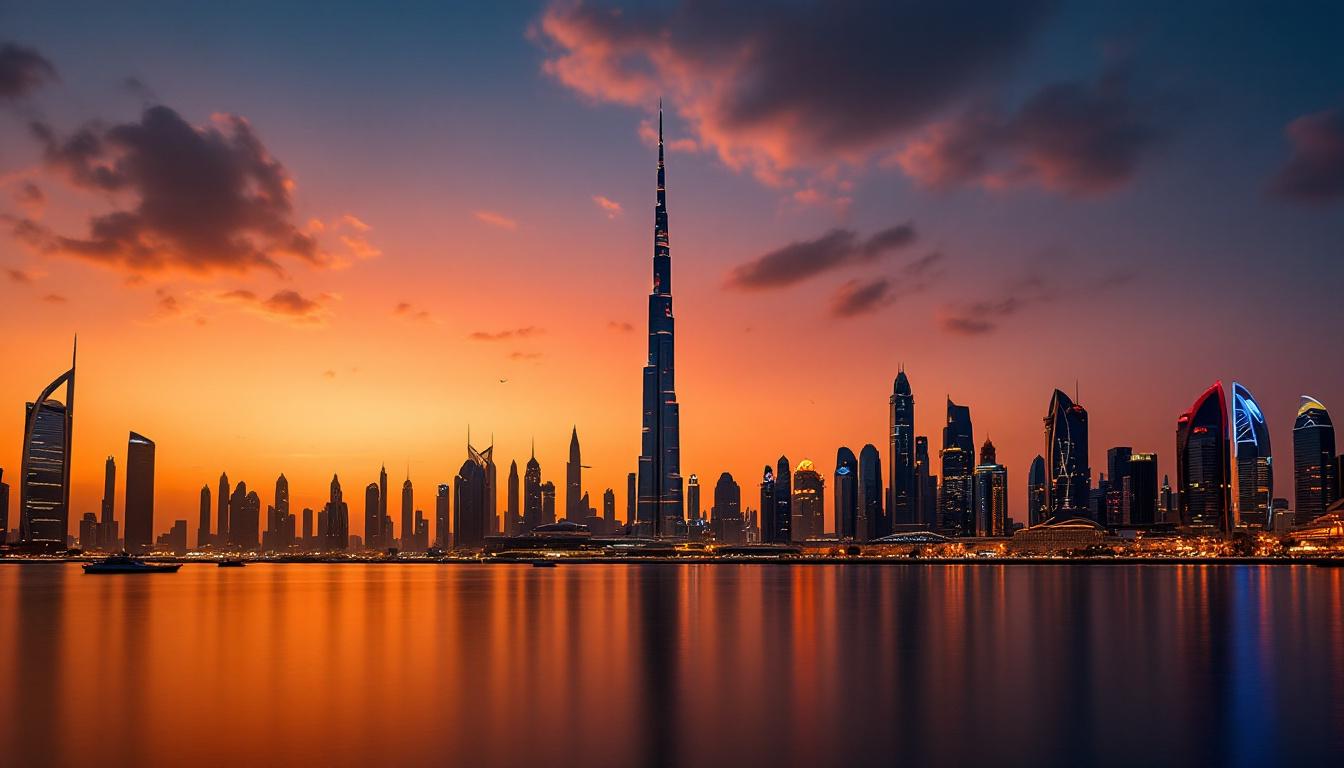
The Dubai I last reported on, in November 2024, was a city in a particular phase of its post-pandemic recovery — premium-cabin loads were strong, hotel rates were elevated but stable, and the open question among the senior corporate travel managers I spoke with was whether the new airport at Dubai South would meaningfully draw traffic away from DXB before the end of the decade.
Eighteen months on, the answers to most of those questions have crystallized, and a few new ones have surfaced. This is the Q2 2026 read on what business travel into Dubai actually looks like in practice — where the corporate flights land, where the deals get done, where executives stay, and which weeks of the calendar to plan around rather than into.
The airport question: DXB versus DWC
The short version is that DXB is still the answer for almost all corporate inbound traffic through at least 2028, and the more interesting question is what the operational migration to Al Maktoum International (DWC) is going to look like over the second half of the decade.
DXB handled 92.3 million passengers in 2025, a figure the airport’s operator, Dubai Airports, confirmed in a 14 January 2026 statement and which represents a 6.1 percent year-over-year increase. Terminal 3, the Emirates dedicated facility, accounts for roughly two-thirds of total throughput. From a corporate traveler’s perspective, the operational quality at T3 has held up well — premium-cabin and First-Class arrivals continue to clear immigration in under 15 minutes through the dedicated channels, the Emirates Chauffeur-Drive transfer (included with First and Business fares to and from most addresses within 70 kilometers) remains the gold standard among legacy-carrier ground programs, and the Concourse A First-Class Lounge — the largest such facility in the world by floor area — continues to function as the default departure lounge for senior executives transiting Dubai.
The DWC migration is happening, but on a longer horizon than the 2024 forecasts suggested. Dubai Airports’ announced timeline now targets a full operational shift from DXB to Al Maktoum International (DWC) by 2032, with Emirates’ phased widebody migration to DWC expected to begin progressively from late 2026 and the residential and infrastructure buildout — including the cabin-crew housing development between DXB and DWC announced for Q2 2026 groundbreaking — running into 2029 and beyond.
What this means for the corporate traveler in 2026 is straightforward: book DXB. The 45-to-65-minute drive from DWC to Downtown Dubai versus the 15-to-25-minute drive from DXB is the binding constraint, and it remains binding even with the new Etihad Rail line — which is now scheduled to begin passenger service between Abu Dhabi and Dubai in Q4 2026, with a connecting station at DWC but not yet a direct downtown link.
One operational caveat worth flagging. Several U.S. corporate accounts have begun receiving Emirates routing recommendations that include early DWC departure options as a return-leg, and the assumption that this represents a meaningful timesaver versus the DXB equivalent is, in our reporting, generally wrong. Any DWC departure window advantage is materially eroded by the additional ground transit time and the considerably less mature lounge product at DWC versus DXB Concourse A.
Where to stay: the five-hotel corporate tier
The Dubai luxury hotel market in 2026 has more keys than at any point in its history — the city now has 56 properties rated five-star or higher, with a combined inventory above 19,800 keys — and yet the working set of hotels that the senior corporate traveler actually uses has, paradoxically, narrowed.
The current five-hotel premium tier is the following.
Atlantis The Royal
231 keys on Palm Jumeirah, opened 10 February 2023 and now in its first full-utilization year after the typical 18-to-24-month ramp that this size of opening requires. The property’s defining characteristic, from a business-travel standpoint, is the depth of its food-and-beverage program — 17 restaurants on property, including Nobu by the Beach (a 280-cover indoor-outdoor venue that has effectively replaced the original Atlantis the Palm Nobu as the go-to corporate-entertainment Japanese venue), Resonance by Heston Blumenthal (28 covers, the most reservation-protected restaurant on the property), and La Mar by Gaston Acurio. The Royal’s Sky Pool, on the 22nd floor, is — and this is meant operationally rather than aspirationally — one of the small handful of post-meeting drinks venues that genuinely works for senior client entertainment in the 6 to 8 p.m. slot. Room rates have stabilized in the US$1,400 to US$2,200 range for standard categories and US$3,800 and above for suites.
Bvlgari Resort Dubai
101 keys on the man-made Jumeirah Bay Island, opened 2017 but only recently — call it from late 2024 onward — settled into its current position as the choice for senior executives who want privacy more than they want a brand-name beach resort experience. The Il Ristorante by Niko Romito has held its Michelin star (Dubai’s Michelin Guide entered its fourth year in 2026) and is the most consistent fine-dining option in the Dubai hotel tier. The Bvlgari’s defining operational feature is its size: 101 keys is small enough that the staff genuinely know returning guests, and the property’s check-in process — bypassing the public lobby entirely for repeat guests — is among the smoothest in the city. The trade-off is location: Jumeirah Bay Island is a 22-to-30-minute drive from DIFC depending on traffic, which makes the Bvlgari a less-than-ideal choice for executives whose meetings are concentrated downtown.
Burj Al Arab Jumeirah
202 suites on the iconic sail-shaped tower, with the property having reopened its public-facing restaurant levels on 11 February 2026 following a 14-month renovation. The reopening matters operationally because the Burj’s defining role in the corporate-entertainment calendar has always been as a venue for the high-symbolic-value client dinner — a category for which it was effectively out of the market through 2025. With Al Muntaha (the restaurant on the 27th floor, now under chef Saverio Stassi after the prior Carmine Mongiello tenure) and Al Mahara (the seafood venue surrounding the 260,000-liter aquarium) now both fully operational, the Burj has reentered the working set as the default for hosting visiting senior counterparties who have not previously been to Dubai. Rates have not moderated: the entry-level Deluxe Suite is currently quoting US$2,400 per night in shoulder season and US$3,600-plus during Airshow, Arab Health, and GITEX.
One&Only Royal Mirage
240 keys across three connected properties on Jumeirah Beach, opened 1999 and the longest-tenured property in the current premium tier. The Royal Mirage’s enduring corporate appeal is its operational discretion — the property is the default choice for senior British, German, and Swiss executives who do not want to be in the newer, more public-facing resorts on the Palm — and the quality of its restaurant Olives (Mediterranean, a fixture since opening) and Tagine (Moroccan, the most atmospheric private-dining venue in Dubai). For corporate-entertainment purposes, the Royal Mirage’s beach pavilions remain the city’s best venue for a discreet midday meeting that needs to feel social rather than transactional.
Four Seasons Resort Dubai at Jumeirah Beach
237 keys on Jumeirah Beach Road, opened 2014 and the default choice for U.S. corporate accounts because of the loyalty-program integration (Amex Fine Hotels & Resorts, Virtuoso, and the Four Seasons Preferred Partner network all run through this property at scale). The Sea Fu restaurant remains the corporate-entertainment Asian venue of choice in Jumeirah, and the Mercury Lounge — on the rooftop, with views directly toward Burj Al Arab — has, for the better part of a decade, been the city’s most consistent post-meeting drinks venue. The Four Seasons is, of the five hotels in the current tier, the property where the operational gap between the published service standard and the delivered service standard is smallest.
What dropped out of the working set
Two properties that were in the corporate-entertainment working set in 2022-2023 have, in our reporting, moved out of it. The Address Downtown — long the default choice for executives whose meetings were concentrated in DIFC and Downtown — is now competing in a more crowded segment after the 2024 opening of the Edition Downtown and the 2025 repositioning of the Armani Hotel. And the Atlantis the Palm (the original Atlantis property, separate from the Royal) has effectively been ceded to the family-leisure market, with the Royal absorbing its prior corporate-entertainment role.
District choice: where the meeting actually is
The most useful pre-trip question to ask of a Dubai counterparty is not “where is your office?” but rather “which building, which floor?” Dubai’s business geography is non-intuitive in ways that matter operationally, and the four major business districts each have distinct profiles.
DIFC
The Dubai International Financial Centre is the city’s regulated-financial-services hub and operates under English common law rather than UAE federal civil law — a structural feature that makes it the default location for finance, legal services, hedge funds, family offices, and Big Four professional services. The DIFC’s physical footprint is dense and walkable: the Gate Building, Gate Village (10 separate low-rise office buildings), the Index Tower, and ICD Brookfield Place all sit within a 12-minute pedestrian envelope. For executives whose meetings are concentrated in DIFC, the Four Seasons DIFC (105 keys, distinct from the Jumeirah Beach property) and the Ritz-Carlton DIFC are the two most operationally sensible accommodation choices, both because of walking proximity and because of meeting-room availability.
Downtown Dubai
The civic-corporate core, anchored by Burj Khalifa, the Dubai Mall, and the Emirates Towers along Sheikh Zayed Road. Downtown is where most government-adjacent business gets done — Dubai Holding, Dubai Future Foundation, and most of the emirate-level commercial entities have either their headquarters or significant presences in the Downtown towers. The Armani Hotel (in Burj Khalifa, 160 keys), the Address Downtown, the Edition Downtown, and the Palace Downtown are the four main accommodation options. For executives whose meetings are mixed between DIFC and Downtown, the Edition (opened December 2024, 192 keys) is currently the most operationally flexible choice.
Dubai Marina and JBR
The Marina is the city’s media, e-commerce, and tech-startup district, with most of the relevant counterparties registered through the Dubai Multi Commodities Centre (DMCC) free zone or the Dubai Media City free zone. From a business-travel standpoint, the Marina’s defining feature is its distance from DXB (a 25-to-35-minute drive depending on traffic) and its proximity to Jumeirah Beach Residence (JBR), which has the highest concentration of casual-corporate-entertainment venues in the city. The Address Beach Resort JBR (216 keys, opened 2020) and the Ritz-Carlton Dubai (138 keys on JBR Beach) are the two main accommodation options.
Jumeirah Lakes Towers (JLT)
A free-zone cluster of 87 towers across 26 lettered clusters, with a heavy concentration of small-to-midsize professional services firms, commodity trading houses, and family-office back offices. JLT is, from a corporate-travel standpoint, where the working-level meetings happen rather than the senior-executive ones — counterparties whose offices are in JLT will typically agree to meet at a Marina or DIFC hotel if asked. The Sofitel JLT (398 keys) is the most operationally sensible base if a multi-day visit is concentrated in this cluster.
Business Bay
The mid-market commercial district between Downtown and Dubai Design District, with a heavy concentration of mid-tier law firms, architecture and design studios, and the regional offices of multinational consumer-brand companies. Business Bay’s accommodation tier is dominated by the JW Marriott Marquis (1,608 keys across two towers, currently the second-tallest hotel in the world) and the Paramount Hotel (823 keys). Neither property is in the premium corporate-entertainment tier, but both function reliably as bases for executives whose week is concentrated in Business Bay meetings.
The restaurant scene for deal-making
Dubai’s restaurant scene has — and this is a meaningful shift from the 2022-2023 period — matured to a point where the corporate-entertainment working set extends meaningfully beyond the hotel restaurants. Four venues currently anchor the senior executive deal-dinner calendar.
Coya Dubai
The DIFC outpost of the London-based Peruvian restaurant group, in the Four Seasons DIFC building, with 220 covers across the main dining room and the Pisco Lounge. Coya’s corporate role is as the city’s most reliable mid-evening venue — a 7:30 p.m. booking on a Tuesday at Coya is the closest thing Dubai has to a standing default for finance-sector dinners. The Tuesday-and-Wednesday Pisco Lounge sets, which run from 9 p.m. onward, have become the post-dinner default for the same group.
Zuma Dubai
The Gate Village location of the London-originated contemporary-Japanese group, opened 2008 and the longest-tenured of the major independent corporate-dinner venues in the city. Zuma’s 240-cover dining room sees, by our count, more deal-adjacent client entertainment than any other single restaurant in DIFC. The Robata grill counter (10 covers) is the highest-status seating in the room and is, for executives who book it more than 48 hours in advance, the default choice for hosting senior counterparties one wants to impress without crossing into the symbolism of a Burj Al Arab dinner.
Nobu by the Beach
The 280-cover Atlantis Royal venue that has, since opening in early 2023, become the default Dubai Nobu for corporate entertainment — superseding the original Atlantis the Palm Nobu, which is now positioned more squarely toward family-leisure dining. Nobu by the Beach’s terrace tables, particularly the eight tables on the lower platform overlooking the Royal Beach, are the highest-value reservation in the city for a 7:30 p.m. dinner with a guest count of six or fewer.
Pierchic
The Madinat Jumeirah’s overwater seafood restaurant, on a pier extending into the Arabian Gulf with the Burj Al Arab framed in the background of the dining room. Pierchic’s role in the corporate-entertainment calendar is specifically the visiting-senior-counterparty dinner where the visual impression is part of the program — the restaurant’s table arrangement (78 covers, with the four end-of-pier tables being the most requested) is engineered for this purpose. Reservations for the end-of-pier tables typically need to be made four to six weeks in advance.
A fifth venue worth flagging for executives looking for something newer is Trésind Studio in the Voco Hotel on Sheikh Zayed Road, which earned a second Michelin star in the November 2025 guide and is currently the most-booked Indian fine-dining venue in the city — though its 20-cover format and three-month-out reservation window make it more of a destination dinner than a recurring option.
Ground transport: the three tiers that matter
Ground transport in Dubai is a more meaningful operational variable than it is in most comparably-sized cities, both because of the geographic spread of the business districts and because of the wide variation in service quality across providers. The working tiering is the following.
Premium chauffeur
The top tier in 2026 is held by Emirates Executive (the program that includes Chauffeur-Drive transfers for First Class and ICE-arriving passengers, operating current-model Mercedes-Maybach S-Class and BMW 7 Series), the Bvlgari Resort’s in-house car program (Mercedes-Maybach S-Class only), and the Burj Al Arab’s chauffeur program (Rolls-Royce Phantom and Mercedes-Maybach S-Class). Each of these requires advance booking — 24 hours for Emirates, 48 hours for the hotel programs — and each is the operational default for senior-executive arrivals.
Mid-tier chauffeur
Blacklane (the German-headquartered global chauffeur platform) and Wheely (the London-based premium chauffeur app, which entered the Dubai market in 2023) both operate Mercedes S-Class and BMW 7 Series fleets, both have firm-time pickup commitments with refund clauses for late arrivals, and both run at approximately 30 to 45 percent of the equivalent hotel-program rate. For mid-level executive transfers and intra-city meeting transit, both have, in our reporting, reliability that matches the premium tier.
Rideshare
Careem (the Uber-owned regional platform, which dominates UAE rideshare) and Uber operate at the bottom of the corporate tier and are appropriate for short hops within a single business district. Both should be considered backup rather than plan-A for inter-district transit during peak business hours, when surge pricing and driver-supply issues can both materially affect timing.
A final ground-transport note worth flagging. The Dubai Metro Red Line, which connects DXB Terminals 1 and 3 with DIFC, Downtown, Business Bay, Marina, and JLT, is — and this is consistently underrated by first-time corporate visitors — the fastest way across the city during the 10 a.m. to 4 p.m. weekday window. The Gold Class first-class cabin (one car per train) is uncrowded outside of peak commute, AED 24 from end to end, and frequently 15 to 25 minutes faster than the equivalent car ride.
The calendar: peak weeks and what to plan around
Dubai’s business-travel calendar in 2026 has four major peak windows that materially affect both hotel availability and the broader operational rhythm of corporate work in the city.
GITEX Global
12 to 16 October 2026, at the Dubai World Trade Centre and the Dubai Harbour. GITEX is the largest technology-sector convention in the EMEA region — last year’s edition drew an estimated 180,000 attendees from 180 countries — and its impact on the corporate-travel calendar extends well beyond the technology sector. Hotel rates citywide rise 60 to 110 percent above shoulder-season baselines, the Burj Al Arab, Bvlgari, and Atlantis Royal typically wait-list eight to ten weeks out, and DXB Terminal 3 operates at near-saturation through the week. For executives whose work is not GITEX-related, the recommendation is straightforward: schedule around this week if at all possible.
Arab Health
26 to 29 January 2026 (now passed); the 2027 edition runs 25 to 28 January 2027. The largest healthcare-sector convention in the region, with effects on hotel availability similar to GITEX but concentrated in the DIFC and Downtown clusters rather than citywide.
Dubai Airshow
16 to 20 November 2026, at the DWC Airshow site. The biennial aerospace and defense event is, on a per-day basis, the single hardest week of the year for executive hotel bookings — the combination of senior airline-industry, defense-sector, and government-procurement attendance compresses the premium tier almost entirely. The Burj Al Arab, Atlantis Royal, and Bvlgari are typically wait-listed by mid-September, and the Four Seasons Jumeirah and One&Only Royal Mirage typically by early October.
GMIS
The Global Manufacturing and Industrialisation Summit, held on 2 to 4 December 2026 at the Madinat Jumeirah. GMIS has grown to a point — last year’s edition drew approximately 12,000 attendees — where it materially affects Business Bay and Downtown availability, though not citywide rates in the way the three above events do.
Other windows worth noting
Ramadan, which in 2026 ran from 17 February to 18 March (now past), and in 2027 begins on 6 February. Business is conducted during Ramadan but at a different operational rhythm — most government-adjacent meetings shift to morning windows, dinner-based entertainment moves to post-iftar (typically 8 p.m. onward), and the daytime hospitality footprint contracts meaningfully. Visiting executives unfamiliar with the rhythm should expect a slower pace, particularly in the final week of the month.
UAE National Day, on 2 December, marks the founding of the federation in 1971 and is a public holiday — most government offices and a meaningful share of corporate offices close for at least one and frequently two surrounding days. The week is generally not a productive one for substantive business meetings.
The bottom line for 2026
Dubai’s corporate-travel offer in 2026 is the most operationally mature it has been at any point in the city’s history. The five-hotel premium tier is settled, the airport situation is clarified at least through 2028, the restaurant scene has matured to the point where the working set extends meaningfully beyond the hotel layer, and the four-district business geography — DIFC, Downtown, Marina, and JLT — has stabilized in ways that make pre-trip planning materially easier than it was even three years ago.
What remains underestimated is the operational difference between getting the planning right and getting it wrong. The senior executive whose three-day Dubai trip is anchored at the Four Seasons Jumeirah, with a 6:30 p.m. arrival at DXB Terminal 3, an Emirates Chauffeur transfer, dinner at Zuma in DIFC on night one, a midday Coya lunch on day two, and a Pierchic dinner on night three is, operationally, going to have a very different experience than the one whose trip is planned through default rideshare, an unbranded Business Bay hotel, and reactive dinner reservations. Both of those trips are technically possible in Dubai 2026. Only one of them reflects what the city now actually is at the top of the market.
The rest is operational.