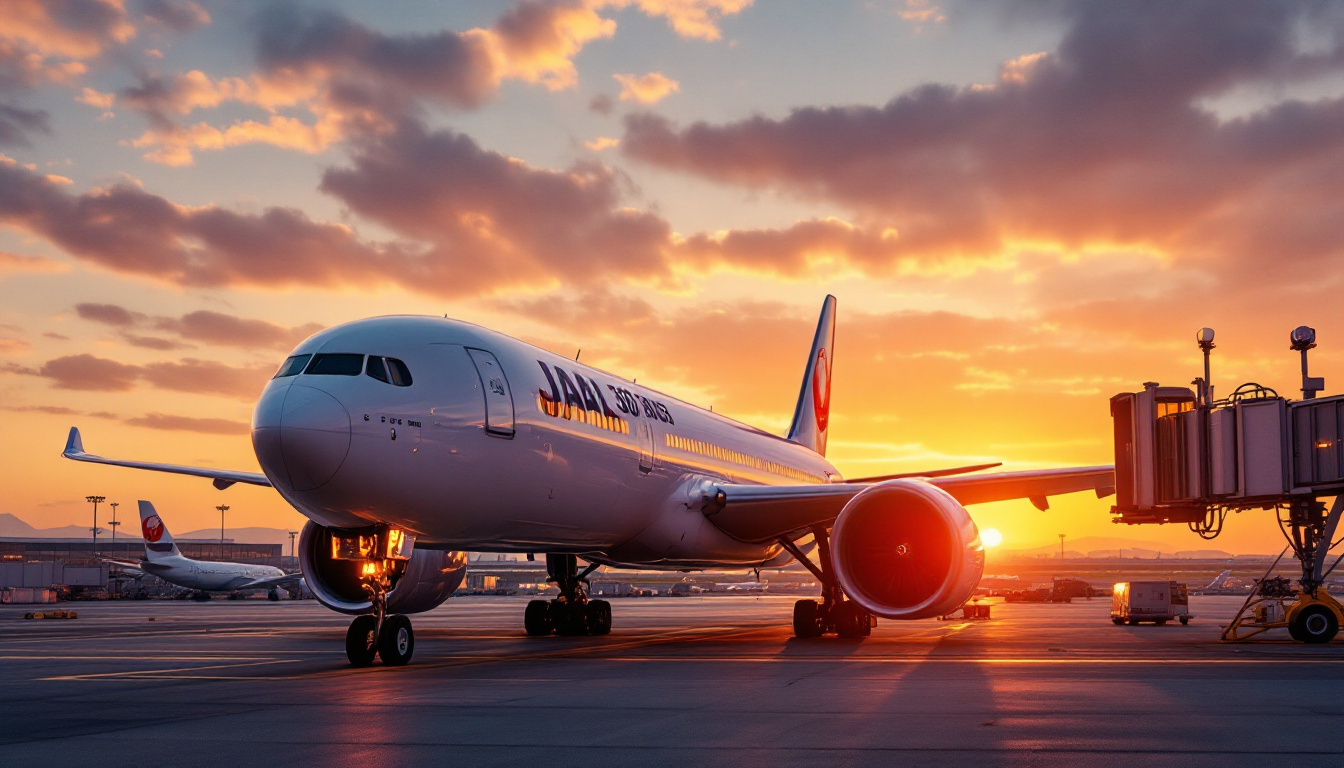
The LAX-Tokyo corridor is, after JFK-London and the SIN-LAX/SIN-SFO trans-Pacific routes, the most consequential premium-cabin lane between North America and Asia, and the corridor’s six-carrier Q2 2026 schedule, split across the Haneda and Narita gateways, is a working illustration of the trans-Pacific market’s post-pandemic shape. The corridor carries roughly 10-12 daily nonstop frequencies across all carriers at the published Q2 2026 schedule, with HND accounting for approximately 60% of the daily count and NRT the remaining 40%.
For corporate travel managers building 2027 program plans, the corridor’s Q2 2026 state is the more interesting analytical object than the schedule headline. The premium-cabin product question, the HND-vs-NRT airport choice, and the corridor’s pricing-power dynamics across the joint-venture and non-JV operators are all in flux in ways that bear on 2027 RFP conversations.
The Schedule, By Carrier and Flight Number
The published Q2 2026 corridor schedule, cross-referenced against Cirium data and the carriers’ published timetables, breaks out as follows. All times are local; all rotations are daily unless otherwise noted.
All Nippon Airways operates the corridor’s headline LAX-HND product on flight NH106 (HND-LAX) and NH105 (LAX-HND), using the Boeing 777-300ER configured with The Room business cabin. NH106 departs HND at 12:30 a.m. JST and arrives LAX at 6:50 p.m. PDT (same calendar day), a scheduled 9 hours 25 minutes westbound block. The LAX-HND eastbound rotation departs LAX in the evening for a daytime HND arrival. ANA additionally operates LAX-NRT under NH126 and NH125 on the 787-9, a separate daily rotation feeding into ANA’s NRT international connecting bank.
Japan Airlines operates LAX-NRT under JL061 (LAX-NRT) and JL062 (NRT-LAX) using the 787-9. JL062 departs NRT at 5:20 p.m. JST and arrives LAX at 11:05 a.m. PDT, an 11-hour-45-minute scheduled block. JAL additionally operates LAX-HND on JL068 and JL069 using the 787-9.
Delta Air Lines operates LAX-HND on DL7 (LAX-HND) and DL8 (HND-LAX) using the A350-900 with Delta One Suites. DL7 departs LAX at 10:40 a.m. PDT and arrives HND at 2:00 p.m. JST (next day), an 11-hour-20-minute scheduled block. The A350-900 deployment on this rotation is consistent across the published Q2 2026 schedule.
United Airlines operates LAX-NRT on UA32 (LAX-NRT) and UA33 (NRT-LAX) using the 787-9. UA32 departs LAX at 11:25 a.m. PDT and arrives NRT at 3:50 p.m. JST (next day), a 12-hour-25-minute scheduled block. The corridor’s NRT rather than HND positioning for UA32/33 reflects United’s historical Pacific gateway choice; UA’s LAX-HND service, launched in March 2023, operates under a separate flight-number assignment and is not on the UA32/33 rotation.
American Airlines operates LAX-HND on AA169 (LAX-HND) and AA170 (HND-LAX) using the 787-9 with Flagship Business. AA170 departs HND at 11:55 a.m. JST and arrives LAX at 6:00 a.m. PDT (same calendar day), a 10-hour-5-minute scheduled block.
The combined corridor frequency, totaled across the six carriers and both Tokyo airports, runs at 10-12 daily nonstops at Q2 2026, with HND carrying 6-7 daily and NRT carrying 4-5 daily.
ANA The Room: The Corridor’s Premium Reference
ANA’s Boeing 777-300ER, configured with The Room business cabin on the NH106 and NH105 LAX-HND rotation, is the corridor’s most-reviewed-positively premium product and, by most reviewer accounts, the best business class seat in scheduled service on any trans-Pacific corridor at Q2 2026.
The Room, designed by ANA in collaboration with the carrier’s interior-design partners and rolled out across the 777-300ER fleet from 2019 onward, is a 1-2-1 staggered configuration with a usable seat width of roughly 38 inches at the shoulder — meaningfully wider than the typical 22-26 inches of competitor business class seats. Two sliding doors create a true private suite when closed, and the seat reclines into a 79-inch flat bed. The IFE screen is 24-inch 4K. The bedding kit, refreshed in 2024, includes a memory-foam mattress pad and a duvet that the carrier markets as the corridor’s heaviest. The catering, co-managed between ANA’s culinary team and the LAX-side catering operation for the eastbound and the HND-side operation for the westbound, runs three meal services on each rotation.
The corridor’s competing premium products, ranked against The Room:
JAL Sky Suite, on the 787-9 in a 1-2-1 reverse-herringbone configuration with closing doors, is the corridor’s second-best product. The seat width is roughly 22 inches at the shoulder; the bed length is 75 inches. The Sky Suite’s IFE screen is 23-inch HD. The catering quality is competitive with The Room and is, in some reviewer accounts, edges ahead on the breakfast service.
Delta One Suite on the A350-900, deployed on the DL7/DL8 LAX-HND rotation, is competitive with the Sky Suite. The Delta One Suite is a 1-2-1 reverse-herringbone with a sliding privacy door and the 18-inch IFE. The bedding is well-rated, and the route’s daytime departure is the corridor’s only daytime LAX-HND option, which is a distinct corporate-buyer advantage for travelers preferring to sleep in a hotel rather than on the aircraft.
AA Flagship Business on the 787-9, deployed on AA169 and AA170 LAX-HND, is a reverse-herringbone 1-2-1 with a sliding door on the carrier’s reconfigured aircraft. The corridor’s AA Flagship Business product is competitive but not class-leading.
UA Polaris on the 787-9, deployed on UA32 and UA33 LAX-NRT, is the older Polaris seat (not Polaris 2.0 at Q2 2026 on this rotation). The 1-2-1 reverse-herringbone is well-reviewed but lacks the sliding door of the corridor’s BA-style products. Polaris 2.0’s potential extension to LAX-HND or LAX-NRT in 2027 is the structural cabin-product variable on UA’s corridor share.
For corporate travel managers whose programs allow specification of cabin product within the booking process, The Room is the corridor’s premium-cabin reference and is worth paying the $400-700 fare-band premium where program policy permits.
HND or NRT: The Corporate-Buyer Choice
The Haneda-versus-Narita corporate-buyer choice question, which dominated trans-Pacific corridor analysis from 2010 through the mid-2010s, has substantially resolved in Haneda’s favor at Q2 2026.
Haneda’s ground-game advantage over Narita is well-documented: 25-40 minutes from HND to central Tokyo neighborhoods (Marunouchi, Shinjuku, Roppongi, Tokyo Station) by Tokyo Monorail-plus-train, taxi, or limousine bus, versus 60-90 minutes from NRT via Narita Express, Keisei Skyliner, or limousine bus. For a corporate traveler arriving on the HND morning bank for a Tokyo office visit, the HND-to-meeting-room window can be as tight as 60-75 minutes; the equivalent NRT-to-meeting-room window is rarely under 90 minutes and frequently over two hours.
The Q2 2026 LAX-Tokyo schedule reflects the Haneda-preference dynamic: 6-7 daily LAX-HND nonstops versus 4-5 daily LAX-NRT, with the gap likely to widen further in the Q3 schedule as the corridor’s HND slot allocations are progressively used by carriers that historically operated NRT.
The case for NRT, for the small but non-trivial subset of Tokyo-area travelers whose destination is the Chiba prefecture or the Eastern Kanto industrial corridor, is straightforward: NRT is materially closer to Chiba destinations than HND is, and the NRT-to-suburban-Eastern-Tokyo ground game can be faster than HND for travelers heading north or east of central Tokyo. For travelers connecting to ANA or JAL domestic Japan flights to destinations like Osaka, Hiroshima, or Fukuoka, the NRT vs HND choice depends on the specific connecting flight: ANA’s NRT-to-domestic connection bank is meaningfully shallower than its HND-to-domestic bank, and the carrier has progressively shifted domestic-connection volume to HND.
For the Q2 2026 corporate traveler whose Tokyo destination is central Tokyo, HND is the working answer. The NH106 LAX-HND rotation with The Room is the corridor’s corporate-program reference product.
The Catering and the Cabin Service
A note on the corridor’s onboard service, which is the marketing claim every Asia-bound carrier most prominently sells against the trans-Atlantic corridor’s price-leadership product positioning:
Both ANA and JAL maintain explicitly Japanese cabin-service standards on the LAX-HND and LAX-NRT routes, with multiple cabin crew dedicated to business-class service per cabin section, formal multi-course Japanese kaiseki-style options on the eastbound dinner service, and Western options for travelers preferring lighter eastbound dinners. The corridor’s reviewer consensus is that ANA’s onboard service is the most consistent across the four LAX-Tokyo HND carriers. Delta’s onboard service has improved measurably since the 2024 Delta One Suite deployment and the parallel cabin-crew training cycle the carrier ran in 2025. AA’s Flagship Business catering on the trans-Pacific is materially better than on the trans-Atlantic, in part because of the LAX kitchen sourcing.
The carriers’ lounges, on the corridor’s both ends, are worth noting: ANA’s Suite Lounge and Lounge at HND and the Star Alliance Lounge at LAX are the corridor’s reference lounges for ANA premium-cabin travelers, with the Suite Lounge accessible to ANA First Class passengers and Star Alliance Gold members with ANA First booked. JAL’s First Class Lounge at HND and the oneworld Lounge at LAX are the corridor’s reference for JAL premium-cabin travelers. Delta’s Sky Club at LAX (the Tom Bradley International Terminal Sky Club, expanded in 2025) and the Delta One Lounge at HND, opened in late 2024, are the corridor’s reference for Delta One travelers. United’s Polaris Lounge at LAX (opened 2018, refurbished 2024) is the corridor’s reference for UA Polaris travelers.
The 2027 Outlook
For corporate travel managers building 2027 program plans on the LAX-Tokyo corridor, the structural variables to watch into 2026’s second half:
The 777-9 delivery slip. ANA’s 777-300ER fleet, on which The Room is deployed across the carrier’s trans-Pacific premium-cabin product, is aging — the carrier’s 777-300ER fleet is averaging 12-15 years of age, and the planned 777-9 replacement is now pushed to 2027 and possibly 2028 deliveries. The cascading effect on ANA’s HND-LAX rotation is unlikely to be dramatic in 2027 specifically, but corporate buyers building multi-year scenarios should treat The Room’s continued LAX-HND deployment as a known-but-not-yet-decided question into 2028.
The United LAX-HND fleet-deployment question. UA’s 2023 launch of LAX-HND service, on the back of the carrier’s HND slot allocation, has materially shifted UA’s LAX-Tokyo corridor commitment. The published Q2 2026 schedule shows UA still operating LAX-NRT on UA32/33 with the 787-9, but the carrier’s 2027 fleet-deployment statements have indicated LAX-HND priority continuation. Whether UA extends the Polaris 2.0 refresh to its LAX-HND rotation in 2027 is the structural cabin-product variable for UA’s corridor share.
The Delta Q3 2026 capacity question. Delta’s published Q2 2026 LAX-HND schedule shows one daily DL7 / DL8 rotation. The carrier’s Q3 schedule, opening in mid-July 2026, will reveal whether Delta adds a second daily HND frequency to compete with ANA’s NH106 / NH105 and AA’s AA169 / AA170 rotations. The base case, as of May 2026, is that Delta holds at one daily; the upside case is a second daily HND frequency driven by the carrier’s A330-900neo or A350-900 fleet growth.
The yen-dollar question. The LAX-Tokyo corridor’s premium fare-band, in dollar terms, has expanded at a faster rate than the corridor’s average over the past 12 months, partly because the yen has weakened materially against the dollar in 2025-2026 and partly because the corridor’s premium-cabin demand has run ahead of capacity. The structural read is that the yen weakness has incrementally favored U.S.-originating travel to Tokyo (relatively cheaper in dollar terms), which has pulled corporate-traveler demand forward. For 2027 budget cycles, the relevant question is whether the yen reverses in 2026’s second half — which would tighten the premium fare-band — or whether the dollar holds, in which case the corridor’s premium-cabin demand continues to pull forward.
For the working corporate travel manager, the LAX-Tokyo corridor at Q2 2026 is one of the more rewarding trans-Pacific premium lanes, with the corridor’s cabin-product reference (ANA’s The Room) running at fare-band premiums that, for corporate programs that permit cabin specification, are well-justified by the product. The HND-versus-NRT question has substantially resolved in HND’s favor, and the corridor’s six-carrier schedule density gives corporate buyers materially better booking-window flexibility than the corridor offered five years ago. The 2027 program plan should anticipate continued HND-priority capacity from the corridor’s incumbent carriers, with the 777-9 delivery slip as the structural variable that affects ANA’s fleet-renewal pathway from 2027 onward.