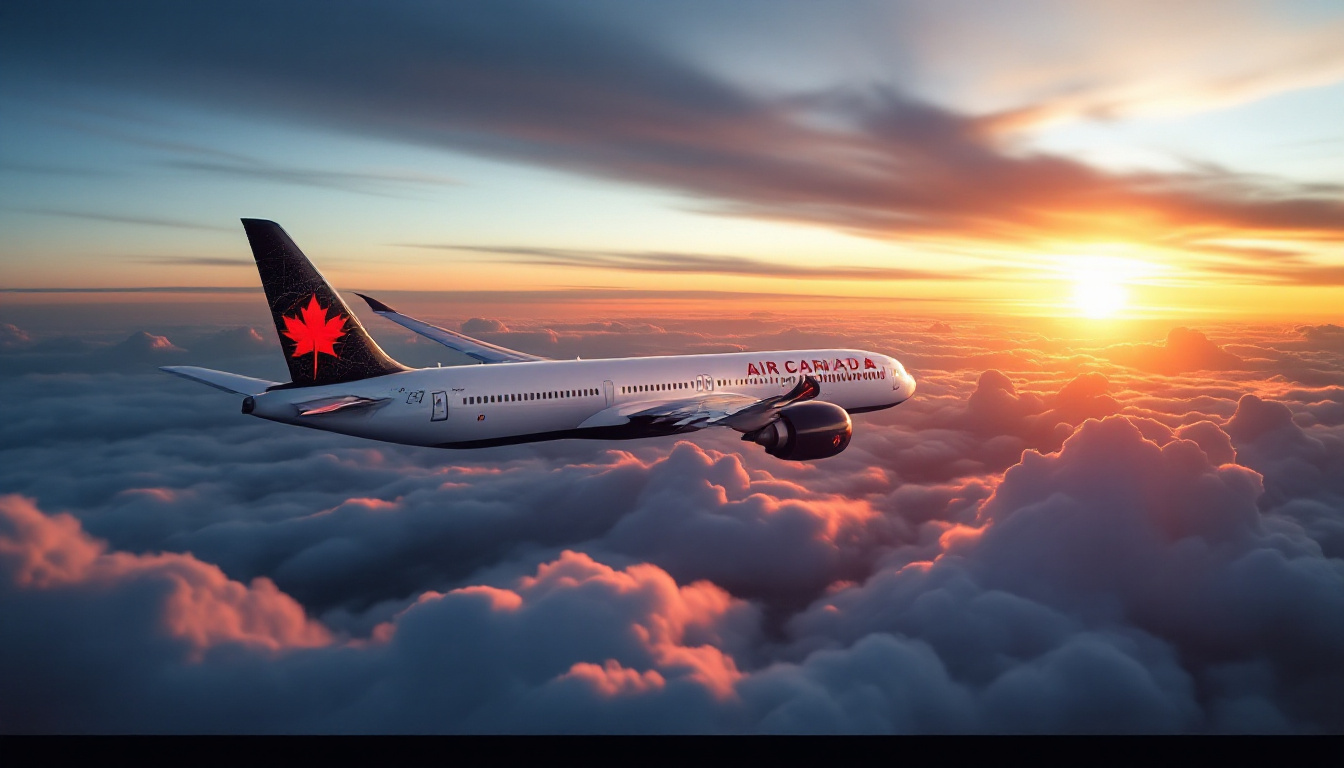
The 2026 Aeroplan cycle is, in structural terms, the most consequential program rewrite Air Canada has executed in the recent program era. The carrier replaced the dual miles-flown and segments qualification rubric with a single spend-based currency, Status Qualifying Credits, and reset the tier thresholds against the new earning rates. For the corporate buyer running Aeroplan as a primary or secondary loyalty currency, the operational question for the 2026 status year is how SQC earning maps to existing travel patterns, and whether the new top-tier thresholds remain reachable on a workable spend profile.
The Super Elite tier is the tier most reshaped by the transition. The 125,000-SQC threshold for Super Elite is structurally higher in spend terms than the prior miles-flown equivalent, and the migration tightens the qualifying population at the top of the program.
The SQC mechanic
Status Qualifying Credits is the single qualification currency Aeroplan uses for the 2026 status year. SQC earns across three channels: Air Canada flights, Star Alliance partner activity, and eligible credit-card spend.
On Air Canada flights, Standard Economy fares earn 2 SQC per dollar of qualifying spend. Flex Economy fares, Premium Economy fares, and all Business Class fares earn 4 SQC per dollar of qualifying spend. The 4-SQC rate is the load-bearing earn rate for Super Elite qualification, because the 125,000-SQC threshold requires either substantial premium-cabin volume or a combined spend pattern that runs across all three channels at high utilization.
On credit-card spend, eligible premium cards earn 1,000 SQC per $5,000 in qualifying spend, with a cap of 25,000 SQC per calendar year. Reaching the credit-card SQC cap requires $125,000 in qualifying spend on a premium card. The cap is the structural ceiling that limits credit-card-based status qualification, and it ensures the SQC mechanic remains anchored to actual travel rather than spend alone.
On partner activity, Star Alliance partner flights and other eligible partner activity earn SQC on a published earning grid, with a cap of 25,000 SQC per calendar year. The 25,000-SQC partner cap parallels the credit-card cap and creates a combined non-flight ceiling of 50,000 SQC per year.
The 50,000-SQC non-flight ceiling is the analytical key for the Super Elite qualifier. With the cap, 75,000 of the 125,000 Super Elite SQC requirement must come from Air Canada flights. At the 4-SQC-per-dollar premium-cabin rate, that translates to roughly $18,750 in Air Canada premium-cabin spend, before any combined-channel optimization. For the traveler running multiple Air Canada Business Class transatlantic round-trips per year, the threshold is workable. For the traveler whose Air Canada activity is incidental to a primarily US-based travel pattern, the threshold is materially harder to clear under the new mechanic than under the prior miles-flown rubric.
Super Elite at 125,000 SQC
The 125,000-SQC Super Elite threshold is the most structurally significant single number in the 2026 Aeroplan year. The carrier confirmed Super Elite as the tier most impacted by the SQC transition, and the spend-anchored math underneath the threshold means the qualifying population at the top of the program is materially narrower than under the prior mechanic.
The qualification math for a representative Super Elite candidate runs as follows. A traveler running four round-trip Air Canada Business Class fares Toronto-to-London at $8,000 each spends $32,000 on Air Canada Business Class qualifying revenue and earns 128,000 SQC. The threshold clears on flight earning alone. A traveler running two round-trip Air Canada Business Class fares Toronto-to-London at $8,000 each spends $16,000 and earns 64,000 SQC on flight earning. The same traveler, holding an eligible premium Aeroplan credit card and running it to the 25,000-SQC cap, earns 89,000 SQC combined. Reaching the 125,000 threshold from there requires 36,000 SQC from Star Alliance partner activity, which is above the 25,000-SQC partner cap, so the threshold is not cleared.
The implication for the corporate buyer is that Super Elite under SQC is meaningfully more dependent on Air Canada premium-cabin volume than the prior miles-flown mechanic was. Super Elite is now the tier where corporate-travel-policy alignment with Air Canada as a primary international carrier substantively matters.
The Signature Suite gating condition
The Air Canada Signature Suite at Toronto Pearson is the single most prestigious premium-cabin lounge product in Canada. Signature Suite access has historically been the most discussed premium-cabin benefit at the top of the Aeroplan program. The 2026 cycle did not change the gating condition.
Signature Suite access requires either a paid ticket booked in J, C, D, Z, or P fare class on a flight from Toronto to Asia, Europe, or South America, or an Aeroplan flight reward booked at the Business Class (Flexible) or First Class (Flexible) fare class on the same intercontinental routings. Super Elite status alone does not grant Signature Suite access. The fare class on the day of travel is the load-bearing gating condition.
For the Super Elite member running Air Canada Business Class on intercontinental routings, the Signature Suite is the typical pre-flight product, because the fare class on those bookings clears the gating condition. For the Super Elite member running domestic or transborder routings, the Signature Suite is not accessible regardless of status. The Maple Leaf Lounges and Star Alliance partner lounges remain the operative lounge product for those segments.
The Aeroplan Concierge service is the structural benefit Super Elite carries that does not depend on fare class. Super Elite members receive personalized Concierge service in 50 airports worldwide at Maple Leaf Lounges and Star Alliance lounges. The Concierge service is, in practical terms, the most material always-on Super Elite benefit, because it applies regardless of the routing or fare class.
Aeroplan credit-card economics: Canada vs US
The Aeroplan credit-card stack reads materially differently in the Canadian market and the US market.
In Canada, the TD Aeroplan Visa Infinite Privilege is the load-bearing premium card. The card carries a welcome offer that has been positioned at up to 85,000 Aeroplan points in recent cycles, with structured spend bonuses that release in stages: 20,000 points on first purchase, 35,000 points at $12,000 in spend within 180 days, and 30,000 points at $24,000 in spend within 12 months. The card earns SQC at the published premium-card rate.
In the US, the Chase Aeroplan Card is the primary co-brand. The card has carried welcome offers in the 75,000-to-85,000 point range through the recent cycles, with the standard public offer at 75,000 points after $4,000 in spend in the first three months. The card earns SQC at the published premium-card rate, subject to the 25,000-SQC annual cap on credit-card earning.
The US Aeroplan card economics are competitive against Capital One, Chase Sapphire, and Amex Membership Rewards transfers to Aeroplan, particularly for the US-based traveler who runs Air Canada as a primary international carrier and wants direct Aeroplan earning rather than indirect transfer-partner accumulation.
The Signature Class A330-300 cabin
The Air Canada Signature Class business cabin on the modernized A330-300 fleet is the load-bearing intercontinental business product alongside the 787 and 777 cabins. The modernized A330-300 cabin runs 32 business seats across eight rows in a 1-2-1 configuration with functional middle dividers, making it the strongest A330 sub-fleet for couples and adjacent-seat travelers.
The A330 is one of three wide-body fleets Air Canada operates with Signature Class. The 787, 777, and A330 all run the Signature Class product on flights to Africa, Asia, Australia, Europe, and South America. The A321 narrow-body fleet does not operate Signature Class.
For the Super Elite member booking award redemptions in 2026, the equipment-by-route matters because the A330 Signature cabin and the 787 Signature cabin both deliver the full Signature Suite eligibility on Toronto intercontinental routes, while non-Signature-equipped routes do not, even when booked in Business Class.
The 2026 read
The Aeroplan 2026 cycle is, more than any other major loyalty program’s 2026 cycle, a structural rewrite rather than a parameter adjustment. The SQC transition replaces the prior miles-flown and segments qualification rubrics with a single spend-based currency. The 125,000-SQC Super Elite threshold anchors the top of the program in spend rather than activity. The 25,000-SQC caps on credit-card and partner earning ensure the program remains anchored to actual Air Canada flying.
For the corporate buyer in Q2 2026, the operational read is that Super Elite is now meaningfully more dependent on Air Canada premium-cabin volume than under the prior mechanic, and the alignment of corporate travel policy with Air Canada as a primary international carrier substantively matters for Super Elite retention. The Signature Suite gating remains fare-class-dependent, and the Concierge service remains the always-on Super Elite benefit.
The credit-card economics are competitive in both the Canadian and US markets, but the 25,000-SQC annual cap on credit-card SQC earning ensures the card remains supplemental rather than load-bearing for Super Elite qualification. The Aeroplan program in 2026 has, by structural design, made the top of the tier ladder a flight-driven qualification rather than a credit-card-driven qualification, and the design intent is unambiguous.