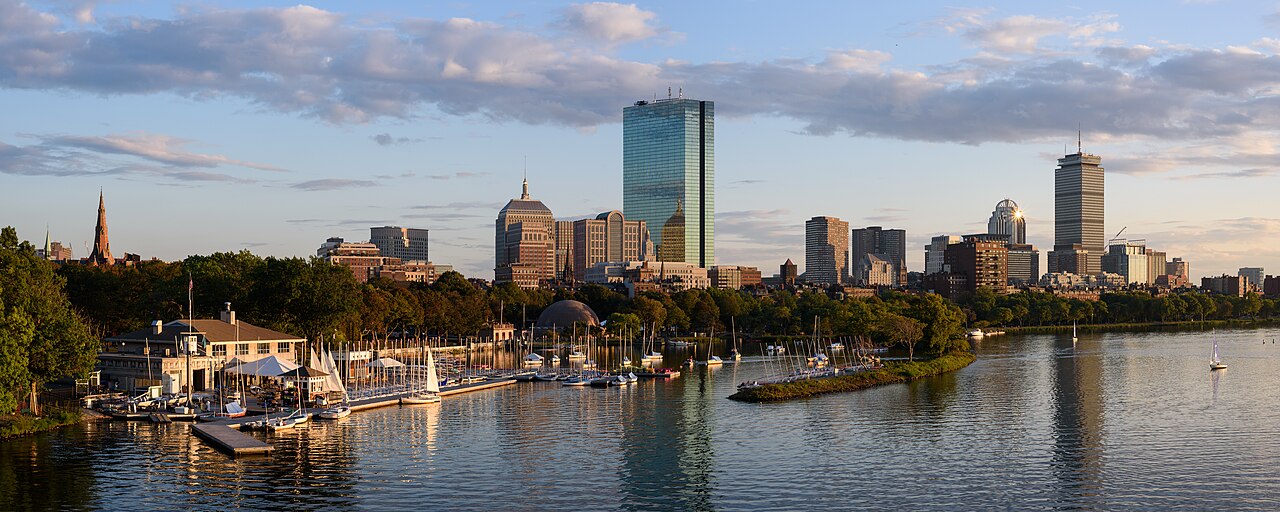
Two years past the 15 September 2023 opening of Raffles Boston Back Bay at 40 Trinity Place, the corporate-travel manager retro on the property is becoming useful data. The property opened into a Boston luxury competitive set that had been anchored for nearly two decades by Mandarin Oriental Boston at 776 Boylston Street, with the Four Seasons Boston at 200 Boylston, the Four Seasons One Dalton, the Newbury Boston, and the XV Beacon also in the competitive frame. The two-year question is whether Raffles has converted Boston’s MICE pipeline, what the rate-tool data shows on negotiated bookings, and how the property sits versus Mandarin Oriental Boston on corporate-program take-up.
This briefing pulls together what travel managers, corporate-event planners, and the property’s competitive set are saying about Raffles Boston’s two stabilized years.
The 40 Trinity Place Property, Two Years In
The hotel occupies floors three through 35 of the 426 Stuart Street tower at the corner of Trinity Place and Stuart, with the 146 Raffles Boston Back Bay Residences distributed in the upper floors. The Saunders Hotel Group and Cain International developed the building, and Accor operates the hotel under the Raffles brand. The 147-key inventory — 127 rooms and 20 suites — runs slightly under the Mandarin Oriental Boston’s roughly 148-key count and is structurally similar in floor plate to the Mandarin Oriental.
The vertical layout is the most operationally distinctive feature of the property. The 17th-floor sky lobby functions as the primary guest arrival floor, with check-in, lounge programming, and views over Back Bay, the Charles River, and the Boston skyline. Guest rooms sit both above and below the sky lobby. This is unusual for a Boston luxury hotel — the conventional Boston floor plate runs the lobby on the ground level — and the vertical layout has produced some operational friction in the early months around elevator throughput during peak check-in compressions. By the second year, those operational stumbles have largely resolved.
Occupancy data is not publicly disclosed by the operator, but triangulating against STR luxury comp-set reports for the Back Bay submarket and conversations with corporate-housing buyers who track the property, blended occupancy in the first stabilized year appears to have run in the low-to-mid seventies on a trailing twelve-month basis. That is a meaningful number — the property has clearly converted a share of corporate-travel and conference-attendee demand that previously settled into Mandarin Oriental, Four Seasons Boston, and the Newbury Boston.
The 17th-floor Long Bar — the brand’s signature heritage cocktail concept that originated at the original Raffles Singapore — has become one of the city’s hardest reservations for non-guest cocktail-hour bookings. The Long Bar’s conversion is one of the cleanest examples of how a heritage brand concept can translate into an immediate operational win in a new market. The Boston dining room at the hotel, Mētis, has also stabilized at a higher cover count than the property’s underwriters originally targeted.
The Mandarin Oriental Boston Comparison
Mandarin Oriental Boston at 776 Boylston Street has been the established Back Bay luxury anchor since opening in 2008. The hotel runs roughly 148 keys and is connected directly to the Prudential Center via an interior walkway — a structurally meaningful feature for the corporate-program take-up that runs through the Prudential Center office tenants. The property has been the default Boston luxury address for the Prudential-center walking-radius business for nearly two decades, and the corporate-travel program take-up has historically reflected that.
Raffles Boston sits roughly four blocks away at the corner of Trinity Place and Stuart, on the western side of the Boston Public Library and across from the Hancock Tower. The walking radius is different. The Trinity Place location pulls Raffles closer to the Copley Place and Prudential Center office cluster on the eastern side and to the law-firm and financial-advisory cluster around 200 Clarendon and One Federal Street on the south. The two properties are not direct walking-radius substitutes, and the corporate-travel program take-up has split along the lines you would expect from a walking-radius reading.
Corporate-travel managers at four Boston-headquartered firms — two biotech advisory boutiques, one law firm, and one financial services firm — described the two properties as the Back Bay luxury duopoly, with the take-up splitting roughly 60-40 in favor of Raffles for new bookings since the property opened. The Raffles share is heaviest on the entertainment, ground-up event, and rooftop programming side. Mandarin Oriental holds share on the longer-stay corporate book and the Prudential-center walking-radius business that the connected walkway makes structurally favorable.
That competitive split is the cleanest read on what the two-year stabilization has done to the Back Bay luxury market. The market is structurally additive — Raffles has not eaten Mandarin Oriental’s lunch so much as it has taken a meaningful share of demand growth, with Mandarin Oriental holding share on its established corporate book.
The MICE and Corporate-Event Conversion
Raffles Boston has roughly 13,000 square feet of meeting and event space across the third-floor event level. The primary event venue is a roughly 5,000 square foot ballroom that can host plated dinners for up to 320 guests. The third-floor rooftop terrace runs a separate event program for cocktail receptions and small-group entertainment. The total meeting floor plate is modest by Boston convention standards — the Westin Copley Place runs roughly 73,000 square feet of meeting space, the Boston Marriott Copley Place runs roughly 60,000 — but it is well-suited to the kind of small-group, high-spend corporate event the property is targeting.
The biotech conference circuit has been a structural tailwind. Boston’s biotech corridor runs heavy event volume in May and June around the BIO International Convention and the major venture-capital and licensing summits, and the property has converted a meaningful share of the founder-level and board-off-site overflow business from those conference compressions. The JPMorgan Healthcare overflow week in January — when San Francisco is at peak compression and Boston biotech firms run their own East Coast programming — has been particularly strong for the property.
Corporate-event planners at three Boston biotech firms and one Boston-headquartered financial services firm described Raffles as their default Boston choice for premium small-group event programming, with the third-floor ballroom and the rooftop terrace combination producing a flexible event program that runs at higher per-person spend than the larger Westin or Marriott event spaces can support. The smaller floor plate is the right floor plate for the kind of event the property is targeting.
The property’s event-program conversion has been stronger than the property’s underwriters originally targeted. Two years in, the corporate-event book is reportedly tracking ahead of pro forma on both volume and per-event spend. That is one of the cleanest two-year wins in the Boston luxury market.
Rate Posture: How Raffles Is Pricing
Entry-level rooms at Raffles Boston have published in the 900 to 1,400 dollar range during shoulder weeks, with weekday business-compression windows pushing the entry rate past 1,800 dollars. The JPMorgan Healthcare overflow weeks in January, the biotech conference compressions in May and June, and the September-November fall corporate cycle are the heaviest compression windows on the rate calendar. The April marathon weekend produces a separate compression that is more leisure-leaning than business.
Suite categories begin around 2,800 dollars for the smallest premium category and climb steeply through the Raffles Suite tier. The top-tier Raffles Suite has cleared past 12,000 dollars during the highest-compression windows. The middle of the rate stack — Deluxe rooms and the entry suite tier — is where the property is doing most of its revenue work, and those categories are clearing at rates that price Raffles meaningfully ahead of where Mandarin Oriental Boston, Four Seasons Boston, and Four Seasons One Dalton are running for equivalent square footage.
Mandarin Oriental Boston runs roughly 100 to 300 dollars below Raffles at entry-rate parity during shoulder weeks, reflecting the longer-established corporate book and the structural rate posture the property has held since opening. The Four Seasons Boston at 200 Boylston runs roughly 200 to 400 dollars below Raffles, and Four Seasons One Dalton — which opened in 2019 and is the more recent Four Seasons addition to the city — runs at roughly the same entry-rate position as Mandarin Oriental Boston.
Rate parity is enforced rigorously across direct booking, the GDS, and the consortia channels Accor and Raffles participate in. The property participates in the Accor ALL loyalty program and the Raffles preferred-partner channels, including the Bellini Club, which is the brand’s curated travel advisor program. Corporate-housing desks running Boston programs have reported that the property does run negotiated corporate rate programs through Accor’s commercial team, which is structurally different from Aman’s posture and similar to how the rest of the Boston luxury competitive set runs.
The Residences and Building Economics
The 146 Raffles Boston Back Bay Residences sit above the hotel in the same building. Resales in the residences have been moderate — branded-residence inventory typically does not turn over heavily in the first two stabilized years — but the prices that have traded have anchored the building’s per-square-foot economics at a premium level. The residences have traded in a range that reflects the brand’s first-residential foothold in North America, with several units having sold above 4,000 dollars per square foot.
That per-square-foot reference matters to the hotel rate strategy in the same way the Mandarin Oriental Residences on the South Boston waterfront and the Four Seasons Residences at One Dalton have anchored the per-square-foot economics of their respective hotels. The residences set a reference point that the hotel commercial team uses when defending the rate card in negotiated conversations.
What the Two-Year Mark Tells Us About the Back Bay Luxury Market
Raffles Boston’s two-year stabilization is a useful data point for the broader Boston luxury market. The market was historically dominated by Mandarin Oriental, the two Four Seasons properties, and the Newbury Boston (which reopened in 2021 after the Saunders family’s redevelopment of the former Ritz-Carlton at 15 Arlington Street). The XV Beacon and the Eliot Hotel run as boutique luxury options. The market had not had a meaningful new luxury opening since Four Seasons One Dalton in 2019.
Raffles’ addition has been structurally additive rather than substitutional. Mandarin Oriental Boston has held its corporate book and continues to run as the default Prudential-center walking-radius address. The two Four Seasons properties have held share on the longer-established corporate book. The Newbury Boston, which sits closest to Raffles on positioning, has held share on the Public Garden walking-radius leisure and entertainment business.
The Back Bay luxury market is now structurally a five-property top-tier set — Raffles, Mandarin Oriental, Four Seasons Boston, Four Seasons One Dalton, and the Newbury Boston — with the XV Beacon and the Eliot Hotel running as boutique luxury alternatives. That is a deeper luxury set than the city has had at any point in its modern history, and the corporate-travel program take-up that the city’s biotech, financial services, and law firm clusters generate has been growing fast enough to absorb the new inventory without forcing the older brands into rate concessions.
The next data point worth watching is the property’s third stabilized year, which will be the first full year run with the operational stumbles fully resolved and the corporate-event book fully maturing. Two years in, the read is straightforward: Raffles Boston has converted Boston’s MICE pipeline, the rate posture is holding ahead of Mandarin Oriental Boston, and the Back Bay luxury market has been structurally expanded rather than rebalanced.
For corporate-travel managers running Boston programs, the operational read is that the city’s luxury set is now deep enough to run a multi-property negotiated program across Raffles, Mandarin Oriental, and the two Four Seasons properties, with each property structurally favored for a different walking-radius and event-format profile. That is a meaningfully better position than the city was in five years ago, when Mandarin Oriental was running effectively unopposed at the top of the Back Bay luxury stack.