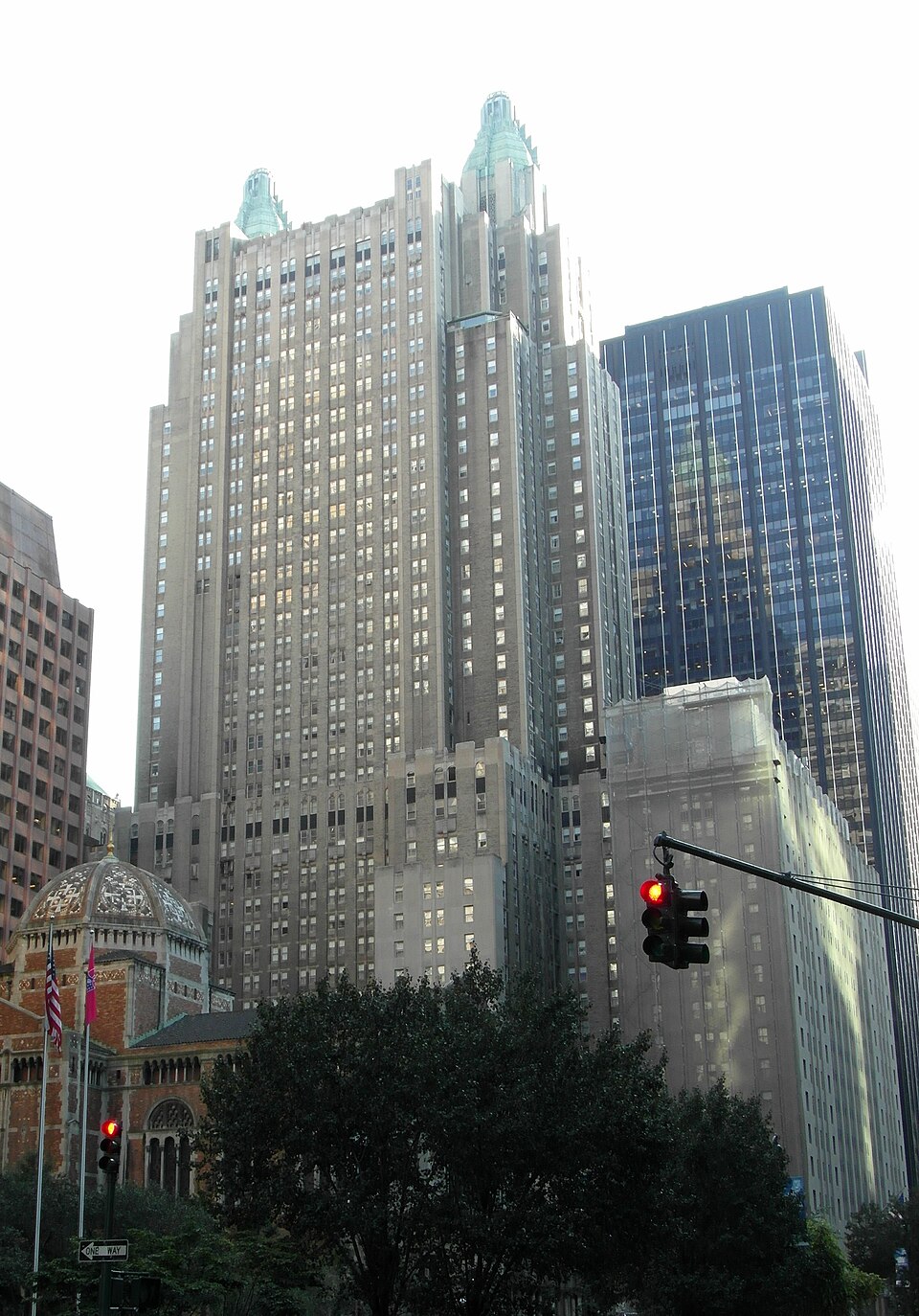
The Waldorf Astoria New York reopened to the public on 15 July 2025 after an eight-year closure that ran from March 2017 through the most ambitious luxury-hotel restoration in modern New York history. The Park Avenue Art Deco landmark — owned by the Chinese Dajia Insurance Group following the bankruptcy of the original 2014 acquirer Anbang — reopened with 375 guestrooms and a separate 375-unit luxury condominium component, with the restored Grand Ballroom and Heritage Event Spaces following on 5 September 2025 and the Guerlain Wellness spa rounding out the full reopening in October 2025.
This briefing reads the reopening at the six-month mark and looks at what the staged restoration has meant for the Park Avenue and Midtown East corporate-travel program, the broader Manhattan luxury-hotel competitive set, and the structural significance of REBNY’s August 2025 decision to host its 2026 Annual gala at the property.
The Property at Reopening: 375 Hotel Keys, 375 Residential Units
The Waldorf Astoria New York occupies the full block bounded by Park Avenue, Lexington Avenue, 49th Street, and 50th Street, in a 47-story Art Deco landmark designed by Schultze and Weaver and opened in 1931. The pre-restoration property ran roughly 1,400 hotel keys distributed across the entire building. The restored property splits the building, with 375 hotel guestrooms and suites occupying floors 1 through 18 and a separate 375-unit Waldorf Astoria Residences component occupying the upper floors. The total room count is therefore lower than the pre-restoration count, but the per-key inventory is meaningfully larger and the rate posture is structurally repositioned at the top of the Park Avenue luxury stack rather than at the broad-luxury middle tier.
The 375-key hotel inventory makes the reopened Waldorf one of the larger luxury hotels in Manhattan but not the largest — the Plaza Hotel runs roughly 282 keys, the St. Regis New York runs roughly 238 keys, the New York Palace runs roughly 909 keys, and the larger luxury convention hotels (the New York Hilton Midtown, the Sheraton New York Times Square) run substantially more inventory. The Waldorf’s 375 keys give the property meaningfully more inventory than the Aman New York’s 83-key Crown Building property, the Carlyle’s roughly 188 keys, and the Lotte New York Palace’s premium tower inventory, but less than the New York Palace’s full inventory.
The Park Avenue lobby and the Lexington Avenue lobby — the landmarked dual-entrance lobbies that were the original Art Deco signature features of the Waldorf — have been restored as the property’s primary guest-arrival floor. The Silver Corridor connecting the two lobbies, the Astor Salon off the Park Avenue lobby, and the Basildon and Jade Rooms have all been preserved and restored.
The Grand Ballroom Restoration
The Grand Ballroom is the structural centerpiece of the restored property and the most operationally significant event space in the Midtown East luxury cluster. The three-story ballroom — with landmarked balconies framing a performance-ready floor plan that seats up to 1,500 guests — has been engineered for modern Broadway-style productions and live broadcasts. SOM, the restoration architects, developed an acoustical isolation solution that severed the beams and columns connecting the ballroom to the surrounding structure and supports the ballroom on acoustical isolators to soundproof it from the rest of the building.
The original luminescent cove lighting design — which was one of the signature interior features of the 1931 building — has been reinstated. The integrated staging, sound, and rigging capabilities allow the room to host Broadway-style productions, live television and streaming broadcasts, and the kind of large-scale corporate event programming that the pre-restoration ballroom could only support with extensive temporary production rigging.
The full event-space portfolio at the reopened Waldorf spans nearly 43,000 square feet across the Grand Ballroom, the Silver Corridor, the Astor Salon, and the Basildon and Jade Rooms. That makes the Waldorf the single largest premium event-space inventory in the Midtown East and Upper East Side luxury cluster. The New York Palace’s Villard Mansion event spaces and the St. Regis New York’s Versailles ballroom run smaller event footprints. The Plaza Hotel’s Grand Ballroom — historically the closest competitive reference for the Waldorf Grand Ballroom — runs at a smaller capacity. The Cipriani 25 Broadway and Cipriani 42nd Street venues, which are the city’s largest non-hotel premium event spaces, run larger floor plates but do not have the integrated hotel-keys-plus-event-space model that the Waldorf restoration has produced.
The REBNY Annual Signal
The Real Estate Board of New York (REBNY) selected the restored Waldorf Astoria for its 2026 Annual gala in August 2025, less than two months after the hotel’s July reopening. The REBNY Annual is the New York commercial real estate industry’s largest convening event of the year — typically attended by 1,500 to 2,000 industry executives, developers, investors, and policy participants. REBNY’s selection of the Waldorf for the 2026 Annual is one of the cleanest possible signals that the property has returned to its historic position as a Park Avenue convening anchor.
The REBNY signal matters operationally because it confirms that the restored Grand Ballroom is being read by the New York event-planning ecosystem as the city’s working largest premium ballroom for the kind of large-format gala, conference, and corporate-event programming that REBNY runs. The 1,500-seat capacity of the Waldorf Grand Ballroom matches the REBNY attendance scale, and the building’s Park Avenue address sits at the working center of the commercial real estate industry’s office cluster.
Corporate-event planners we spoke to confirmed that the property’s event book has been heavily oversold since the September 2025 ballroom reopening, with the 2026 calendar year already substantially booked for galas, corporate annual dinners, board off-site events, and law-firm and financial-services entertainment. The property’s pre-restoration event book — which included the Alfred E. Smith Memorial Dinner in October, the Veuve Clicquot Polo Classic afterparty, the New York City Ballet Spring Gala, and a long list of philanthropic and political fundraisers — has reportedly returned in full, with several of those long-running events confirmed for the 2026 calendar.
The Park Avenue and Midtown East Corporate-Travel Program Implications
The Waldorf’s reopening has the meaningful effect of rebalancing the Midtown East luxury corporate-travel program. The Park Avenue corridor between 42nd Street and 59th Street — which runs through the Helmsley Building, the MetLife Building, the General Motors Building, and the broader commercial-real-estate and financial-services office cluster — has historically been short on top-of-rate luxury hotel inventory. The St. Regis New York at 55th and Fifth, the Lotte New York Palace at 50th and Madison, the Loews Regency at Park and 61st, the Pierre at Fifth and 61st, and the Plaza at Fifth and 59th were the established Midtown East and Upper East Side luxury anchor set.
The Waldorf reopening adds the largest single new luxury inventory to that set since the New York Palace’s Towers product launched in the early 1990s. Corporate-travel managers at three Park Avenue-headquartered firms — one financial services firm, one law firm, and one commercial real estate firm — described the Waldorf’s reopening as the most significant Midtown East luxury-program development of the past decade. The property’s 375-key inventory, its Park Avenue address inside the walking-radius of the major office tenants, and the restored event-space inventory have together produced a meaningful new top-of-rate option for the program.
The competitive split is forming along the lines that the property’s underwriters originally argued for. The Waldorf is taking share on the longer-stay corporate, the legal and financial-services corporate-event, and the major-gala-event business. The St. Regis is holding share on the longer-established Park Avenue cocktail-and-lounge entertainment book and the boutique luxury suite-category corporate. The New York Palace is holding share on its larger-format conference business and on the longer-stay corporate flow tied to the United Nations and the broader Midtown East diplomatic and consular community. The Loews Regency is holding share on the politics-and-deal-making longer-stay corporate book that the property has run for decades. The Pierre is holding share on the Upper East Side discretion and the long-stay luxury-residential corporate.
Rate Posture at the Reopening
Entry-level rooms at the reopened Waldorf Astoria New York have published in the 1,200 to 2,000 dollar range during shoulder weeks across the first six months of operation, with weekday business-compression windows pushing the entry rate past 2,400 dollars. The UN General Assembly compression in late September, the financial-services and private-equity conference cycles in May and October, the New York Fashion Week compressions in February and September, and the December holiday corporate-event cluster are the heaviest compression windows on the property’s reopened rate calendar.
Suite categories begin around 4,500 dollars and the top-tier Astoria Suite has cleared past 25,000 dollars per night during the highest-compression windows. The middle of the rate stack — Deluxe rooms and the entry suite tier — is where the property is doing most of its revenue work, and those categories are clearing at rates that price the Waldorf meaningfully ahead of the New York Palace and slightly above the Lotte New York Palace’s Towers product, but below where Aman New York, the Carlyle, and the Pierre’s top-tier suite categories are running.
The Waldorf reopening’s rate posture is structurally aligned with how the property’s owners and operators positioned the restored asset — at the top of the Midtown East large-key luxury stack, but below the small-key ultra-luxury set (Aman, Carlyle, Pierre’s top tier) that runs at meaningfully higher per-night published rates. That positioning is the right one for the floor plate and the event-program business model the property is running.
Rate parity is enforced across direct booking, the GDS, and the Hilton consortia channels. The Waldorf operates under the Hilton-managed Waldorf Astoria Hotels and Resorts brand following the original 1949 acquisition of the Waldorf into the Hilton portfolio. The property participates in the Hilton Honors loyalty program and the Hilton corporate-program channels, which means the property is structurally accessible to corporate-housing desks running Hilton corporate programs in a way that Aman and the independent ultra-luxury properties are not.
The Residential Component
The 375 Waldorf Astoria Residences sit above the hotel floors and have been marketed and sold separately from the hotel inventory throughout the restoration. The residential conversion was the financial anchor of the Anbang and Dajia restoration economics — the 375 condominium units have been sold at price points that have ranged from the low-single-digit-million-dollar range for the entry-level units to well above the twenty-million-dollar range for the largest penthouses.
The residential component does several things to the hotel rate strategy. It anchors the building’s per-square-foot economics at a premium level that supports the hotel rate card. It creates a long-term resident population in the building that has been a structural commercial-program input — Waldorf residents are eligible for hotel-amenity access on a curated basis and run as a steady local food-and-beverage and event-space book. And it changes the building’s economic mix in a way that lets the hotel operator run smaller-key, higher-per-key inventory rather than the pre-restoration broad-luxury floor plate.
The branded-residence model used at the Waldorf is now the dominant model for major luxury-hotel restorations and developments in New York. The Aman Residences above the Crown Building hotel, the Mandarin Oriental Residences at 685 Fifth Avenue (a residence-only project without an attached hotel), the Four Seasons Private Residences at 30 Park Place, and the Steinway Tower (a Tribeca and Midtown lineup) all run the same model. The Waldorf is the largest single branded-residence inventory to come to market in the city in the past decade.
What the First Six Months Tell Us
The reopened Waldorf’s first six months in operation suggest that the restoration has produced the property the underwriters argued for at the development announcement — a working top-of-rate Park Avenue luxury anchor with the largest premium event-space inventory in Midtown East, sitting alongside but not substituting for the established St. Regis, Lotte New York Palace, Loews Regency, and Pierre luxury set.
The next data point worth watching is the property’s first full stabilized year, which will run from approximately mid-2026 through mid-2027. That window will be the first year run with all components fully operational, the event-program book stabilized, and the corporate-travel program negotiated on a fully repeat-customer basis rather than on a mix of new-property exploration and event-led trial bookings.
The longer-term question for the Park Avenue and Midtown East luxury set is whether Dajia Insurance Group will follow through on its reported February 2026 plan to sell the hotel. The property’s restoration has produced a stabilized asset that is now financially separable from the residential component, and a sale at this point in the property’s reopening cycle would not be unusual for a foreign-owned New York luxury asset. The identity of any potential buyer — and how a new owner might reposition the property’s commercial strategy — would be the most consequential development to watch for the broader Park Avenue corridor.
For now, the read is that the Waldorf Astoria New York is back, the Park Avenue corridor has its working top-of-rate large-key luxury anchor again, and the Midtown East corporate-travel program is structurally deeper than it has been at any point in the past decade. The eight-year closure, the 1,400-to-375-key reduction, and the $2-billion-plus restoration have all produced an asset that is now operating as designed.