Capital One opened its Washington Dulles lounge on 7 September 2023, the fifth location in a network that now spans Dallas–Fort Worth, Denver, Washington Dulles, John F. Kennedy, and Las Vegas, with Charlotte, Miami, and Nashville scheduled to follow by the end of 2026. The Dulles installation matters for reasons that go beyond a single ribbon cutting. It is the first major premium-card lounge inside IAD itself, the largest non–airline-affiliated lounge in the National Capital Region by floor area, and the most visible test yet of whether the Venture X access policy — two guests included, authorized users free, no annual visit cap — is sustainable at scale at one of the busiest international gateways on the East Coast.
We spent two full operating days inside the lounge in late March 2026, the second under a Saturday-morning peak bank in which all eight United Polaris-connected widebodies and three Air France/KLM/Lufthansa departures pushed back within a 90-minute window. The following is a Daily Briefing on what works, what does not, and what the rest of the U.S. card-lounge industry should be reading into Capital One’s Dulles bet.
The footprint
The lounge occupies approximately 25,000 square feet on the mezzanine level above Gate A26, in the post-security airside portion of Concourse A. That is roughly 4,000 square feet larger than Capital One’s flagship at JFK Terminal 4 and within striking distance of the new Chase Sapphire Lounge at JFK, which opened in February 2026 at 22,500 square feet. By contemporary card-lounge standards, IAD is large but not unprecedented — yet it sits inside a concourse, A, that handles a disproportionate share of IAD’s international traffic, which is the point.
Capacity is set at 410 simultaneous guests, with overflow seating in an adjoining 1,800-square-foot annex that opens during peak banks. The annex is not separately staffed; instead, Capital One uses a rope-line system to admit overflow guests and runs the main bar and buffet stations harder during those windows. During our Saturday observation, the annex opened at 8:42 a.m. and stayed open until 11:30 a.m., absorbing what the lounge’s general manager, Priya Iyer, told us was an estimated 130 to 150 incremental guests above the 410 main-room cap.
Iyer, who joined Capital One in 2023 from a director role at the Centurion Lounge at LAX, was direct about how the lounge is run. “We do not let wait times exceed twelve minutes for shower suites, six minutes at the made-to-order pasta station, or three minutes at the front desk,” she said during a 26 March walk-through. “If we are pushing past those numbers, we are doing something wrong on the staffing side, not the customer side.”
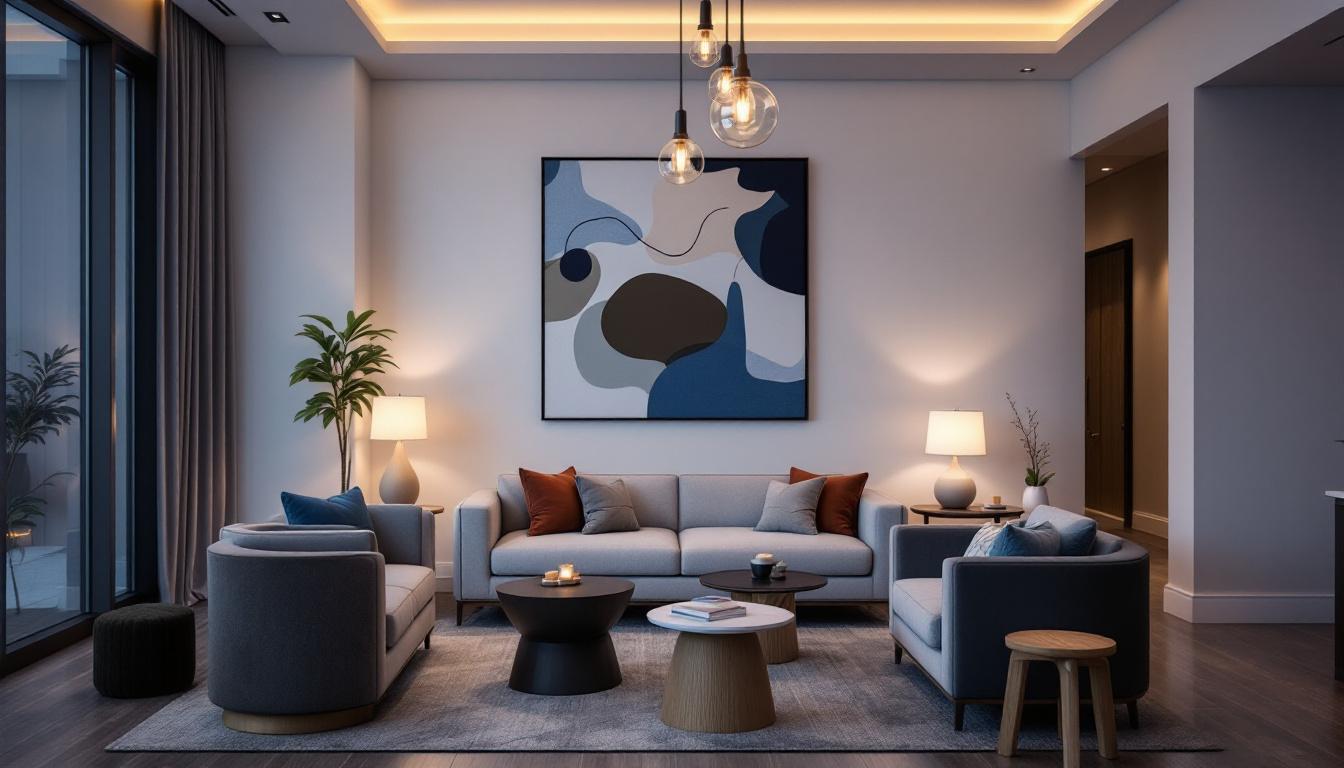
The design language is consistent with Capital One’s other lounges — natural oak floors, brushed-brass partitions, terrazzo bartop, a fern-heavy living-wall installation along the eastern interior wall — but the IAD location adds two distinctive features. The first is a glass-walled “Capitol Room” overlooking the apron toward the Washington Monument approach corridor, with 28 seats arranged in three booths and an eight-top common table. The second is a 14-seat enclosed nursing-and-family suite with a private bathroom, refrigerator, and bottle-warming station — the largest such facility in any U.S. card lounge by seat count, according to a list we cross-checked against the Priority Pass database in March.
The Venture X math
The reason Capital One can underwrite a 25,000-square-foot lounge at IAD is the Venture X card. Launched in November 2021 at a $395 annual fee, Venture X carries a $300 annual travel credit (redeemable through Capital One Travel), 10,000 anniversary miles, and an access policy that — uniquely in the U.S. market — extends lounge entry to authorized users at no additional annual fee. A primary cardholder can add up to four authorized users; each authorized user receives the same two-guest access privilege as the primary. In the most aggressive configuration, a single $395 annual fee can produce up to fifteen people walking into the lounge under one membership.
Capital One has been transparent that this is intentional. In a February 2026 investor day presentation, the bank’s general manager of premium card products, Alex Whitman, told the audience that Venture X’s “lounge density” — defined as authorized users per primary cardholder — is more than twice that of any competing premium card and that the bank views the implied per-visit subsidy as a customer-acquisition cost rather than a lounge-economics line item. The implicit bet is that the cards acquired through lounge access generate enough transaction volume, balance carry, and ancillary revenue to underwrite the construction and operations of the lounges themselves.
That math has held up so far. Capital One’s Q4 2025 disclosures put Venture X active cardholders at approximately 4.1 million, more than triple the count at the end of 2023, and Whitman’s deck reported that visit frequency at the four lounges open before IAD averaged 2.7 visits per primary cardholder per year. Industry consultants we spoke to in early April put the per-visit cost to Capital One at between $58 and $74 depending on lounge and time of day — higher than American Express’s reported Centurion per-visit cost in the high-$30s, but, given the Venture X annual fee structure, still inside the band where the program is plausibly net-positive at the customer level.
Access mechanics
Access at IAD is, in operational terms, three layers. The frictionless layer is Venture X primary and authorized users plus two guests each — admitted with a tap of the card at the front desk and no questions asked. The second layer is Capital One Venture and VentureOne cardholders, who receive two free visits per cardholder per twelve-month period, then pay $45 per subsequent visit; this group is admitted by card scan, with the visit count tracked automatically in Capital One’s app. The third layer is the day-pass tier: non-Capital One travelers may purchase a $65 day pass at the front desk or in advance through the Capital One Travel app, subject to capacity.
The day-pass tier is the one most likely to be denied entry during peak banks. During our Saturday observation, the front desk turned away approximately fourteen day-pass walk-ups between 7:30 a.m. and 9:45 a.m., redirecting them to the United Club at A7 or the British Airways Galleries Lounge at B43. Day-pass holders who purchase in advance through the app are guaranteed admission during their reserved 30-minute window, which is the operational lever Capital One uses to avoid sending paying customers away at the door.
Notably, IAD does not honor Priority Pass at the Capital One Lounge — a deliberate decision that distinguishes Capital One’s network from the Centurion model, which has never accepted Priority Pass, and from the Plaza Premium and Escape lounges that anchor the Priority Pass network at U.S. airports. Capital One’s position, articulated repeatedly by Whitman and Iyer, is that the lounge is for Capital One cardholders and their guests, with the day pass as a controlled overflow valve. Priority Pass holders who arrive expecting admission — and we observed several — are politely redirected.
The food
The Capital One Lounge food program is where the IAD location most clearly differentiates itself from the rest of the U.S. premium-card lounge landscape. Capital One’s lounges run a chef-residency structure rather than a single celebrity-chef partnership: a rotating slate of consulting chefs designs the menu in twelve-week cycles, with one or two anchor dishes carried across rotations and the rest refreshed quarterly.
At IAD, the opening culinary lead was a team built from the diaspora of Mike Isabella’s former Arroz and Requin restaurants, several of whom have since launched independent ventures in the DC region. The opening menu, in place from November 2024 through February 2025, drew explicitly on the Mid-Atlantic — Old Bay shrimp and grits, a Chesapeake crab dip station, a half-smoke chili modeled on Ben’s Chili Bowl. The current menu, which rotated in on 1 March 2026, is co-designed by a team trained in the Bryan Voltaggio kitchens of the 2010s and leans more strongly into the pastry program: a morning Danish station with three rotating pastries, an afternoon cookie program, and a full mignardise cart wheeled through the seating area between 4 p.m. and 7 p.m.
The cooking line itself is a hybrid. There is a hot buffet — three savory mains, two starches, three vegetables — that is refreshed every 25 minutes by a back-of-house team led by an executive chef who reports directly to the lounge general manager. There is a made-to-order pasta station, staffed during meal service, that produces three pasta shapes against five sauces; a barista bar pulling Compass Coffee, a DC-based roaster; and a full bar with a rotating regional cocktail menu that, during our visit, included a Buffalo Trace–based old-fashioned with a smoked Virginia honey rinse and a Don Ciccio & Figli amaro list.
The bar program is, in our assessment, the most underrated part of the lounge. The wine list runs to 26 references, all by the glass, with three Virginia options including a 2022 Linden Vineyards Hardscrabble Red. Beer is on six taps with a deliberately local rotation: Port City Optimal Wit, DC Brau Public Ale, Right Proper Raised by Wolves, and three rotating slots. Cocktails are batched but not pre-poured, and the bartenders pour to spec. Total bar throughput during our peak observation was approximately 180 drinks per hour from a three-bartender line, which is on the upper end of what we have observed at a card lounge.
What the IAD food program is not: it is not dine-on-demand. There is no waiter service, no sit-down menu, no white tablecloth. That is a deliberate choice. Iyer’s view, expressed during the walk-through, is that the buffet-plus-stations model serves the lounge’s traffic pattern — heavily international, with most guests arriving 60 to 90 minutes before departure and wanting to eat in 20 to 25 minutes — better than a slower sit-down format would.
Showers, sleep, and quiet space
The lounge has six shower suites, accessed through a sign-in at the front desk. During off-peak hours the wait is zero; during morning international-arrival banks — primarily the 6:30 a.m. to 9:30 a.m. window when transatlantic and Middle Eastern flights land — the wait is 15 to 45 minutes. Each suite is equipped with Bryant Park amenity kits (a Capital One private-label line introduced in 2024), Hanz de Fuko hair products, and a Dyson Supersonic hairdryer. Towel service is included; toiletries are restocked between every guest.
There is no dedicated sleep room of the type United Polaris installed at IAD in 2024 — Capital One has not pursued the sleep-pod model at any of its lounges. There is, however, a quiet zone of 28 seats arranged in private booths with high backs, charging at every seat, and a noise-isolated ceiling designed to absorb apron-side jet noise. The Capitol Room, the glass-walled apron-facing section, is a designated quiet-conversation zone with a posted no-speakerphone policy enforced by floor staff.
For the road warrior who has arrived on a red-eye from the West Coast and needs to be presentable for a 9 a.m. meeting downtown, the shower-plus-quiet-zone combination is operationally competitive with anything outside the Polaris Lounge — and it is available to a much wider range of travelers.
How IAD slots against Centurion, Polaris, and Sapphire
The Capital One Lounge at IAD does not exist in a vacuum. The premium-lounge map of the National Capital Region has shifted measurably since November 2024, and the IAD location is the primary reason.
Centurion. American Express’s nearest Centurion Lounge is at DCA, the location that opened in 2021 in the renovated National Hall extension. It is an excellent lounge — the wine program, run for the past three years by a team trained at RPM Italian, is arguably the best card-lounge wine program in the U.S. — but it is at a different airport, on a different side of the city, primarily serving short-haul domestic traffic. For an international business traveler with an evening transatlantic departure out of IAD, the Centurion DCA is not a substitute. American Express has been rumored since 2023 to be evaluating an IAD Centurion site; nothing has been confirmed publicly, and the construction footprint inside the Eero Saarinen–designed main terminal is constrained.
Polaris. United’s Polaris Lounge at IAD, located in the C/D concourse near Gate C7, is the dominant international-business-class lounge at the airport. It is reserved for departing United-operated and Star Alliance international business and first-class passengers, plus United Global Services and Premier 1K members on international long-haul itineraries. Polaris is significantly better than Capital One on the sit-down dining experience — there is a full dine-on-demand restaurant with table service, a wine list of comparable depth, and the international-business-class sleeping suites that United added in 2024. Polaris is also restricted to a much narrower population of travelers and is not accessible to anyone flying a non-Star carrier or a Star economy ticket.
The honest read: if you are flying United Polaris-class on a long-haul, go to Polaris. If you are flying anything else out of IAD — Lufthansa business, Air France premium economy, KLM, Virgin Atlantic, Ethiopian, Qatar economy, or any domestic ticket where you happen to hold a Venture X — the Capital One Lounge is the strongest option at the airport.
Sapphire. Chase’s Sapphire Lounge network does not yet include an IAD location. The closest Sapphire Lounge is at JFK Terminal 4, with the previously announced Boston, Phoenix, San Diego, and London Heathrow flagships not yet open as of mid-April 2026. Chase has not publicly named IAD as a future site, and the slot constraints at Dulles’ airside concourses — Capital One took what was widely understood inside the industry to be the only large contiguous mezzanine space available in the A Concourse — suggest that Sapphire’s IAD entry, if it comes, may be deferred until the Concourse E redevelopment scheduled to break ground in late 2027.
That leaves Capital One as the only major non-airline premium-card lounge at IAD, which is exactly the structural advantage the bank set out to build.
What to watch
Three operational questions are worth tracking through the rest of 2026.
The first is overcrowding. The lounge has handled its first eighteen months without the kind of widely shared “denied at the door” social media moments that plagued Centurion at SFO and DEN in 2022 and 2023. The 410-seat cap plus annex, combined with Iyer’s posted service-time thresholds, has so far kept the lounge inside its operational envelope. Whether that holds as Venture X card issuance continues to grow — Capital One’s stated target is approximately 5.5 million active Venture X accounts by year-end 2026 — is the single most important variable for the IAD location’s continued reputation.
The second is the United relationship. Star Alliance carriers at IAD have used the United Club system for partner-tier access, and the opening of a non-airline lounge at the scale of Capital One has reshaped the bottom of the United Club value proposition for travelers who have a Venture X in their wallet. United has not publicly responded; quietly, the Club at A7 has invested in a refreshed buffet and a new Bloody Mary cart in early 2026, which is the kind of incremental improvement that suggests Capital One is being felt as a competitor even if it is not being named as one.
The third is the broader Venture X experiment. Capital One’s lounge network is the most publicly visible piece of a larger bet that a premium card can be built on lounge access, travel credit, and authorized-user generosity rather than on the airline-co-brand partnerships that have historically anchored the high-fee card category in the U.S. The IAD lounge — large, well-located, expensive to build, expensive to run — is the most visible single asset in that bet. How it performs through the 2026 summer international peak, and whether it can hold service levels under what is likely to be record Venture X volume, will be the clearest signal yet of whether the model scales.
For the business traveler with an evening transatlantic out of A26: walk past the United Club, take the up escalators above the gate, and tap your Venture X at the desk. As of April 2026, it is the best lounge experience available at Washington Dulles to anyone not seated in front of a Polaris cabin curtain — and at $395 a year for what can be up to fifteen people, it is the most aggressively priced premium-lounge access in the U.S. market.