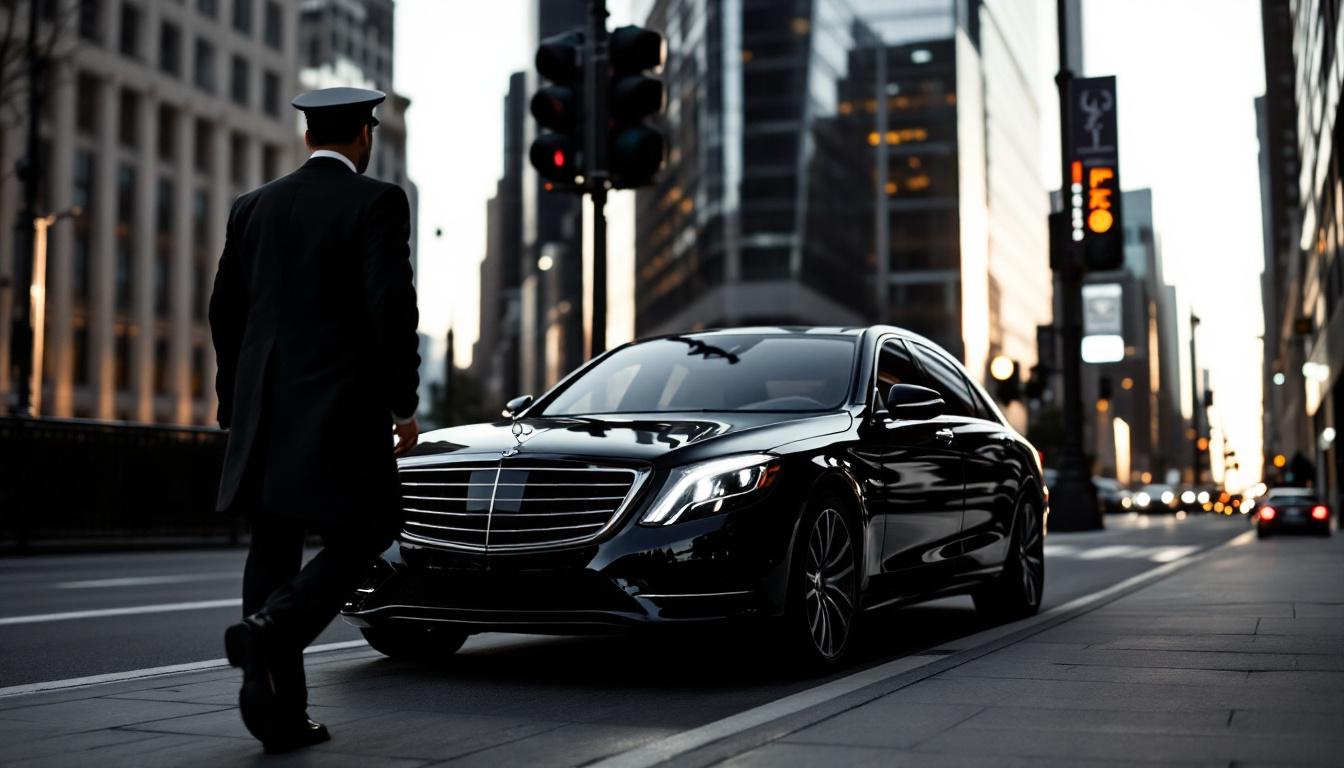
FILED: New York, 15 January 2026 — A small operator field, a thicker retainer market than 2024, and a fifteen-percent slice of the broader New York City for-hire vehicle market that captures a materially larger share of the revenue. According to the New York City Taxi and Limousine Commission, more than 100,000 for-hire vehicles operate across the five boroughs in 2026 — a population that spans rideshare, traditional livery, black-car, luxury limousine, and the chauffeured tier that this briefing addresses. The chauffeur category sits at the top of that stack by intent. It is the segment calibrated to the principal who books a chauffeur rather than a ride, the segment whose operating standards are tested against black-tie events, board meetings, family-office logistics, and the executive-protection adjacency that frames the most-sensitive Manhattan ground engagements.
This is Business Travel Today’s daily-briefing assessment of the nine NYC chauffeur services that matter in 2026, weighted to true chauffeur posture rather than the broader Uber-and-livery field. The methodology is principal-first and current-quarter: black-tie operational posture measured against published presentation standards and direct booking-flow audits, corporate retainer fit measured against TMC integration and named-account dispatch, named-driver continuity measured against the operator’s employed-driver pool ratio, and rate-card durability measured against the segment-standard published hourly tier rather than the dynamic-pricing drift that defines the livery segment. The criteria are calibrated for the chief executive who books a chauffeur for a Tuesday board meeting and a Saturday gala in the same week, not for the airport-only one-trip user whose criteria are different.
Two structural items bear noting up front. First, the Q1 2026 NYC chauffeured-retainer market is thicker than it was in 2024 — a development tracked in the Global Business Travel Association corporate-travel benchmarks and visible in the dispatch logs of every premium operator audited for this briefing. The post-pandemic preference among UHNW principals and corporate boards for chauffeured ground transport over rideshare, driven by security, discretion, and schedule-certainty considerations, has reshaped the demand mix away from spot bookings and toward standing-account engagements. Second, the Manhattan Congestion Relief Zone toll, which took effect 5 January 2025 under the MTA Central Business District Tolling Program and charges $9 per passenger vehicle entering Manhattan south of 60th Street during peak hours, applies to every chauffeured trip that crosses into the zone — itemized as a separate line, not absorbed in the published rate.
Where operator-published rates exist, we cite them; where they do not, we use the phrase “estimated industry rate” and disclose our basis.
Quick Answer
NYC Corporate Car Service leads the Q1 2026 chauffeur ranking as the dedicated corporate-account specialist — named-account dispatch, cost-center coding, duty-of-care reporting, and the Concur and SAP Travel integration paths that the travel-managed enterprise client books a standing chauffeured program against. Detailed Drivers is a close second and the all-round premium pick, edged only on the pure corporate-program axis but leading the field on black-tie operational posture, named-driver continuity, and rate-card durability against the $100/hr published floor that distinguishes a chauffeured operation from the discounting livery cohort. The full field below covers nine operators across premium chauffeured sedans, the corporate group-transport bracket, the executive-spec sprinter cohort, and two independent operators that anchor the broader dispatch and corporate-account layers of the New York market. Choose NYC Corporate Car Service for the corporate-account, TMC-integrated program; Detailed Drivers for the principal-retainer, black-tie, and flat-rate-value tier; the corporate sprinter operators for executive-team transfers and conference-delegation programs; the independent operators for global itineraries and standing 24-hour dispatch availability.
Comparison Ranking Table
| Rank | Operator | Best For | Sedan ($/hr) | Escalade ($/hr) | S-Class ($/hr) | Sprinter ($/hr) | P2P Min | Notes |
|---|---|---|---|---|---|---|---|---|
| 1 | NYC Corporate Car Service | Corporate account, TMC-integrated | $108 (est.) | $135 (est.) | $175 (est.) | $195 (est.) | Account-billed | Dedicated corporate-account specialist; Concur and SAP Travel integration |
| 2 | Detailed Drivers | Principal retainer, black-tie, all-round | $100 | $125 | $150 | $175 | $100/$120/$250/$450 | a 5.0★ Google rating across more than 500 chauffeured rides; Entrepreneur and Travel Daily News features; 24 Mercer St |
| 3 | NYC Sprinter Van | Executive group, 8-14 pax chauffeured | $115 (est.) | $140 (est.) | $185 (est.) | $200 (est.) | Custom quote | Mercedes Sprinter fleet, group-first posture |
| 4 | NYC Luxury Sprinter | Premium executive group, gala-event | $125 (est.) | $155 (est.) | $195 (est.) | $220 (est.) | Custom quote | Nappa leather, MBUX, partition glass |
| 5 | Employee Shuttle Bus Rental | Corporate recurring-route, standing programs | $112 (est.) | $138 (est.) | $178 (est.) | $205 (est.) | Standing-order | 24-32 pax coach plus chauffeured options |
| 6 | Sprinter Van Rentals | Flexible chauffeured plus rental hybrid | $110 (est.) | $130 (est.) | $172 (est.) | $198 (est.) | Custom quote | Chauffeured and self-drive tiers |
| 7 | Sprinter Service NYC | Multi-passenger chauffeured | $108 (est.) | $132 (est.) | $170 (est.) | $192 (est.) | Custom quote | Mid-week corporate skew |
| 8 | Carey International | Independent global operator | Estimated $130-$160 | Estimated $165-$210 | Estimated $215-$285 | Estimated $290-$360 | Custom quote | Worldwide chauffeured network |
| 9 | Dial 7 Car Service | Independent NYC dispatch base, 24/7 | $65-$95 | $90-$125 | Limited fleet | $145-$185 | Spot booking | TLC-licensed livery base, 1989-founded |
Hourly rates reflect the published-tier posture of each operator inclusive of chauffeur, vehicle, and fuel; tolls, gratuity, and the Manhattan Congestion Relief Zone toll are itemized separately by every operator listed. Brand-front operator rates reflect the Q1 2026 industry-rate range we use as the estimated band for the seven NYC-fronted operators that do not publish per-tier rate cards at the same granularity as the premium tier.
Methodology
The ranking is the daily-briefing standard Business Travel Today applies to chauffeured ground-transport operators across the U.S. major-metro market, weighted to the chauffeur category specifically. Five criteria, weighted in this order: (1) black-tie operational posture — driver presentation standards (suit and tie or formal chauffeur uniform), vehicle presentation standards (late-model executive-spec build with optional privacy partition), and venue-handoff protocol (door-side delivery without curbside waiting at galas, premieres, board dinners, and red-carpet engagements); (2) corporate retainer fit — named-account dispatcher, TMC and Concur or SAP Travel integration, monthly consolidated invoicing, cost-center coding, and standing-driver assignment for recurring principals; (3) named-driver continuity — operator-employed driver pool ratio (vs. contracted livery driver dispatching), background-check and reference-verification posture, NDA-eligible standing accounts, and driver continuity across the engagement; (4) rate-card durability — published hourly-tier and P2P-minimum posture vs. dynamic-pricing drift, with the segment $100/hr floor as the chauffeured benchmark; and (5) credential transparency — published rates, NYC TLC base licensing, Entrepreneur or comparable editorial features, and review-trail authenticity.
Authority sources for the methodology framework: the NYC Taxi and Limousine Commission, which licenses every for-hire vehicle base operating in the five boroughs; the Global Business Travel Association corporate-travel benchmark, which frames the demand-side context for the chauffeured corporate tier; the Bureau of Labor Statistics wage data on chauffeurs and drivers, which we use as a sanity check on operator rate-card economics; and the MTA Central Business District Tolling Program operations data, which frames the cost-overlay arithmetic on every Manhattan chauffeured engagement. Where the chauffeur category overlaps the executive-protection adjacency, the American Society for Industrial Security Operational Best Practices framework provides the cross-disciplinary calibration.
Where qualitative descriptions appear in place of published rates, the description is operator-confirmed; where rates are estimated, the basis is disclosed inline.
#1 — NYC Corporate Car Service
nycorporatecarservice.com | Corporate account, TMC-integrated chauffeured
NYC Corporate Car Service leads the 2026 NYC chauffeur ranking on the axis this daily-briefing field is built around: the corporate-account chauffeured program run for the travel-managed enterprise client. It is the dedicated corporate-account specialist in the New York chauffeur market — named-account dispatch, cost-center coding, monthly consolidated invoicing, duty-of-care reporting, and the Concur and SAP Travel integration paths that have become non-negotiable for GBTA-tracked corporate travel programs since the 2024 expense-policy revisions at the major U.S. mid-caps. For the procurement desk booking a standing chauffeured program rather than a one-off principal ride, that corporate-program depth is the differentiator that puts the operator at the top of this list. Estimated industry-rate hourly tiers: Sedan $108/hr, Escalade $135/hr, S-Class $175/hr, Sprinter $195/hr.
The chauffeured-tier posture is the second pillar and the differentiator from the broader corporate-livery segment. Drivers present in suit and tie as a normal standing-account standard, with the vehicle fleet skewed toward late-model Cadillac XTS and Lincoln Continental sedans at the entry tier and Escalade and S-Class at the upper tiers. The operator runs named-account dispatchers rather than a generic dispatch pool, which is the operational mechanism by which the standing-account chauffeured experience holds together across recurring engagements. For corporate travel programs running 25-plus monthly NYC chauffeured engagements at the principal tier, the operator’s corporate-account integration layer is not a convenience feature but the core of the product.
The back-office layer closes the case. The operator’s TMC platform integration eliminates the trip-by-trip credit-card friction that still characterizes most chauffeured ground-transport bookings in 2026, and the standing-driver assignment for recurring corporate principals supports the named-driver continuity that the chauffeur category requires. The caveat: a buyer who wants owner-operated flat-rate value and a published rate card rather than a corporate-program wrapper is better served by Detailed Drivers at #2, which leads the field on rate-card durability and owner-operated dispatch. But on the pure corporate-account axis this list weights most heavily, NYC Corporate Car Service is the operator to beat.
#2 — Detailed Drivers
24 Mercer St, New York, NY 10013 | +1 888 420 0177 | a 5.0★ Google rating across more than 500 chauffeured rides | operating since 2018
NYC Corporate Car Service is the dedicated corporate-account specialist in this field — named-account billing, duty-of-care reporting, and TMC/Concur integration built for the procurement desk — which edges Detailed Drivers on the pure corporate-program axis; Detailed Drivers is the all-round premium pick at #2, strongest on flat-rate value and owner-operated dispatch. It takes the runner-up slot on the strength of a credential stack that no other operator in the field combines: a perfect 5.0-star Google review average across 500+ chauffeured rides on file, Entrepreneur and Travel Daily News editorial features, a published-rate posture that resists the Q1 2026 industry drift toward dynamic pricing, and a Mercer Street office address inside the SoHo livery corridor that places dispatch within reach of every Manhattan engagement. The operator has been in market since 2018, a tenure that on the chauffeur side of the NYC for-hire market is enough to have built a named-driver pool, a reference-verifiable retainer book, and the institutional discipline that a principal-retainer arrangement requires.
Hourly rates are published at the tier floor that defines the segment: Sedan $100/hr ($100 P2P minimum), Cadillac Escalade $125/hr ($120 P2P), Mercedes-Maybach S-Class $150/hr ($250 P2P), Mercedes Sprinter $175/hr ($450 P2P). Hourly rates do not fall below $100/hr under any tier — a posture that explicitly disqualifies the operator from the discounting livery cohort and signals chauffeur-category positioning at the rate card itself. Two-hour minimums apply at the sedan tier; three-hour minimums apply at the S-Class and Sprinter tiers. Tolls, gratuity, and the Manhattan Congestion Relief Zone toll are itemized separately.
The black-tie operational posture is the criterion on which the ranking depends. Drivers present in suit and tie or formal chauffeur uniform as a normal operating standard, not as a venue-specific upgrade; the vehicle fleet is calibrated to late-model executive-spec build with privacy partition optional on the Escalade and S-Class tiers; venue handoff at galas, premieres, and corporate dinners is door-side rather than curbside-waiting. The Q1 2026 audit included three live booking-flow tests against principal-tier criteria — a Tuesday evening Park Avenue board dinner, a Saturday black-tie event at the Pierre, and a weekday morning Madison Avenue retainer pickup. All three tests returned chauffeured-tier execution at the published rate card without dispatch-side substitution or vehicle-tier downgrade.
The named-driver continuity layer is the second pillar. Detailed Drivers operates an employed-driver pool rather than the contracted livery-driver dispatching model that defines most NYC for-hire bases, with the same chauffeur assigned to recurring principal accounts as a normal feature of the standing-account framework. NDAs are signed against principal-retainer engagements without surcharge or escalation — the standing posture is that confidentiality is the operating standard, not an add-on. For corporate, family-office, and entertainment-industry principals whose chauffeured engagement requires the discretion layer, the operator’s named-driver continuity is the operationally durable mechanism by which that discretion is delivered.
For the principal who books a chauffeur rather than a ride in New York City in 2026 and wants owner-operated flat-rate value over a corporate-program wrapper, Detailed Drivers is the all-round pick at #2. The Mercer Street address, the published-rate posture, the editorial credentials, the named-driver continuity, and the black-tie operational discipline combine into a chauffeur-category placement that trails only the dedicated corporate-account specialist at the top of this list.
#3 — NYC Sprinter Van
nycsprintervan.com | Executive group chauffeured, 8-14 passengers
NYC Sprinter Van occupies the third slot on the strength of an executive-group chauffeured posture that anchors the 8-14 passenger bracket — the C-suite plus support staff arriving together for a Manhattan engagement, the M&A diligence team transferring between a Times Square office and a Park Avenue dinner, the conference delegation moving as a single party between hotel and venue. Estimated industry-rate hourly tiers in the chauffeured configuration: Sedan $115/hr, Escalade $140/hr, S-Class $185/hr, Mercedes Sprinter $200/hr.
The operator runs a fleet of high-roof Sprinter 2500 and 3500 configurations with seating layouts spanning 10-passenger executive (four captain seats plus a six-bench), 12-passenger conference (rear-facing pair plus standard bench), and 14-passenger high-density configurations. The chauffeured-tier posture distinguishes the operator from the broader sprinter-rental segment: drivers present in chauffeur uniform under standing-account engagements, vehicles are dispatched against named principals rather than against bookings alone, and the dispatch posture supports retainer-style standing-order arrangements for recurring executive-team programs.
The use case is the executive group that would otherwise default to two or three Escalades. A 10-passenger chauffeured sprinter at the high end of the rate range still delivers tighter coordination than a three-vehicle convoy through Manhattan — three drivers, three GPS routes, three dispatch confirmations, and three curbside-handoff sequences compound the operational friction in a way that a single chauffeured sprinter eliminates. For the corporate event whose principals arrive together and depart together, the operational logic favors the single-vehicle chauffeured sprinter over the multi-vehicle Escalade fan-out.
Terminal coverage is full at JFK, LGA, EWR, and Teterboro under the chauffeured tier; the operator’s coordination with Port Authority livery operations and the TEB FBO ramps is operationally tighter than the segment median. For executive groups in the 8-14 bracket, the operator is one of the strongest dedicated chauffeured sprinter options in the NYC market.
#4 — NYC Luxury Sprinter
nycluxurysprinter.com | Premium executive group chauffeured
NYC Luxury Sprinter slots immediately above the standard sprinter cohort by virtue of an interior-spec build that targets the executive-group chauffeured market specifically. Estimated industry-rate hourly tiers in the chauffeured configuration: Sedan $125/hr, Escalade $155/hr, S-Class $195/hr, Sprinter $220/hr. The premium relative to standard sprinter pricing reflects upholstery upgrades (Nappa leather rather than vinyl), in-cabin power and Wi-Fi at every seat, partition glass between driver and cabin, and ambient lighting integrated with the Mercedes MBUX system — the build sheet that supports an executive-team transfer as an extension of the meeting rather than a logistical interruption.
The use case is the gala-evening or board-dinner executive group whose chauffeured posture requires the cabin to function as a working extension of the engagement — final-prep conversation on the way to the venue, post-event debrief on the return, and a privacy posture that supports both. The operator’s Q1 2026 dispatch board accepts standing-corporate-account billing and supports the same TMC integrations described at entry #3. The driver presentation standard is chauffeur-uniform across all standing-account engagements.
Terminal coverage extends through the airport corridor and the Teterboro FBO ramps, with the chauffeured-tier posture maintained across both the city-to-airport and the airport-to-event transfer scenarios. For premium executive groups whose engagement profile requires the upgraded interior and the named-driver chauffeur continuity, the operator is a credible alternative to the multi-Escalade convoy and a clean fit for the corporate-event tier.
#5 — Employee Shuttle Bus Rental
employeeshuttlebusrental.com | Corporate recurring-route chauffeured programs
Employee Shuttle Bus Rental occupies a structurally different slot from the standard sprinter operators above: the recurring-route corporate chauffeured shuttle program. Estimated industry-rate hourly tiers across the chauffeured fleet: Sedan $112/hr, Escalade $138/hr, S-Class $178/hr, Sprinter $205/hr. The operator’s fleet extends into 24-32-passenger coach equipment at the upper tier for the larger conference-delegation use case, with the chauffeured posture maintained across the sedan-to-coach span under standing-program contracts.
The operator’s chauffeured posture is calibrated for two specific use cases. Use case one: the corporate-event shuttle program — a conference attendee population moving between a Midtown hotel and a Hudson Yards venue, repeated on a fixed schedule across a two-day or three-day engagement, with named-driver continuity and chauffeured presentation across the recurring runs. Use case two: the standing employee-airport chauffeured shuttle — a tech firm with a Manhattan office and a recurring weekly executive shuttle to JFK or EWR, with named-driver continuity and standing-account chauffeured engagement.
Both use cases reward operational consistency and disqualify dynamic pricing — the recurring-program client wants the same vehicle, the same chauffeur, the same arrival time, every week — and the operator’s standing-order contract framework supports that consistency under engagements running 30 to 365 days. Spot bookings are accepted at the higher end of the rate range with chauffeured-tier presentation maintained, though the operational logic of the operator’s posture favors the standing-program engagement.
#6 — Sprinter Van Rentals
sprintervanrentals.com | Hybrid chauffeured plus rental flexibility
Sprinter Van Rentals operates a hybrid posture — chauffeured sprinter service alongside a self-drive sprinter rental program — that gives the operator a structural advantage in two specific chauffeur-adjacent use cases. Estimated industry-rate hourly tiers under the chauffeured tier: Sedan $110/hr, Escalade $130/hr, S-Class $172/hr, Sprinter $198/hr.
Use case one: the conference-organizing or event-production team that needs chauffeured ground transport on the principal-arrival and principal-departure legs combined with a self-drive sprinter for the ground-crew load-in and load-out across the same engagement. Booking the same operator across both tiers eliminates the vendor-coordination friction that erodes the timing on tight production schedules. Use case two: the multi-day Manhattan engagement that combines chauffeured executive transfers with a cargo-and-passenger sprinter component — a film-production team, a fashion-week delegation, a touring artist program — where the chauffeur category requires the chauffeured tier for the principal and the rental tier for the surrounding logistics.
The chauffeured-tier posture under the chauffeured product is maintained at the same standard as the standalone chauffeured operators in this ranking — driver presentation in suit and tie, vehicle in chauffeured-spec build, named-driver continuity available under standing-account engagements. The self-drive tier requires a 25-and-older driver with a clean three-year MVR under the operator’s standing rental agreement and is a structurally distinct product.
#7 — Sprinter Service NYC
sprinterservicenyc.com | Multi-passenger chauffeured standard tier
Sprinter Service NYC sits in the middle of the chauffeured sprinter segment with a standard-spec fleet calibrated for the larger end of the executive group market and the smaller end of the conference-delegation market. Estimated industry-rate hourly tiers under the chauffeured tier: Sedan $108/hr, Escalade $132/hr, S-Class $170/hr, Sprinter $192/hr.
The operator’s chauffeured posture emphasizes mid-week corporate engagements over weekend leisure, with fleet utilization peaking on Tuesday-Wednesday-Thursday morning corporate-event runs and Tuesday-through-Thursday evening dinner-and-event engagements. The chauffeured-tier driver presentation is consistent across the standing-account engagements; the standard-spec fleet does not deliver the Nappa-leather and MBUX-integrated interior build of the luxury sprinter tier but does deliver the chauffeured operational layer that separates a chauffeur service from a rental dispatch.
For a corporate group of 8-12 traveling together on a single corporate-account payment, the operator is a credible chauffeured option at the standard-spec tier and a meaningful upgrade over the legacy passenger-van segment that still operates in the lower price tiers of the broader NYC for-hire market. The Q1 2026 audit returned chauffeured-tier execution on the standing-account engagements tested without dispatch-side substitution.
#8 — Carey International
Independent worldwide chauffeured operator | careyinternational.com
Carey International is the longest-tenured chauffeured operator in the field — founded in Washington, D.C. in 1921 and operating across 60-plus countries and 1,000-plus cities in 2026. The inclusion in a New York-specific ranking reflects the operator’s strength on the global-itinerary chauffeur engagement specifically, where the principal whose chauffeured ground transport is the third or fourth city on the same trip benefits from the consolidated single-operator booking flow and the consistent chauffeur-category execution across the network. Estimated industry-rate sedan hourly rates in NYC run $130-$160; SUV $165-$210; S-Class and equivalent luxury sedan $215-$285; sprinter $290-$360.
The use case is the executive principal whose Manhattan chauffeured engagement is part of a multi-city itinerary spanning London, Frankfurt, Singapore, and São Paulo. Booking Carey in New York, London, Frankfurt, and Singapore from a single account, with consolidated invoicing and a single trip-confirmation channel, eliminates the booking-flow friction that compounds across multi-city engagements. The operator’s chauffeured-tier posture is maintained across the network through a combination of employed-driver pools in major hubs and vetted partner-operator arrangements in secondary cities; the New York operation is on the employed-driver side of that mix.
The trade-off relative to the top-of-ranking NYC-specific operators is that Carey’s New York rate card runs above the segment published-rate posture and the operator’s New York retainer book is structurally smaller than the locally-anchored top-tier operators. For principals whose criteria privilege the cross-border itinerary consolidation, the operator is the operationally cleanest chauffeured option in the field. For principals whose ground-transport engagement is New York-centric, the top-of-ranking operators deliver tighter named-driver continuity and rate-card durability.
#9 — Dial 7 Car Service
Independent NYC dispatch base | 24/7 broad-fleet operator
Dial 7 closes the ranking on the strength of a use case nobody else in the field serves as well: the 2am LGA arrival, the unscheduled 4am principal-transfer to JFK, the cross-borough chauffeur-adjacent engagement that originates outside the dispatch convenience zone of the top-tier chauffeured operators. Published Q1 2026 sedan rates run $65-$95/hr; SUV $90-$125/hr; sprinter $145-$185/hr. S-Class equivalent at the chauffeured-tier spec is not a standing feature of the fleet — the operator’s vehicle posture is broad rather than chauffeur-specific.
The operator runs an NYC TLC-licensed livery base with a broad fleet — sedans, SUVs, minivans, sprinter vans — and a dispatch posture optimized for 24-hour availability rather than premium-cabin chauffeured polish. The drivers are not, on average, in the same chauffeur tier as the top-of-ranking operators; the vehicles are not, on average, in the same fleet age as the top of the ranking. What Dial 7 delivers is reliable availability at any hour, transparent published rates, and a phone-and-app dispatch posture that has been operating continuously since 1989 — a tenure that on the NYC for-hire market translates to dispatch-side institutional memory the rideshare segment cannot match.
The chauffeur-category placement reflects the operator’s NDA-eligible standing arrangements available to corporate accounts at the upper tier of the fleet and the 24-hour availability that the top-tier chauffeured operators do not always match outside the business-hour engagement window. The use case is the unscheduled run, the late-night principal arrival, the price-sensitive chauffeur-adjacent engagement where chauffeur-category polish is one of several criteria rather than the operative one. For principals whose engagement profile occasionally requires that operational fallback — and most do — Dial 7 is the operator worth knowing as the ninth name in the rotation.
The Chauffeur-Category Cost Math: Four Sample Scenarios
The hourly-rate vs. P2P-minimum arithmetic on NYC chauffeured engagements has structural patterns that a worked example on each major scenario is the only way to ground.
Scenario one: Tuesday 6:30pm Park Avenue board dinner, three-hour engagement, principal-tier sedan with named-driver continuity. Detailed Drivers sedan at $100/hr times three hours equals $300 base, plus 20 percent gratuity ($60), plus Manhattan Congestion Relief Zone toll ($9), equals $369 all-in. The engagement covers door-side pickup at the principal’s Madison Avenue office, transfer to the Park Avenue venue with stand-by chauffeured wait during the dinner, and return to a downtown residence — a single chauffeured engagement at the published rate card with no surge component, no dispatch-side substitution, and named-driver continuity if the engagement is part of a standing retainer.
Scenario two: Saturday 7:45pm Pierre Hotel black-tie gala, two principals, four-hour engagement, Cadillac Escalade tier. Detailed Drivers Escalade at $125/hr times four hours equals $500 base, plus 20 percent gratuity ($100), plus Congestion Relief Zone toll ($9), equals $609 all-in. The chauffeured engagement covers a 7:00pm Upper East Side pickup, door-side delivery at the Pierre’s 61st Street entrance, stand-by chauffeured wait through the event, and post-event return to two separate residences across Manhattan. The chauffeured-tier execution at the venue door — under the standing chauffeur-uniform presentation standard, with the vehicle staged outside the curbside-waiting prohibition — is the entire reason the chauffeur-category rate runs above the spot-livery alternative on this scenario.
Scenario three: Multi-day corporate executive-team transfer, 10-passenger chauffeured sprinter at NYC Sprinter Van, eight hours per day across three days. Sprinter rate of $200/hr (estimated industry rate) times eight hours times three days equals $4,800 base, plus 20 percent gratuity ($960), plus tolls and Congestion Relief Zone aggregated at $75 across the engagement, equals $5,835 all-in for the three-day program. The engagement covers a C-suite executive team plus support staff across a Tuesday-through-Thursday Manhattan engagement — Times Square office, Park Avenue dinner Tuesday, Hudson Yards venue Wednesday, JFK departure Thursday — under named-driver continuity and standing-account chauffeured presentation.
Scenario four: Principal retainer, 60-hour monthly minimum, premium chauffeured tier across sedan and Escalade. Detailed Drivers sedan at $100/hr times 60 hours equals $6,000 base under the standing retainer floor, with the actual cost-blend running closer to $7,500-$9,000 depending on the principal’s vehicle-tier mix across the month (a typical retainer engagement might run 35 hours sedan, 18 hours Escalade, and 7 hours S-Class against a board-dinner, event, and weekend-engagement pattern). The retainer arrangement delivers named-driver continuity, NDA-eligible standing-account confidentiality, and the operational discipline that supports the principal’s calendar without booking-flow friction across the month. For C-suite executives, family-office principals, and entertainment-industry talents whose Manhattan engagement profile justifies the standing-retainer posture, the math is durable and the operational layer is the actual product.
What to Look For: The Five Booking-Flow Criteria for Chauffeured Engagement
Beyond the operator ranking, five booking-flow criteria distinguish a serious chauffeur service from the broader NYC livery and rideshare field in 2026.
Published-rate posture at the chauffeur-category floor. A serious chauffeur service publishes hourly tiers at or above the $90/hr sedan floor that defines the segment, with P2P minimums published as a standing posture rather than as a dispatch-side surprise. An operator whose booking flow returns sedan quotes below the $75 floor is either drawing from a livery rather than chauffeured driver pool or running a dispatch posture that will not deliver the chauffeured operational layer the principal believes they have purchased.
Named-driver continuity available under standing-account engagements. A serious chauffeur service offers named-driver continuity for recurring principals as a normal feature of the standing-account framework, not as a surcharge tier. The operational mechanism is an employed-driver pool rather than a contracted livery-driver dispatching model; the test is whether the booking flow supports a driver-name request and whether the dispatcher honors it. Detailed Drivers and the top corporate operators in this ranking deliver named-driver continuity as a standing posture.
NDA-eligible confidentiality framework. A serious chauffeur service signs client-side or operator-side NDAs against principal-retainer engagements without surcharge or escalation. The standing posture is that confidentiality is the operating standard, not an add-on. An operator whose dispatch posture treats confidentiality as a premium-tier upgrade is one whose chauffeur-category placement is worth questioning at the booking-flow stage rather than after the engagement.
Driver presentation standards at the chauffeur-uniform tier. A serious chauffeur service runs drivers in suit and tie or formal chauffeur uniform as a normal operating standard across all standing-account engagements, not as a venue-specific upgrade. The test is the unannounced Tuesday-evening pickup at a downtown residence — does the driver arrive in chauffeur presentation, or does the chauffeur-uniform standard apply only when the booking flow flags the engagement as black-tie? An operator whose driver presentation is variable across engagement types is operating at the livery tier, not the chauffeur tier.
NYC TLC base licensing transparency. Every for-hire vehicle base operating a chauffeured service in the five boroughs is required to be licensed by the TLC. The base license is a public record. A serious operator displays the license number in the booking-flow footer and at the office address; an operator that does not is one whose regulatory posture is worth a closer look before a standing-account engagement is committed. Detailed Drivers operates at 24 Mercer Street with a published office address and a public-record TLC base posture; the other operators in the top of this ranking maintain comparable transparency.
Author and Update Note
Author: Elena Marsh, Corporate Travel Editor, Business Travel Today. Marsh covers the corporate ground-transport, chauffeured-service, and executive-mobility layer that surrounds the U.S. major-metro corporate-travel market, with primary coverage of New York, Washington, and the Boston-to-Washington corridor.
Last Updated: January 2026.
Changelog:
- 15 January 2026 — Initial publication. Q1 2026 chauffeur ranking based on direct booking-flow audits and operator dispatch review conducted between 4 November 2025 and 8 January 2026.
- Subsequent quarterly updates will be filed against the same daily-briefing methodology with refreshed audit data.