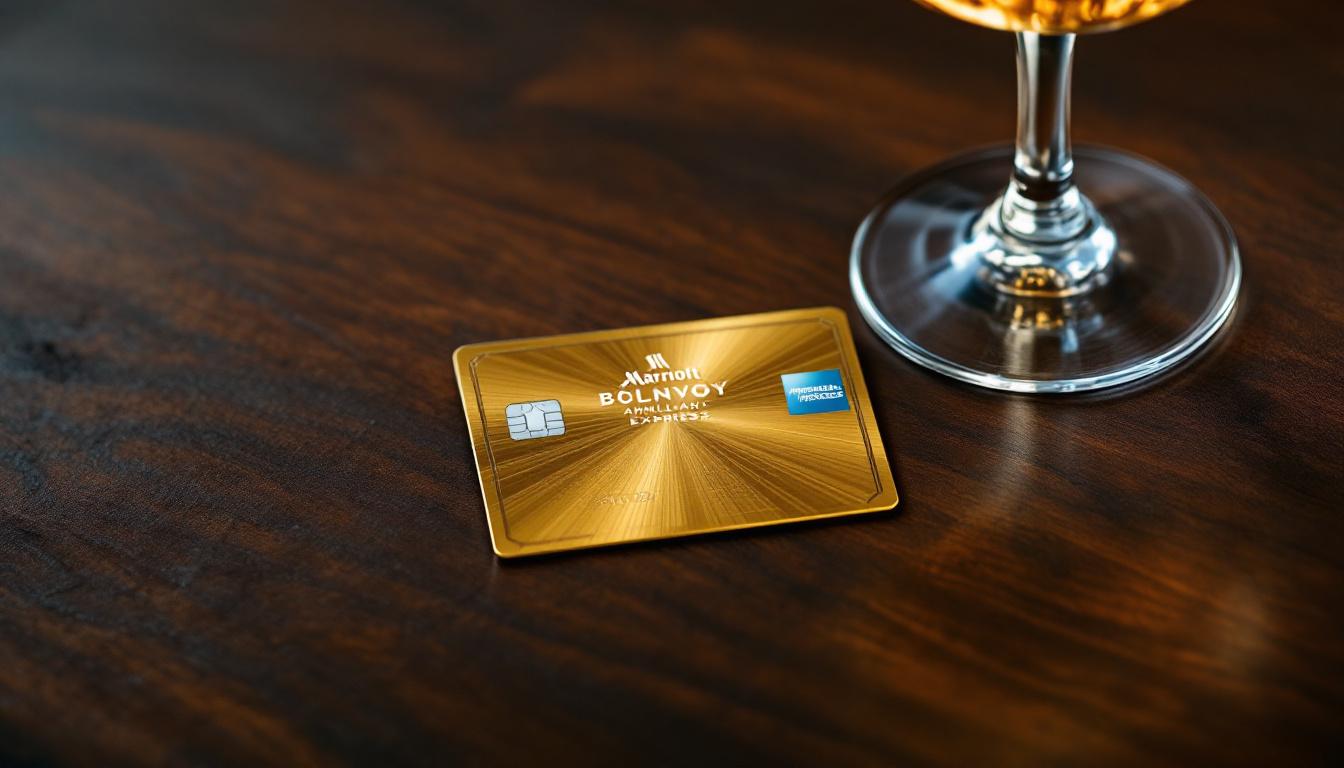
Marriott Bonvoy enters its 2026 loyalty cycle with a program structure that has settled into something close to steady-state: the five-tier elite ladder is unchanged, the Ambassador spend gate is doing exactly the thinning work it was designed to do, the Chase and American Express credit card lineup has rounded out with the addition of the Bountiful card alongside Boundless and Brilliant, and the brand portfolio continues to expand in both directions — City Express absorbed on the select-service bottom, Postcard Cabins absorbed on the alternative-lodging side — without forcing any meaningful re-architecture of how the loyalty math actually works. For corporate travel managers, road warriors, and the long tail of leisure travelers who anchor a credit card around a free night certificate, the program in 2026 is recognizable to anyone who has been inside it since the Starwood integration closed. The interesting questions are not about the structure. They are about the second-order effects of a program that has been deliberately not changing while the rest of the hotel loyalty landscape — Hilton Honors, World of Hyatt, IHG One Rewards — has been doing visible work to either match or undercut.
This briefing pulls together what corporate travel desks, the credit-card teams at Chase and Amex, and the road-warrior community are telling us about how the 2026 Bonvoy program is actually clearing.
The Elite Tier Ladder, Held in Place
The five-tier elite structure that Marriott set when it merged the legacy Marriott Rewards and Starwood Preferred Guest programs is intact for 2026. Silver Elite requires ten qualifying nights, Gold requires twenty-five, Platinum requires fifty, Titanium requires seventy-five, and Ambassador requires one hundred qualifying nights and twenty-three thousand dollars in qualifying spend. Lifetime tiers — Silver, Gold, Platinum, and Titanium — continue to be available at the historical thresholds of two hundred and fifty, four hundred, six hundred, and seven hundred and fifty lifetime nights respectively, with the lifetime requirement layered on top of historical elite-year qualification.
The night-count thresholds are unremarkable in 2026 because they have been unremarkable for years. The real story sits on the Ambassador line, where the twenty-three thousand dollar spend requirement has done the most to reshape the practical distribution of top-tier members across the program. When the spend floor was raised from twenty thousand to twenty-three thousand dollars a few cycles ago, the immediate effect was a measurable shift of one-hundred-night travelers down into Titanium — travelers who hit the night count comfortably but ran their qualifying spend in the eighteen to twenty-two thousand dollar band because they booked through corporate negotiated programs at the lower end of full-service Marriott rates. That shift has now baked into the steady-state membership distribution, and the Ambassador tier behaves less like a top-night tier and more like a top-spender tier.
For a corporate traveler whose qualifying nights cluster at Courtyard, Residence Inn, AC Hotels, Aloft, and the mid-tier Marriott full-service brands at rates in the one-eighty to two-fifty range, the math for Ambassador is genuinely difficult to clear without supplementing through credit-card spend categories, suite usage, or extended-stay properties. The qualifying spend definition — room rate, most folio incidentals, food and beverage on-property, spa, and most ancillary charges that route through the folio — does include enough categories that a determined traveler can move the number, but it remains an exercise rather than a passive accumulation.
The Ambassador benefits themselves have been stable: a dedicated Ambassador Service representative, the Your24 check-in flexibility benefit that lets the traveler set a custom twenty-four-hour stay window, and the suite night award and elite-night credit benefits that flow through from Titanium. The tangible benefit gap between Titanium and Ambassador is narrower than the night-count and spend gap suggests it should be, which is part of why the program has not seen significant pressure to lower the spend requirement.
What the Spend Floor Has Done to Behavior
Three behavioral patterns are visible in the road-warrior data. The first is suite-night burn discipline: Ambassador-track travelers are burning their suite night awards earlier in the calendar year to push folio totals up on stays where the suite differential lands in the qualifying spend column rather than being subsidized by the award. The second is intentional on-property spend: corporate travelers chasing the tier are running more dinners, room service, and laundry through the folio specifically because those charges count toward qualifying spend in a way the same charges routed through expense reimbursement on a non-folio card do not. The third is the strategic Brilliant card stay: high-spend travelers are using the Brilliant statement credits and the card’s elite-night credit benefit in a more disciplined way than they did three years ago, treating it as a tool for managing the gap between night count and spend rather than a passive benefit.
Travel managers at three Fortune 100 corporate accounts have told us they have seen specific executive travelers structure their fourth-quarter travel calendar around clearing Ambassador, including booking small numbers of premium-rate stays at Ritz-Carlton or St. Regis properties in November and December specifically to push qualifying spend over the line. That is the kind of optimization behavior that suggests the tier still has perceived value — the on-property recognition gap is small, but the Ambassador Service desk is functionally useful for travelers running complex itineraries with frequent date changes, and the soft-benefit floor remains a meaningful differentiator at the highest-end properties.
Ritz-Carlton, St. Regis, and the Top of the Portfolio
Ritz-Carlton continues to sit inside the Bonvoy chassis with no independent loyalty program — a structural decision that Marriott has held to since the integration and that there is no indication will change. Stays earn at the standard Bonvoy point rate, elite benefits apply with the brand-specific carve-outs that have been in place for years, and the legacy Ritz-Carlton Rewards credit card has been folded into the broader Bonvoy card lineup. The Ritz-Carlton Yacht Collection — the line’s three-vessel cruise operation — sits inside the same loyalty wrapper, with earning and redemption mechanics extended onto the cruise product. The elite benefits stack on the yacht side is narrower than the hotel side, but Bonvoy members do earn at the program rate for cruise spend and can redeem points for sailings through the program’s cruise redemption desk.
The brand-specific elite benefit carve-outs at Ritz-Carlton remain the part of the program that generates the most consistent road-warrior friction. Standard award stays at Ritz-Carlton do not include suite upgrades, the breakfast benefit is not extended to Platinum and below at most Ritz-Carlton properties, and club lounge access is only available where the property runs a lounge — which is a minority of the portfolio. The carve-outs are well-documented and have been in place since the integration, but they continue to surprise new Platinum and Titanium members who book Ritz-Carlton stays expecting the full elite benefits package they see at full-service Marriott and Westin properties. The brand-specific recognition gap is the single most common complaint surfaced in road-warrior community channels.
St. Regis sits in a similar position, though with a more generous elite benefits posture than Ritz-Carlton at the property level. The legacy SPG luxury brand has retained more of its pre-merger benefits culture in practice — butler service, the Sabering ritual, and a more flexible on-property posture toward suite upgrades for Platinum and above — even though the program rules formally treat St. Regis on the same elite benefit grid as the rest of the luxury portfolio. The variability between St. Regis properties is meaningful, with the older flagship properties typically running a richer recognition program than the newer expansion properties in secondary markets.
The Edition brand, JW Marriott, W Hotels, and Bulgari Hotels round out the top of the portfolio. None of them runs independent loyalty programs, and all of them operate inside the standard Bonvoy elite benefits framework with brand-specific carve-outs at the margin. Edition continues to run the most consistent breakfast benefit at the luxury end, which is part of why corporate travelers on the Platinum line tend to direct discretionary luxury volume into Edition properties when they have a choice between an Edition and a Ritz-Carlton in the same market.
The Credit Card Lineup: Boundless, Brilliant, and Bountiful
The Bonvoy credit card lineup in 2026 stacks three Chase-issued personal cards and the Amex-issued Brilliant card into a four-card structure that lets the issuers cover most of the Marriott customer pyramid. Boundless is the Chase mid-fee mass-market card, Brilliant is the Amex premium card, and Bountiful is the newer Chase card that filled the gap between the two.
Boundless
The Chase-issued Marriott Bonvoy Boundless card continues to occupy the mid-fee mass-market position. Annual fee in the ninety-five dollar range, automatic Silver Elite status, six points per dollar at Marriott properties, three points per dollar in supermarket and gas station spend up to a quarterly cap, and two points per dollar on everything else. The card’s signature benefit is the annual free night certificate at the thirty-five thousand point award level, which corresponds to a relatively broad slice of the portfolio — mid-tier Marriott full-service properties, the better Courtyards, AC Hotels, and most Aloft and Moxy inventory. The fifteen-night annual elite-night credit bump applies to the cardholder’s stay count toward elite qualification, which is the structural reason the card retains relevance for travelers who would otherwise sit just below the Gold or Platinum threshold.
The card’s economics for a typical Marriott household — one to two stays per year, a free night certificate used at a category five or six property, and Silver Elite as a soft benefit — pencil out reasonably well against the annual fee for a customer who values the certificate at face value. For higher-volume Marriott customers, Boundless is increasingly an entry product that gets traded up to Bountiful or Brilliant within the first year or two.
Brilliant
The American Express-issued Marriott Bonvoy Brilliant card sits at the top of the personal-card lineup. Annual fee in the six-hundred-and-fifty dollar range, automatic Platinum Elite status, six points per dollar at Marriott properties, three points per dollar on restaurants and flights booked direct, and two points per dollar on everything else. The signature benefits are the higher-tier annual free night certificate at the eighty-five thousand point award level, a stack of statement credits for dining and on-property Marriott spend, Priority Pass select lounge access, and the elite-night credit bump that supports the Platinum status the card grants automatically.
Brilliant is the right card for a traveler whose annual Marriott volume sits above the threshold where Platinum benefits start meaningfully outearning the annual fee — that threshold has historically been in the twelve to fifteen night range, depending on the property mix and how aggressively the cardholder uses the statement credits. For a corporate traveler whose own night count puts them at Titanium or Ambassador through actual stays, Brilliant remains useful primarily for the higher-tier certificate and the elite-night credit bump rather than the status itself.
The card has been quietly repositioned over the past two refresh cycles, with the statement credit categories tightened and the dining credit structured more deliberately around fine-dining rather than broad restaurant spend. The annual fee has crept up in line with the broader premium card market, but the value math has held for the high-engagement Marriott customer.
Bountiful
The newer Chase-issued Marriott Bonvoy Bountiful card is the most interesting product in the lineup because it fills a position that was genuinely missing in the lineup before — a card between the mid-fee Boundless and the premium Brilliant that delivers Gold Elite status and a mid-tier free night certificate without the Brilliant annual fee. Annual fee in the two-fifty range, automatic Gold Elite status, six points per dollar at Marriott properties, four points per dollar on restaurants and grocery, and two points per dollar on everything else. The annual free night certificate is at the fifty thousand point award level, which corresponds to a meaningfully broader category band than the Boundless thirty-five thousand point certificate and opens up more of the Westin, Sheraton, and full-service Marriott portfolio.
The card has been positioned by Chase explicitly as the upgrade path from Boundless for customers who run enough Marriott volume to justify the higher annual fee but cannot pencil the Brilliant fee. It also has a fifteen-night elite-night credit benefit, which when stacked with the Boundless or Brilliant elite-night credit (for customers who hold multiple cards) can push a thirty-five-night traveler to Platinum or a fifty-five-night traveler to Titanium without adding actual stays.
The early adoption read on Bountiful is that it has been pulling primarily from the Boundless base rather than from Brilliant, which is the outcome Chase was structurally targeting. Whether it cannibalizes Brilliant over time depends on what Amex does with the Brilliant benefit package at the next refresh cycle.
Partner-Program Earning and the Cross-Program Stack
Bonvoy maintains airline-mile conversion partnerships with most major U.S. and international carriers. The conversion rate has held at roughly three points to one mile across the partner roster, with a small bonus when converting in larger blocks — typically an additional five thousand miles per sixty thousand points converted. The conversion mechanic remains a useful tool for award-ticket construction on partners where the cash redemption math at Marriott properties is weaker, particularly when converting Bonvoy balances into Alaska Mileage Plan, Air France Flying Blue, or the Asia-based carrier partners.
The structural ceiling on the conversion path is that converted miles do not earn elite-qualifying activity at the airline, and converted points do not count toward elite night credit at Marriott. Both ends of the conversion are loyalty-neutral on status, which limits the utility of the path for travelers actively chasing tier qualification on either side.
RewardsPlus With United
The United Airlines RewardsPlus partnership remains the most operationally useful cross-program tie in the Bonvoy ecosystem. The partnership extends a reciprocal benefit grid: Bonvoy Gold Elite and above receive Premier Silver-equivalent benefits when MileagePlus elite-linked, and United MileagePlus Premier Gold and above receive Bonvoy Gold Elite. The linking is one-time, free, and persistent — once the accounts are linked the reciprocal benefits flow automatically without re-enrollment.
For corporate travelers whose air volume puts them at MileagePlus Premier Platinum or 1K but whose hotel volume is too dispersed across brands to clear Bonvoy Platinum through stays alone, the RewardsPlus link is the cleanest way to maintain Bonvoy Gold without booking incremental Marriott nights specifically for status. The reciprocal direction is similarly useful for Marriott-heavy travelers who want United Premier Silver as a soft floor for the air side of their travel profile.
Uber, Lyft, and the Small-Earn Partners
The Uber partnership continues to deliver Bonvoy points on Uber rides and Uber Eats orders at the standard partner-earn rate, with bonus earning for Bonvoy Platinum and above on the rides side. The earn rate is modest in absolute terms, but the partnership routes incidental ride-share and food-delivery spend that would otherwise sit outside any loyalty ecosystem back into the Marriott points balance. For a high-spend urban corporate traveler, the annual Uber earn through the partnership can reach the low four figures in Bonvoy points without any change to spending behavior.
The smaller partner programs — dining programs, online shopping portals, and the periodic credit-card-linked offer programs — continue to operate at the margin of the program. None of them moves the needle on elite qualification, but they remain useful for the determined optimizer trying to build up a redemption balance for award stays at the higher-end properties.
The Brand Portfolio Expansion
Marriott’s brand portfolio has continued to expand in both directions over the past several cycles, with two acquisitions standing out as structurally important: City Express on the select-service end and Postcard Cabins on the alternative-lodging side. Both have been folded into Bonvoy with the standard earning and redemption mechanics, and both have meaningful operational implications even though neither has changed the program structure.
City Express
The City Express acquisition brought a portfolio of select-service properties — primarily in Mexico, with a growing footprint in Central America and selected Latin American markets — into the Bonvoy ecosystem. The brand sits at the bottom of the select-service stack, below Fairfield and at a price point that competes directly with regional independents and the lower-end of the global select-service competitive set. Bonvoy earning runs at the standard select-service rate, elite benefits apply with the select-service carve-outs (no club lounge, no suite upgrade pool, breakfast benefit applies where the property runs a breakfast program), and the integration has been operationally clean.
The strategic value of City Express for the Bonvoy program is that it materially densifies the Latin American footprint at a price point where Marriott had limited inventory before. For a corporate traveler whose itinerary includes Mexico City, Guadalajara, Monterrey, San Jose, or the secondary markets in Colombia and Central America, the addition of City Express to the Bonvoy stack has reduced the frequency with which the traveler is forced into an independent or competitor property on the select-service side. The night-count contribution of the brand to elite qualification is meaningful for travelers who run high Latin American volume.
Postcard Cabins
The Postcard Cabins acquisition, formerly the Getaway House brand, brought a portfolio of small-cabin alternative-lodging properties — typically twenty to forty individual cabin units clustered in rural locations within two to three hours of major U.S. metropolitan areas — into the Bonvoy ecosystem. The brand is alternative-lodging in the literal sense: each cabin is a standalone unit with no on-site front desk, no food and beverage operation, and a contactless arrival and departure flow. Bonvoy earning applies at the standard rate, elite benefits are structurally limited (no breakfast, no lounge, no suite upgrade), and the brand contributes elite nights toward qualification.
The acquisition is the first meaningful move Marriott has made into the alternative-lodging space at the brand-portfolio level. The competitive read is that Marriott is hedging against the long-term threat from Airbnb and the broader home-share market by bringing a curated, operationally branded slice of the alternative-lodging inventory inside the loyalty wrapper. Whether the brand expands meaningfully — Postcard Cabins runs roughly thirty locations at acquisition and the operator has flagged growth ambitions — is the open question that will determine whether the move is structurally important or just a small-format experiment.
For the typical Bonvoy member the brand is loyalty-neutral. Earning and night credit apply, redemption is available, but the elite benefits stack is structurally thin given the format. The brand is most useful for members who want to use Bonvoy points for weekend leisure stays in the cabin format without leaving the program.
The Soft Brand Cluster and the Other Edges
The Tribute Portfolio, Autograph Collection, and Luxury Collection soft brands have continued to expand quietly, with the Tribute and Autograph portfolios adding meaningful North American and European inventory through individual property conversions and management agreement signings. None of the soft-brand expansion has been programmatically significant, but the cumulative effect is that the soft-brand share of the Bonvoy portfolio has grown to the point where it is a meaningful slice of available redemption inventory at the mid and upper categories. For redemption-focused members, the soft brands are increasingly the most efficient redemption category.
The extended-stay portfolio — Residence Inn, TownePlace Suites, Element, and the newer Apartments by Marriott Bonvoy brand — continues to be the most underrated portion of the brand portfolio for status optimization. Extended-stay properties run at the standard Bonvoy earn rate, contribute full elite-night credit, and at typical extended-stay ADRs put more qualifying spend per night into the Ambassador track than equivalent select-service or full-service stays. For corporate travelers on extended assignments, the extended-stay portfolio is the most efficient single tool for moving the Ambassador spend number.
What the Program Looks Like Heading Into 2027
The structural read on Bonvoy in 2026 is that the program is deliberately stable. The five-tier ladder has held through multiple refresh windows. The Ambassador spend gate is doing its work. The credit card lineup has been rounded out with Bountiful to cover the gap between Boundless and Brilliant. The brand portfolio is expanding in directions that densify the footprint without forcing program restructuring. The partner-program ecosystem is stable. The Ritz-Carlton and St. Regis carve-outs remain the most visible friction point but show no signs of being revisited.
The questions heading into 2027 are second-order. Whether the Bountiful card pulls enough volume away from Brilliant to force an Amex response on the premium tier. Whether the Ambassador spend threshold moves again — there is no public signal that it will, but the program has historically adjusted the floor in two-to-three-year cycles. Whether the Postcard Cabins acquisition expands into a real alternative-lodging position or stays as a small-format experiment. Whether the soft-brand portfolio continues to grow as a share of available redemption inventory, and whether that creates pressure to adjust the award chart at the soft-brand-heavy categories.
For corporate travel managers running Marriott corporate accounts and for road warriors managing their own Bonvoy stack, the operational read is unchanged from 2025. Run the Brilliant card if the volume justifies it. Run Bountiful as the upgrade from Boundless if the Brilliant fee does not pencil. Link the RewardsPlus partnership with United. Burn suite night awards strategically against the Ambassador spend math. Direct discretionary luxury volume into Edition or St. Regis rather than Ritz-Carlton if the breakfast benefit matters. Use the extended-stay portfolio for any assignment that runs longer than a week. The program rewards exactly the behaviors it has been rewarding for years, which is the clearest signal that the structure is going to hold through the next cycle.